In 2012, we spent three months exploring New Zealand, where trails are tracks and hiking is tramping. We did seven Great Walks. Sometimes we camped in our tent, and sometimes we stayed in huts provided by the Department of Conservation (DOC).
In February, we spent four days and three nights on the Abel Tasman Track in Abel Tasman National Park. John was 59 and I was 57. We camped in our tent.
This track is not a loop, but there are several transportation options, including traveling by air, bus and boat. We had Aqua Taxi transport us from Marahau to Mutton Cove. After getting off the boat, we did the short side trail to Separation Point, which separates Golden Bay from Tasman Bay.

As is common with nearly every other coastal hike, this track frequently climbs up over headlands before dropping back down to the coast. Sometimes we had great views of the golden beaches and aquamarine water below …
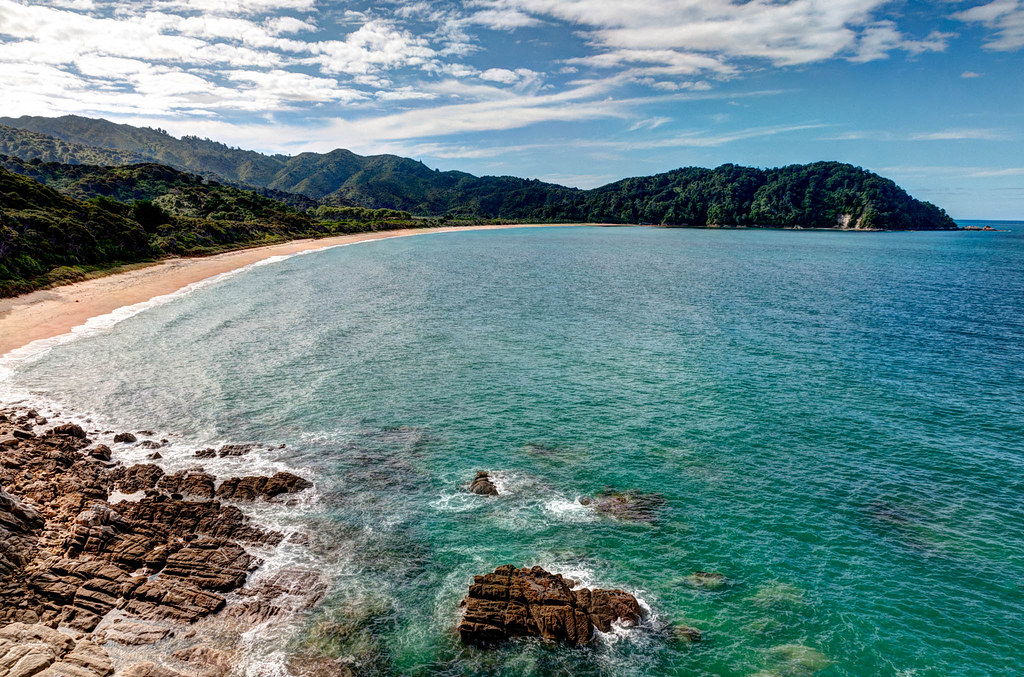
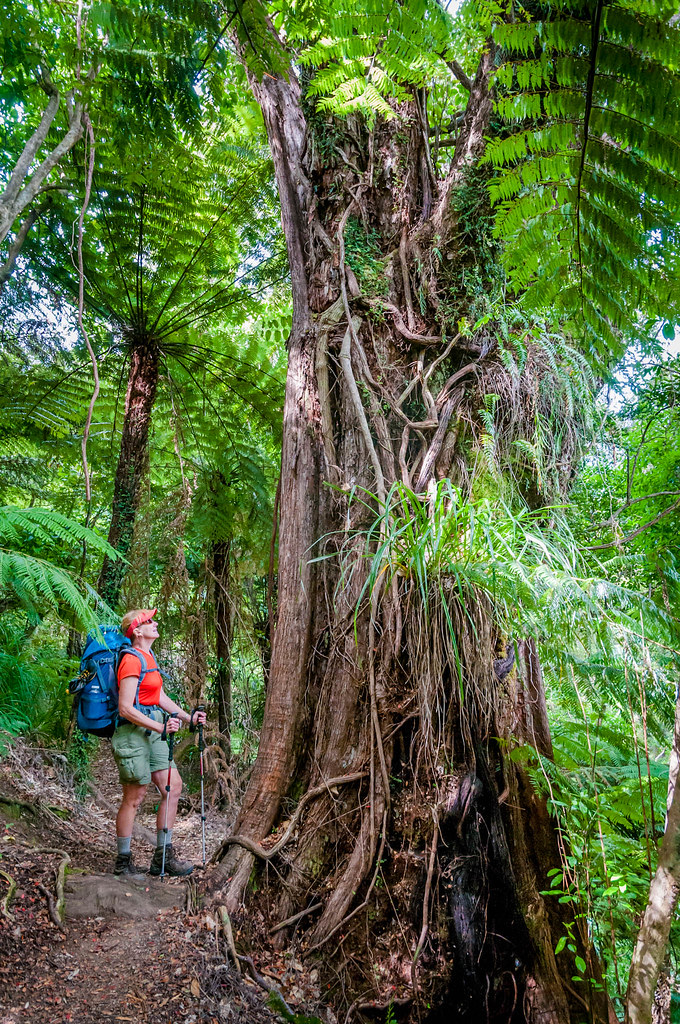
… and sometimes the track took us through forest dense enough that we almost forgot we were near the coast.
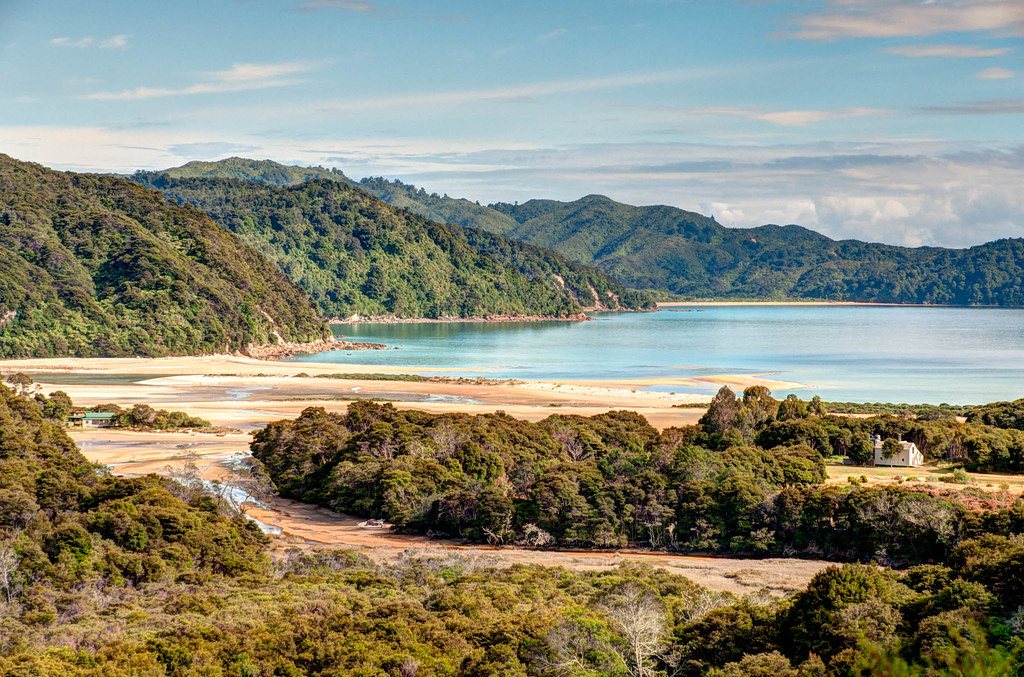
And just like other coastal hikes, it was essential for us to consult a tide chart as there are portions of the track that cross estuaries. Some can only be crossed at low tide. But just because the tide is low doesn’t mean you don’t get your feet wet.


In some cases, there are high-tide routes available. By taking the high-tide route around Torrent Bay, we were able to take the short side trail to a feature known as Cleopatra’s Pool.

Access is easy by boat to any number of spots along the Abel Tasman Track, and it is a popular track for day hiking and kayaking as well as backpacking.

As a result, there were quite a few people on this track. On our first night, we were dismayed by how cramped and crowded the Awaroa Campground was, although it was entertaining to hear a young French woman in a nearby tent explaining her relationship issues to a fellow she had recently met. Apparently, these issues were complicated by her “sensual nature.”
However, our second night at the Anchorage Bay campground was great. The camping area is more spread out, and most campers had their tents clustered near the cooking shelter. We were happy to find a spot in the trees well away from anyone else, so we could listen to the waves instead of hearing about relationship issues. Although I admit I was curious about what that girl’s “sensual nature” was up to.
Doing the Abel Tasman Track also provided us with an educational introduction to a common native species—sand flies. What New Zealand lacks in things that want to kill you—mountain lions, bears, snakes, etc.—it makes up for with sand flies. Anytime we sat down to rest, eat lunch, or enjoy the view, we did not have to worry about being tempted to sit there too long. The presence of those small but incredibly voracious insects made the decision to get going again very easy.

We were lucky to have had great weather for the first two days of our trip. Given New Zealand’s frequent wet weather, it was not surprising that it deteriorated on our last day. While we normally seek out backpack trips in mountains, it can be a refreshing change of pace to backpack along a coast. The Abel Tasman Track is one of the best.
All photos from this trip are on Flickr.


Leave a Reply