In April 2015 we did a five-day, four-night backpack trip to Clear Creek in Grand Canyon National Park, Arizona. John was 62 and I was 60. This trail is located north of the river off the North Kaibab Trail. Even though this trail is north of the river, it is commonly accessed from South Rim trails, specifically the Bright Angel or the South Kaibab Trail.
We had no trouble securing permits for Clear Creek, but we didn’t think we could get all the way there on our first day. We weren’t even sure we could make it to Sumner Wash, the first place one can camp on the Clear Creek Trail. Fortunately for us, there had been a cancellation for Bright Angel Campground. We gratefully took it for the first night.
We would then spend two nights at Clear Creek and camp at Sumner Wash on our last night out. As this last camp would be a dry one, we planned to cache water on our way in. Our last day would be a long one, but we were quite familiar with the Bright Angel Trail and would have no trouble heading back up it by headlamp if necessary.
We descended into the canyon on the South Kaibab Trail as it is less crowded than Bright Angel. That is not to say it isn’t crowded, but it is all relative. However, we knew from experience that the lower we got, the fewer people we would see.
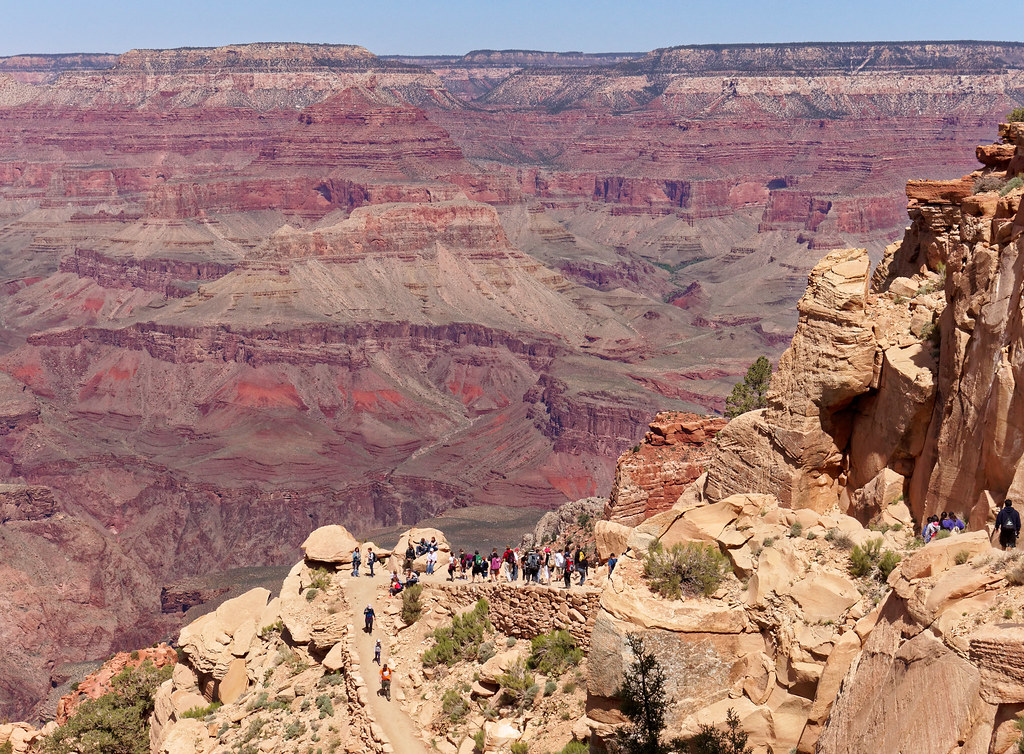
It is also the best-constructed trail and easiest on the knees descending into the canyon.
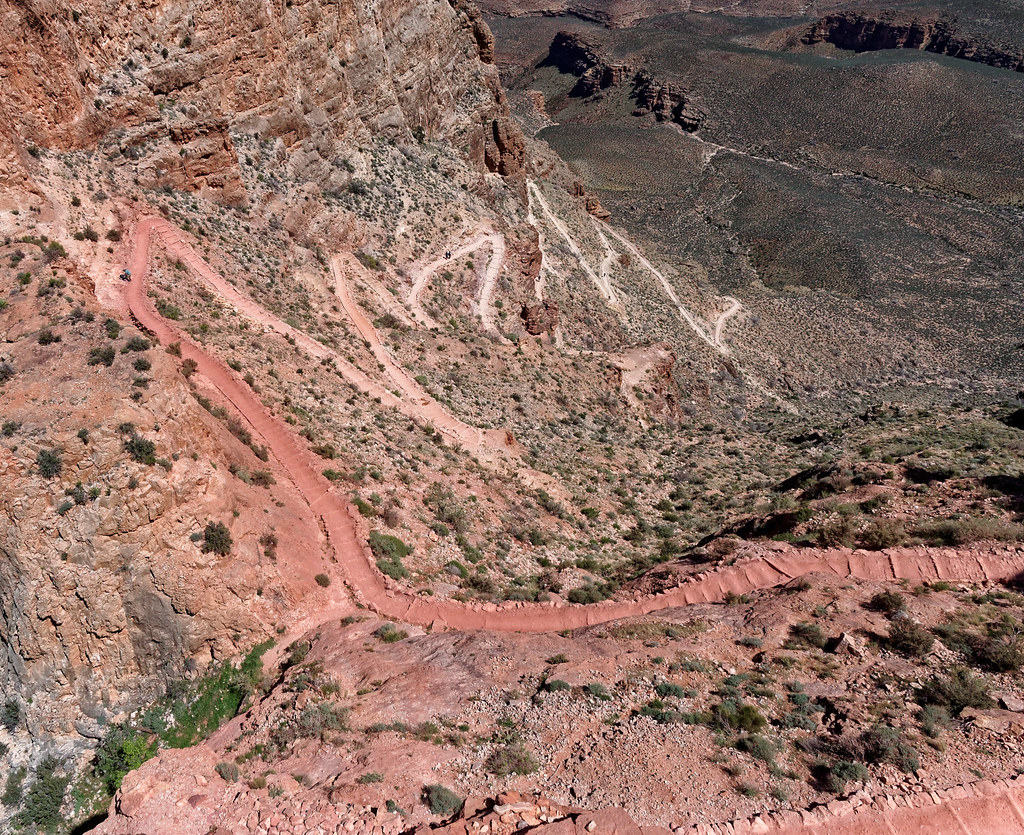
However, the best reason for choosing this trail is that the views are much more expansive.
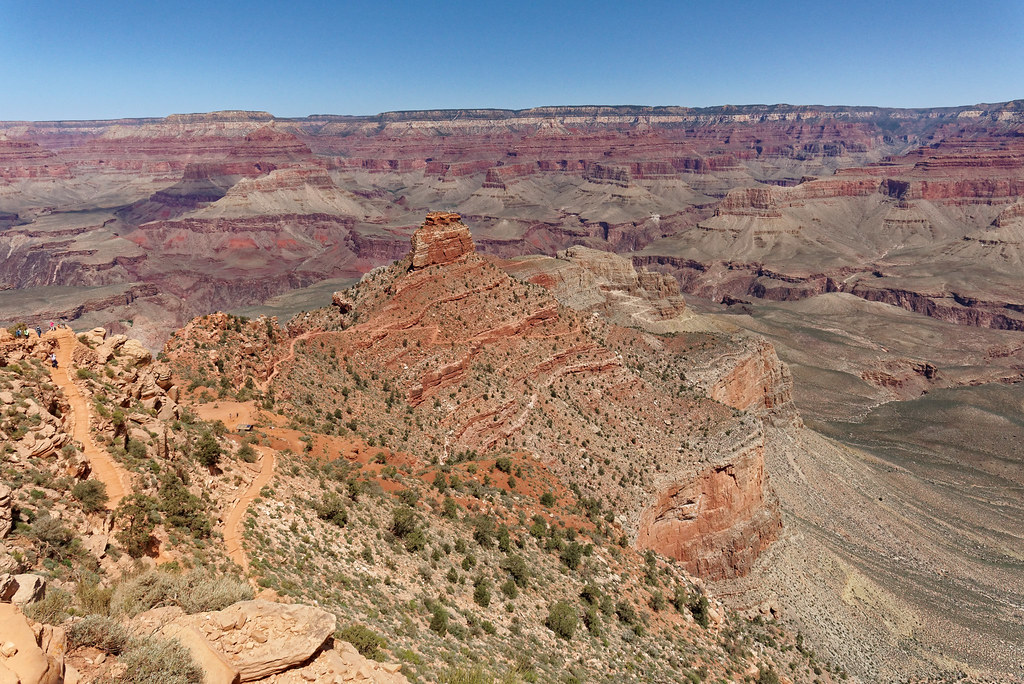
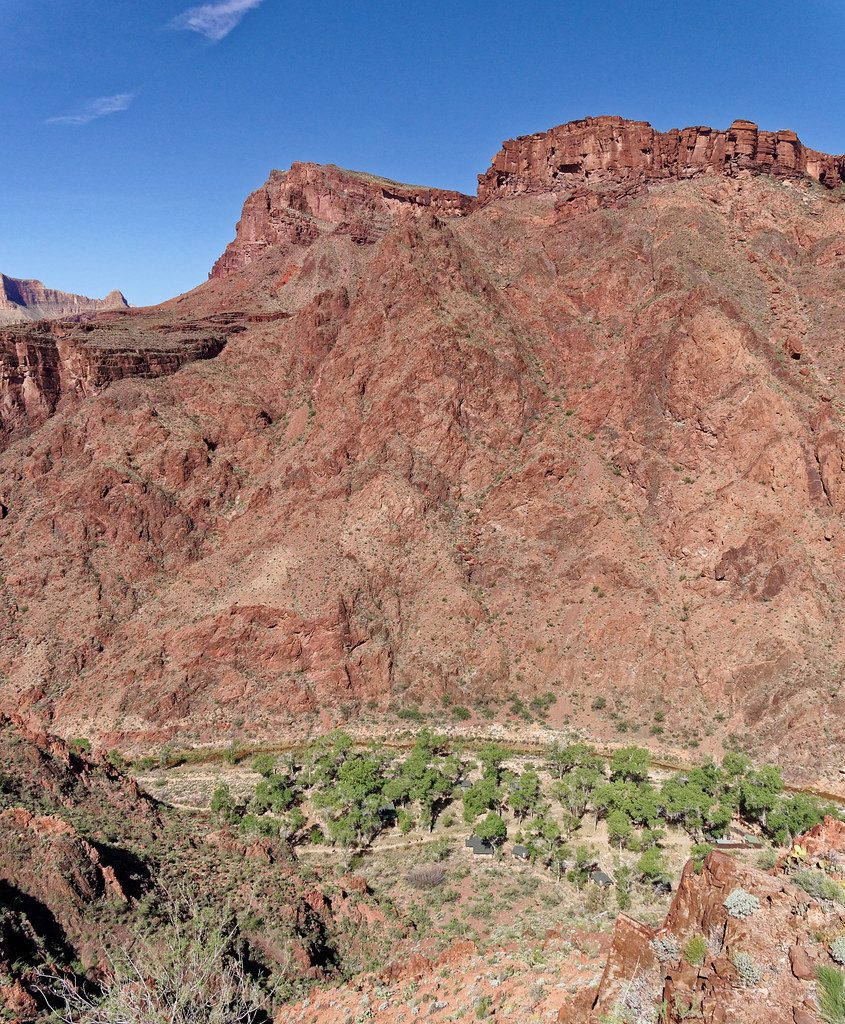
We continued and were happy when we started getting views of the river. It was visual proof we were getting closer, especially as we could see our destination for the day (the trees on the right side of the photo).
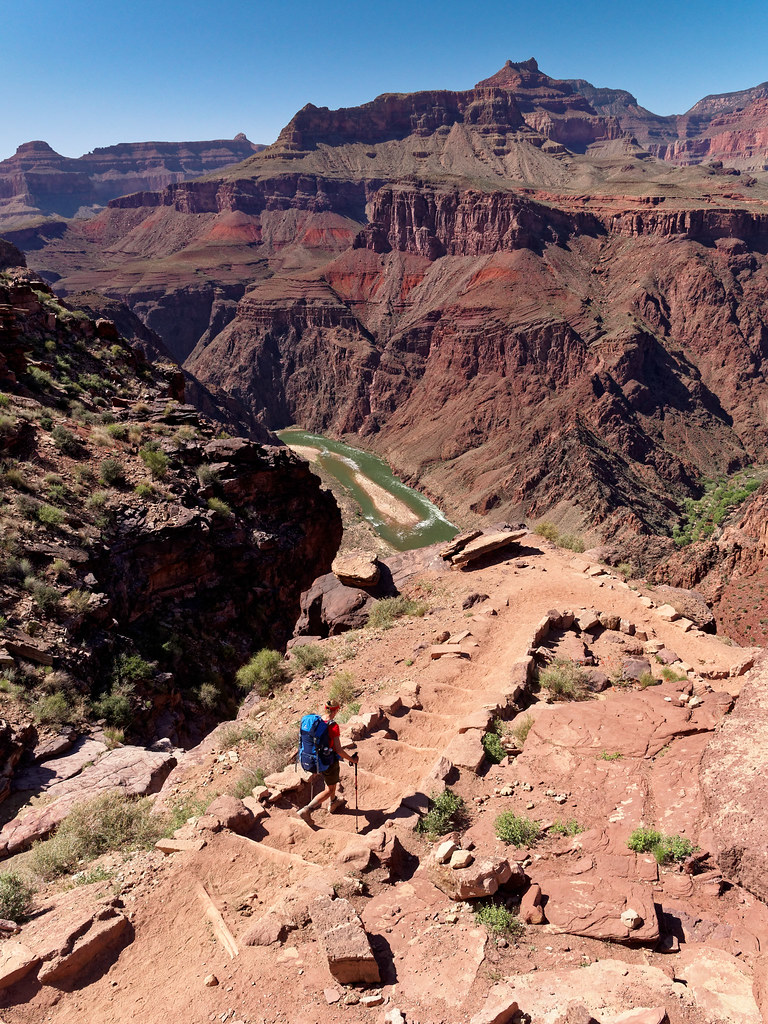
We knew the Clear Creek Trail was somewhere on the plateau across the river on the right. Our best guess was that it skirted the cliffs just below the top of the plateau.
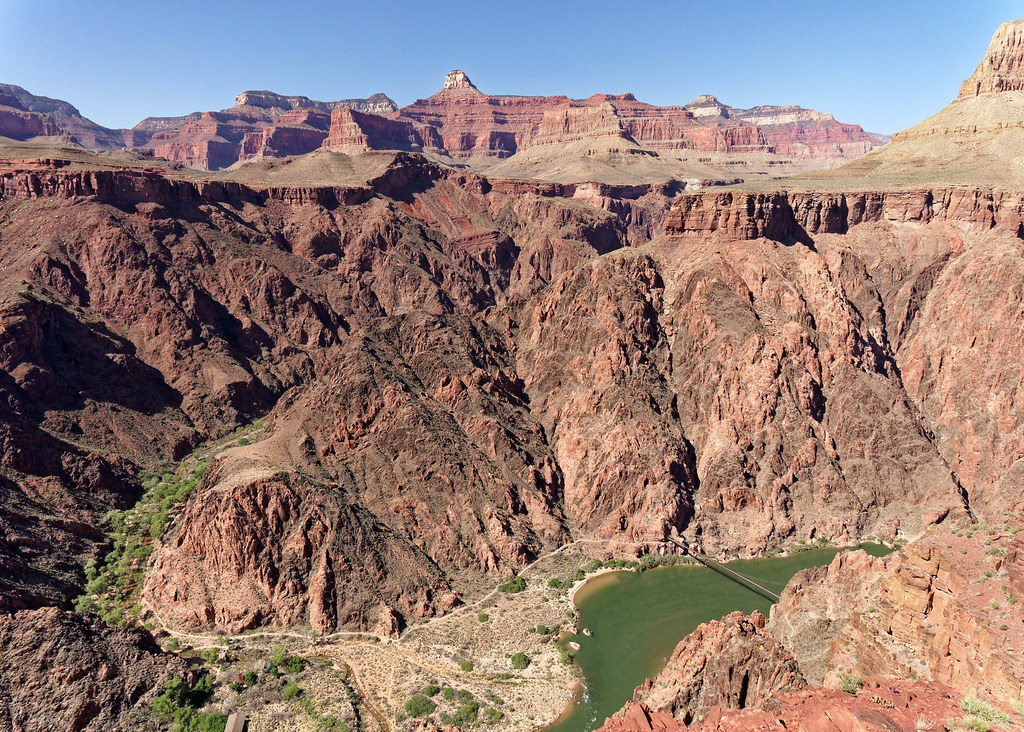
We were surprisingly tired when we reached Bright Angel Campground, so we realized that this really was the best option for our first night. We generally prefer not to stay in any of the campgrounds along the corridor trails (the Bright Angel and North Kaibab Trails). Permits are challenging to get, and they are often crowded. However, we were very grateful to have a site there that night.
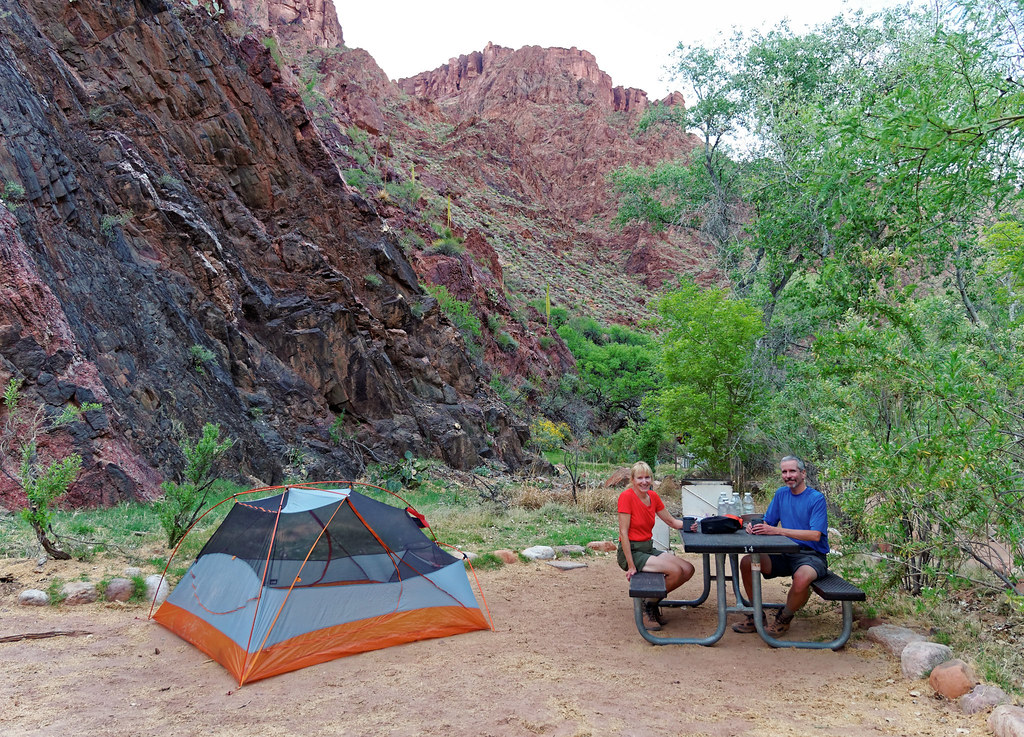
We left camp the next morning and headed a short way up North Kaibab to the trail junction. We were both carrying an additional half gallon of water to cache near where we would camp at Sumner Wash on our last night.
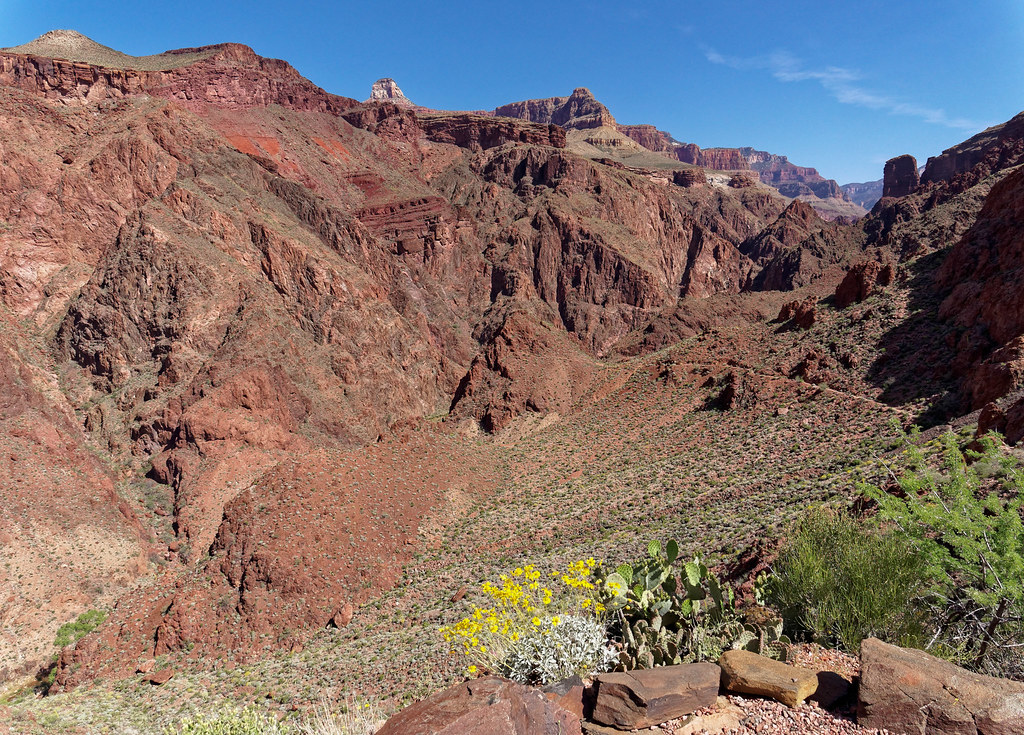
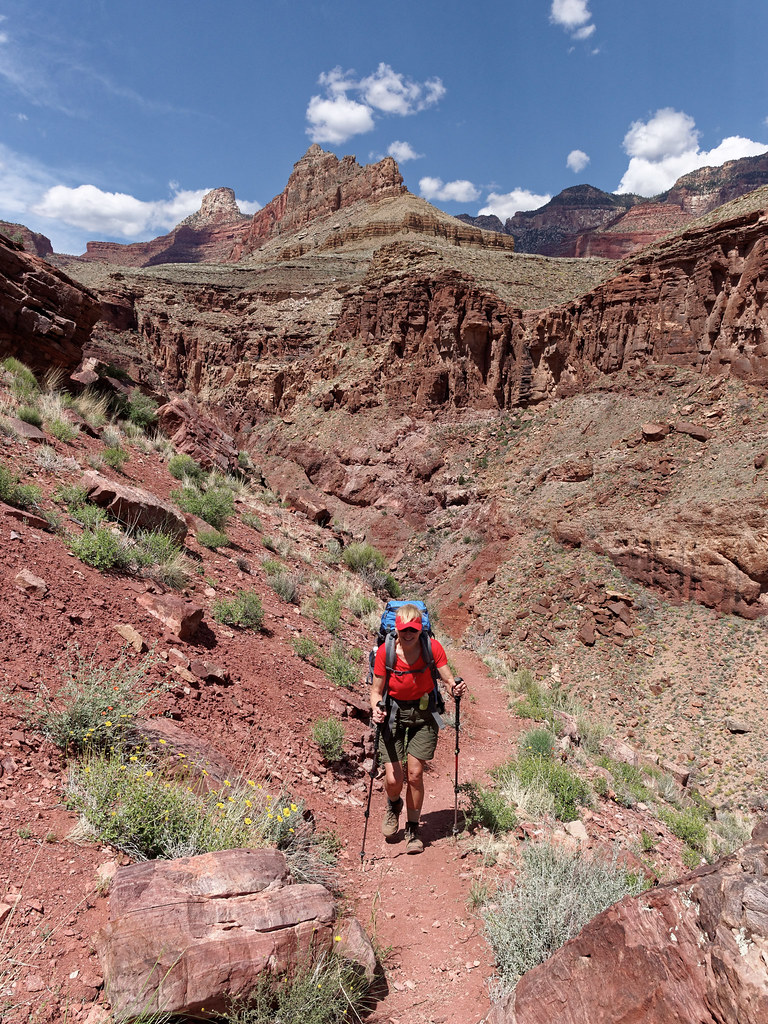
The trail is steep and the going was a bit demoralizing. We were both regretting not keeping up with our conditioning over the winter. The only backpack trip we had done that year was to Cape Solitude on the South Rim, which doesn’t descend into the canyon and is relatively flat.
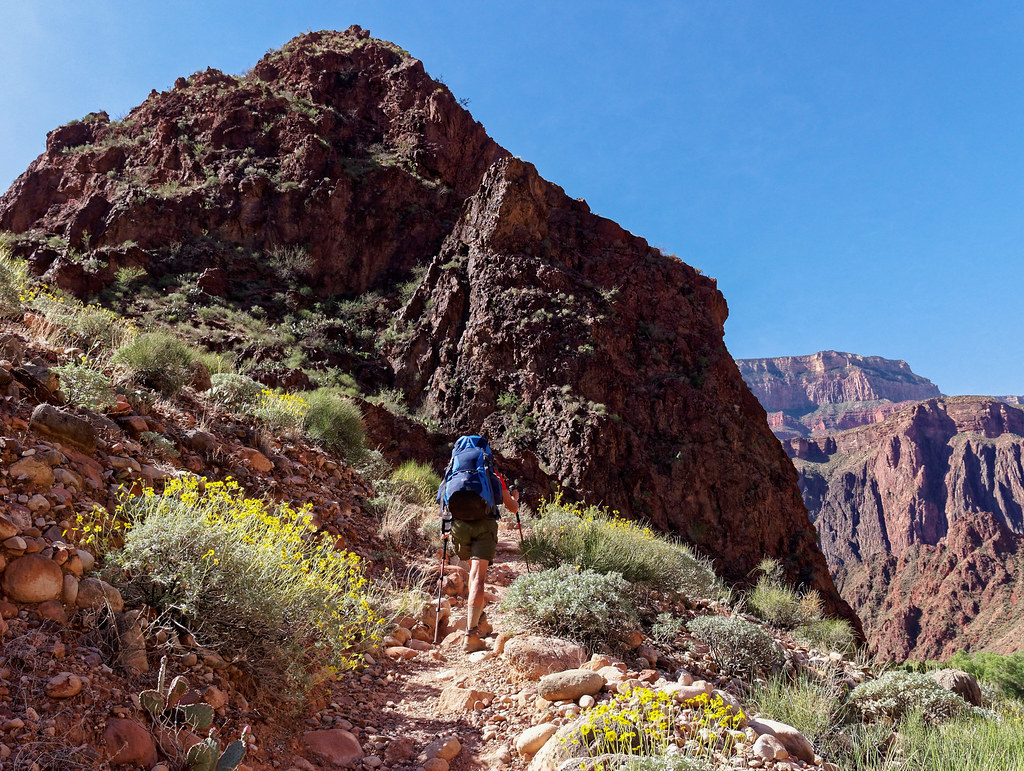
There is an overlook that provides views of the river and Phantom Ranch. This is a popular day hike for those who spend multiple days in the Bright Angel Campground and Phantom Ranch. Some continue as far as the Tonto Platform.
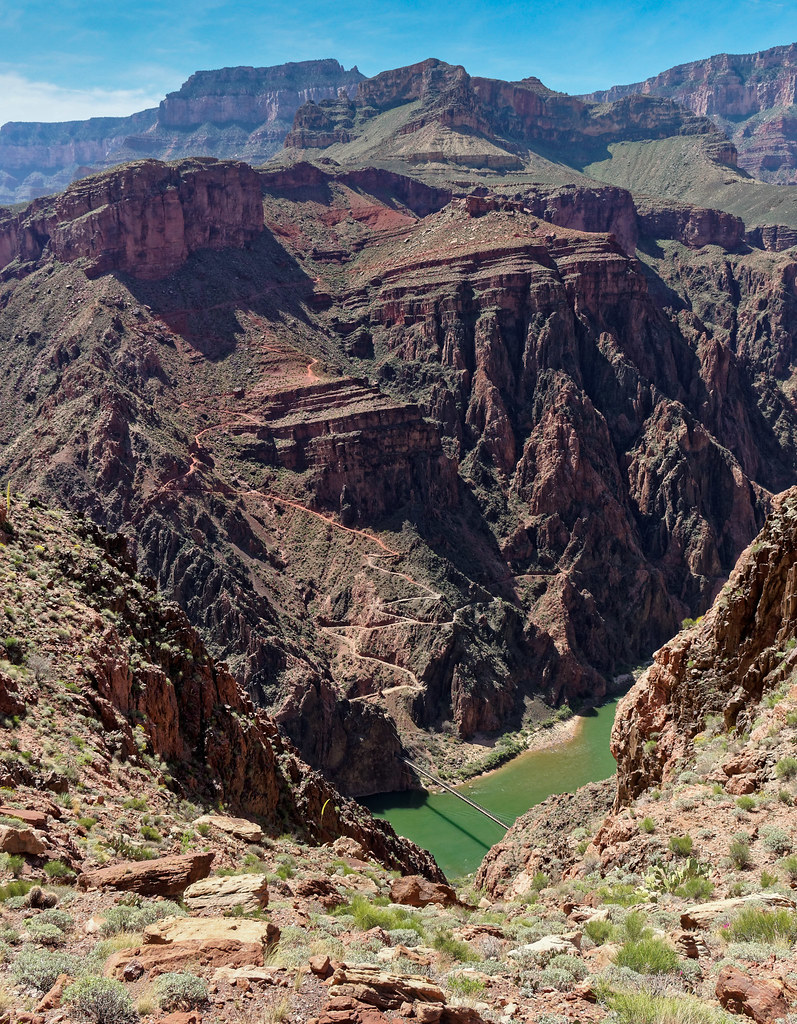
We also got a view of the South Kaibab Trail.
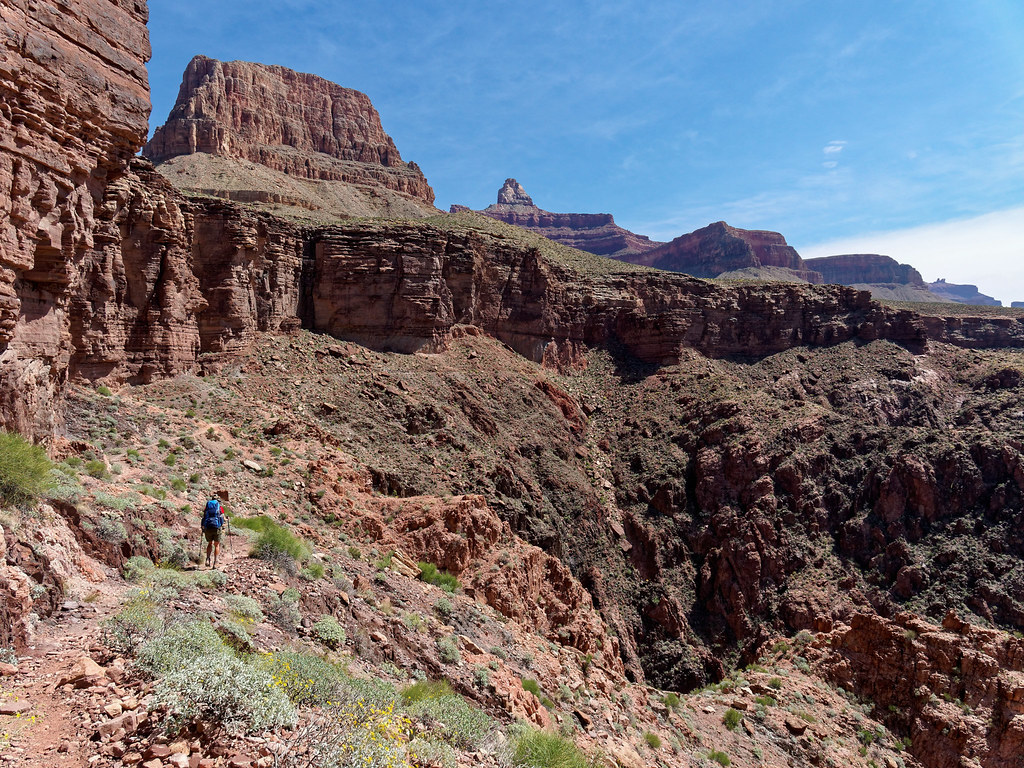
We had been correct that the Clear Creek Trail skirts the cliffs …
… before climbing up …
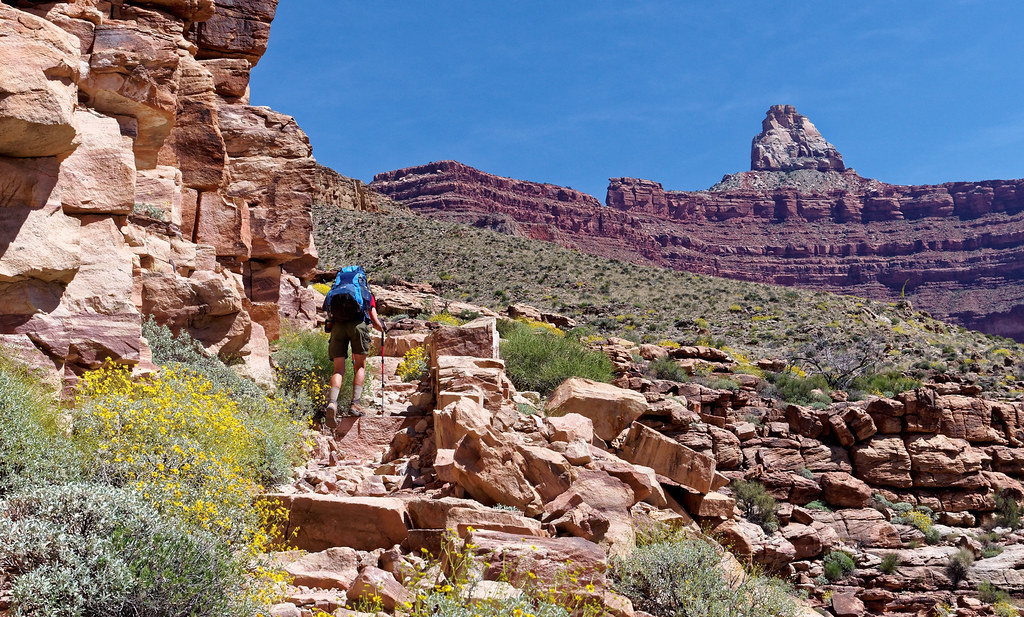
… to the Tonto Platform.
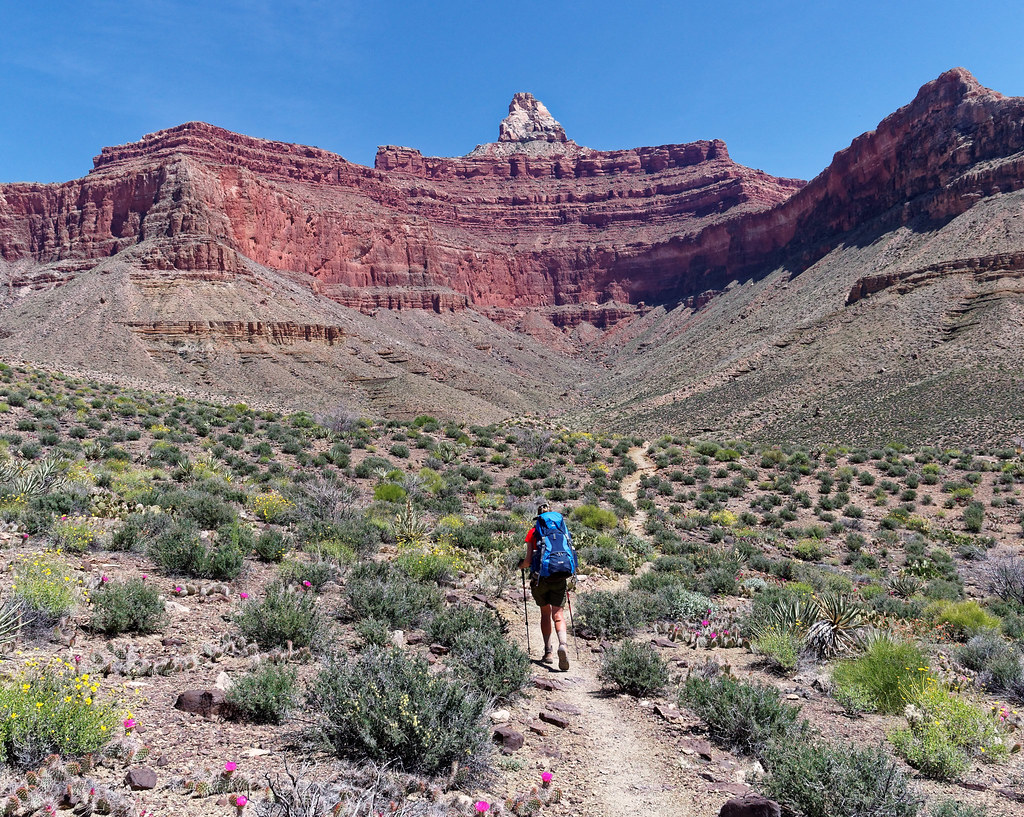
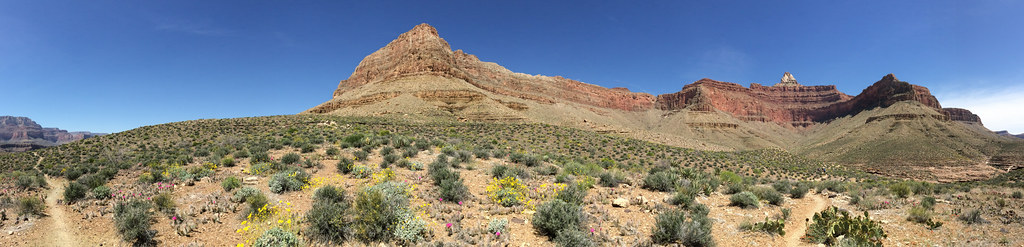
It felt quite familiar as we have spent many a day hiking on the Tonto Platform south of the river. However, this is the only trail north of the river that crosses it.
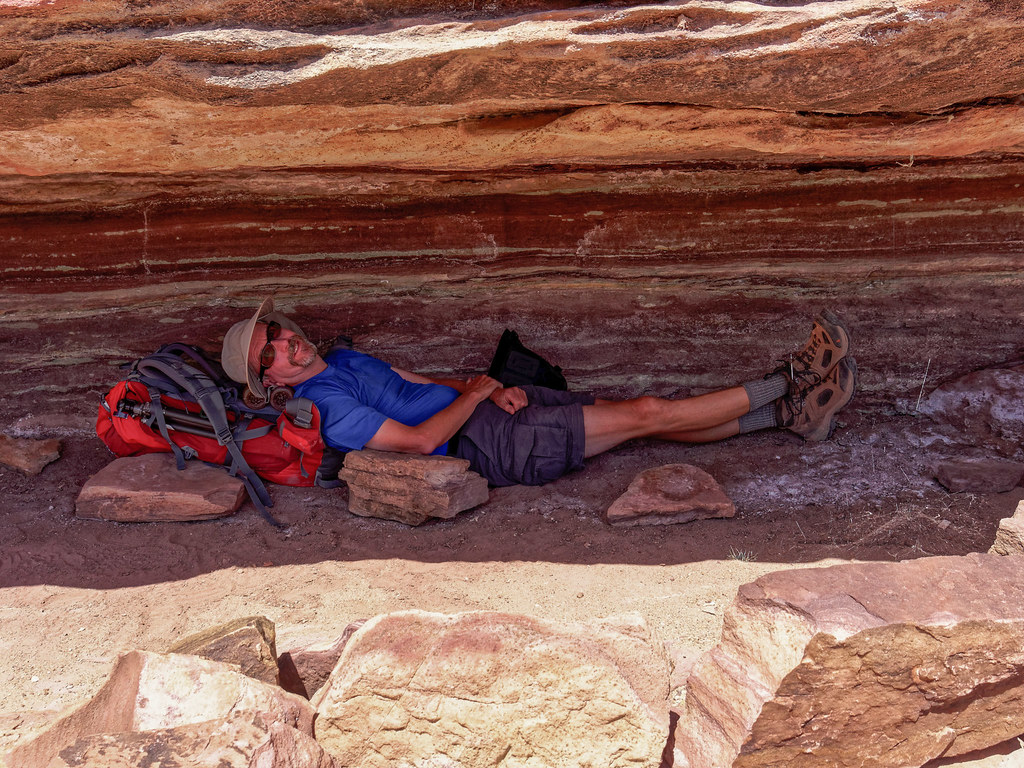
The trails north of the river are notorious for the absence of shade, so it is important to take advantage of any shade you can.
We could see the top of Clear Creek Canyon in the distance, but we knew we still had several miles to go.
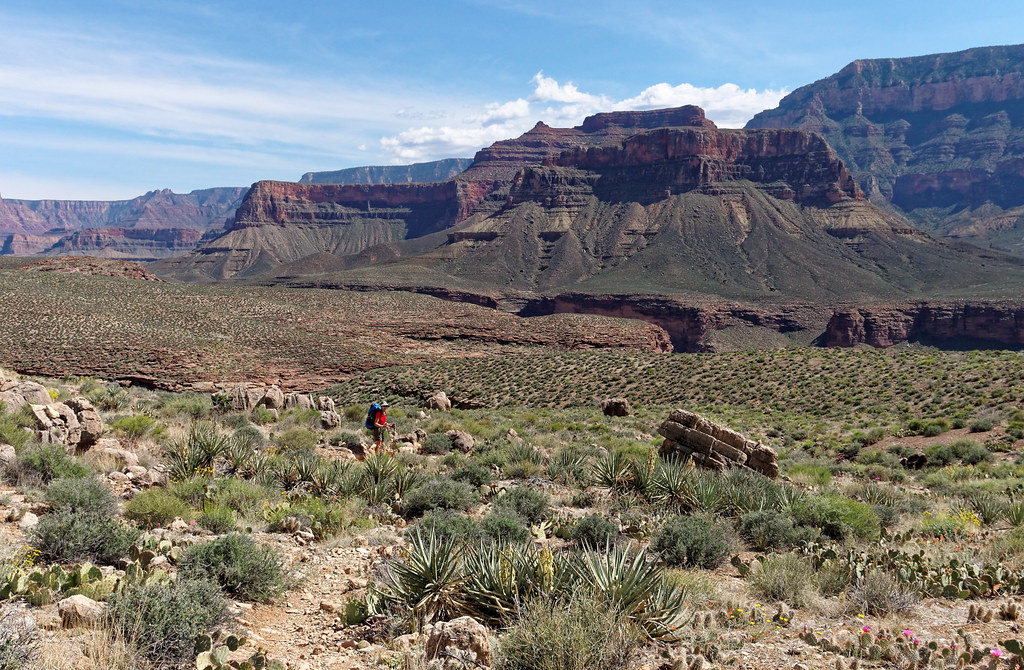
It was somewhat reassuring to see the beginning of Clear Creek Canyon in the distance and know that at the very least we would not have to go that far.
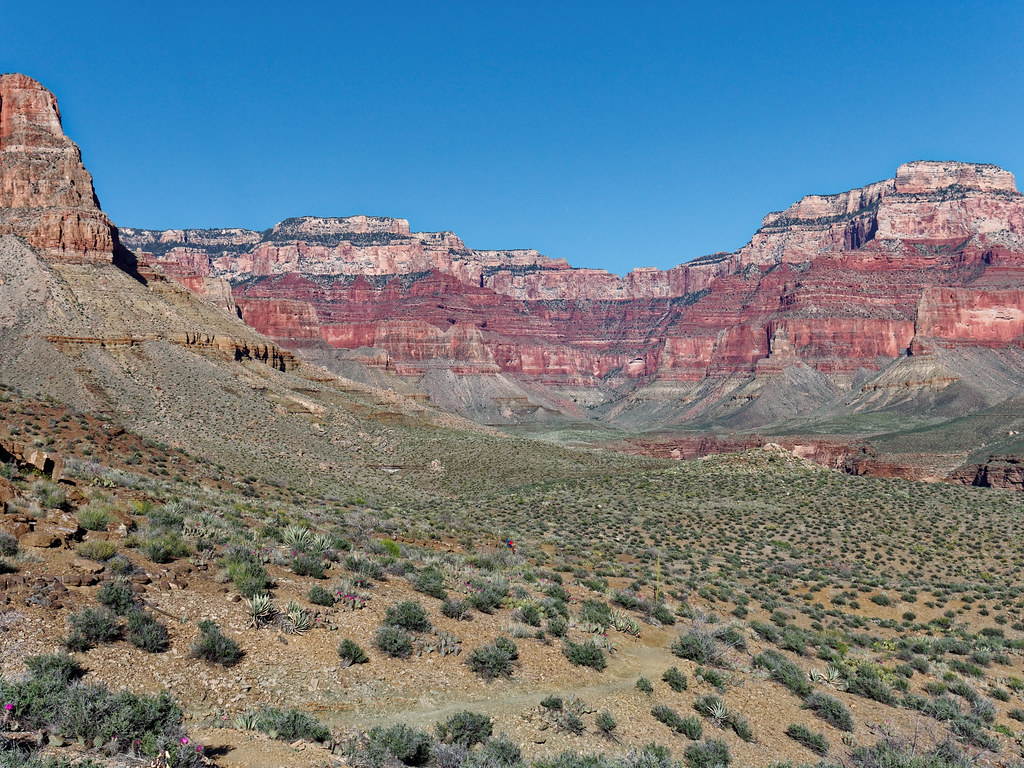
We could also see across to the South Rim.
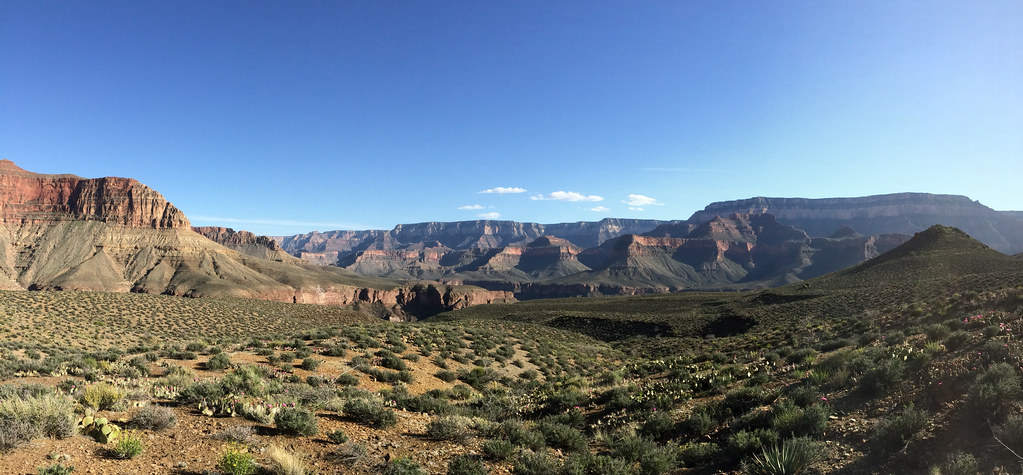
We were relieved to finally see that the trail (zigzagging across the red slope) would soon drop down toward the creek.
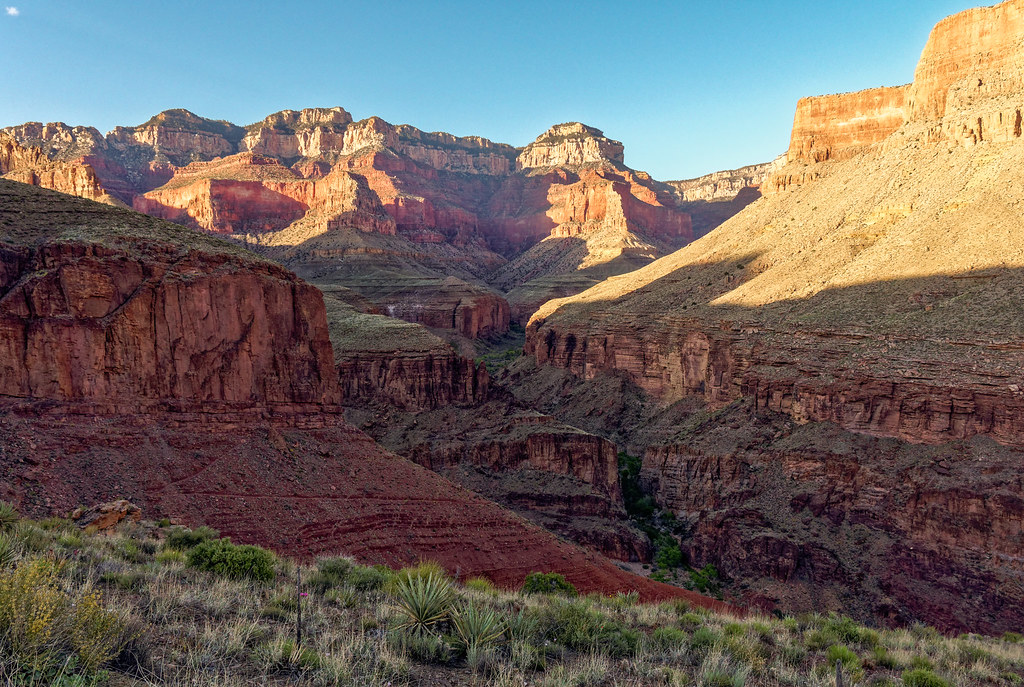
I have read that some have trouble with this section of trail because of the sense of exposure. I can understand that if their previous experience in the canyon was limited to the corridor trails. However, compared to nearly every other trail or route in the park, this is pretty mild.
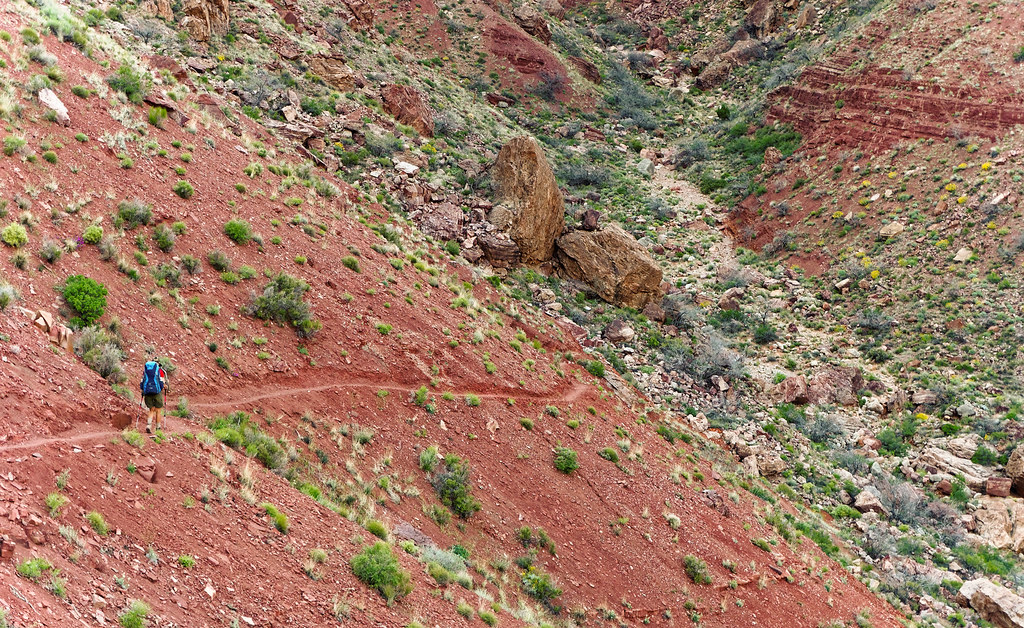
We expected Clear Creek to be crowded as this is a popular destination. In addition, we had heard that there was a group of trail maintenance workers camped there. However, on the way in some other backpackers told us of a good campsite further downstream from the main camping area. We followed their advice and found a fine, well-developed site under some trees that was surprisingly private.
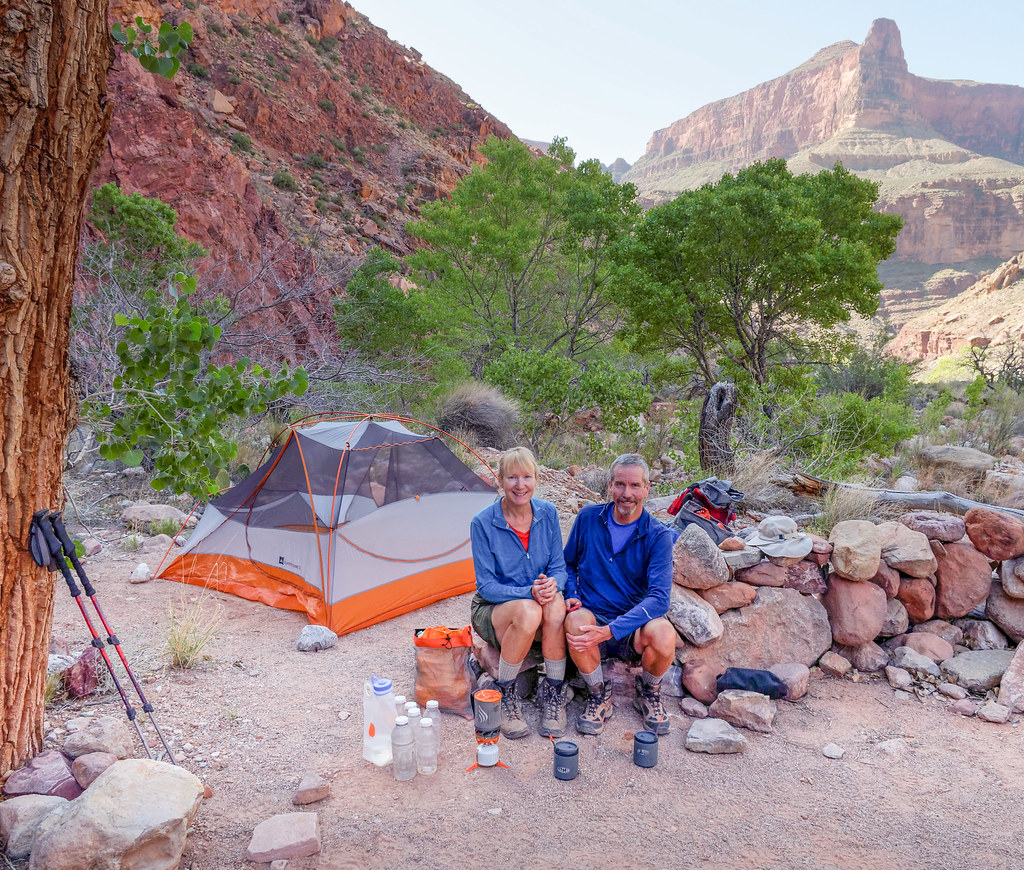
I have read that there is an abundance of mice, and therefore an abundance of snakes, in the Clear Creek camping area. I have also read that ravens are a problem and some have been able to get into Outsak mesh bags, which is what we use to protect our food. There are several YouTube videos that show ways to help protect your food from these mega ravens. We place our Ziploc bags of food in a silnylon bag first. We place that inside the Outsak and then suspend it from John’s tripod (which he usually carries) and have had no problems. However, we did not see any mice or ravens. It could be they frequent the larger and more commonly used campsites further upstream from where we were.
The next day was a layover day, and we planned to do a day hike. One option would have been to hike down to the Colorado River. It is six miles to the river, and the route goes back and forth across the creek. There is apparently a pour-off requiring a 15-foot down climb near the river. We did not feel a need to get to the river as we would be camping by it on upcoming trips. We would have loved to have hiked up canyon to see Cheyava Falls, but had heard it was dry. However, there are other sights to see.
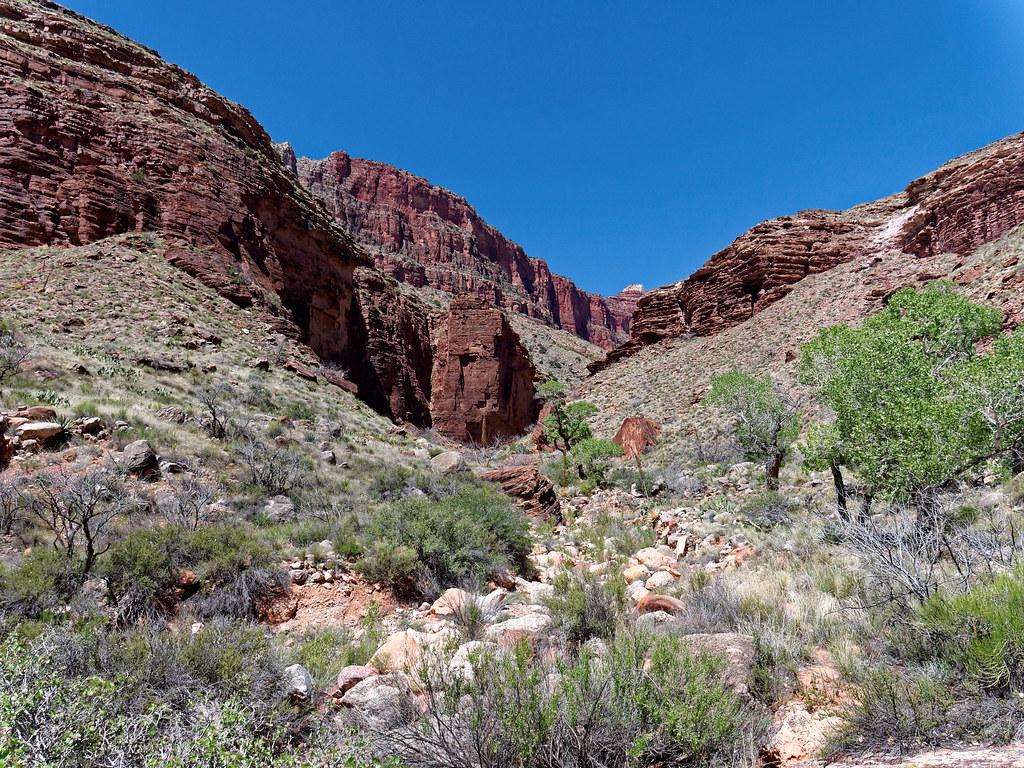
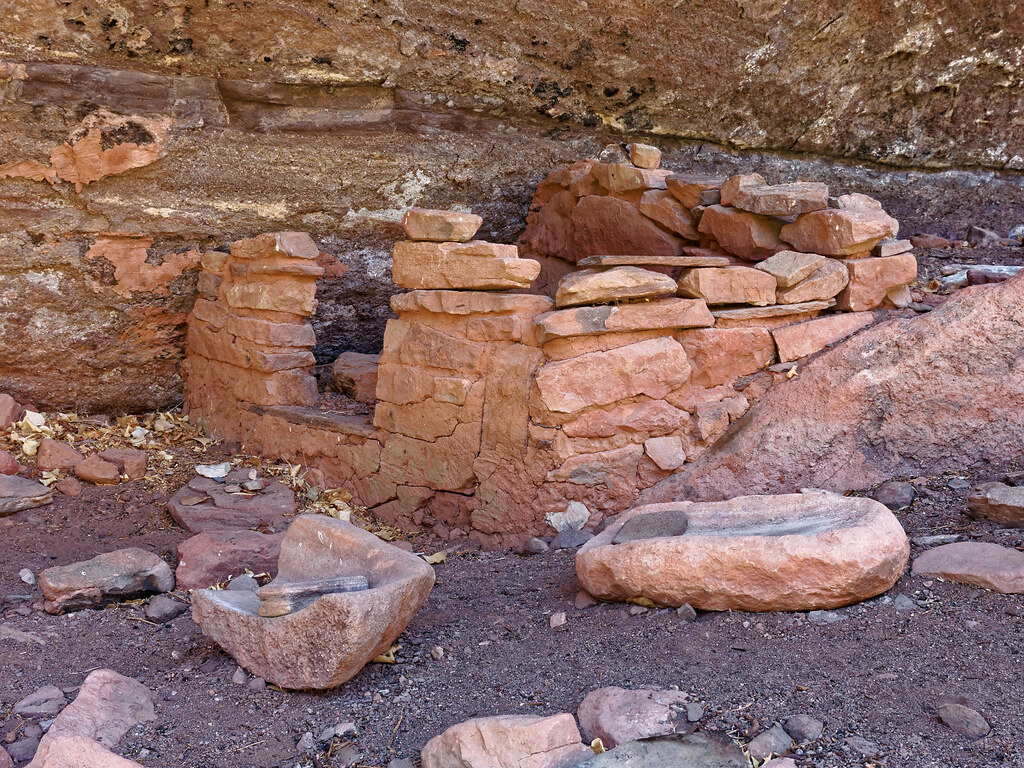
This granary in particular.
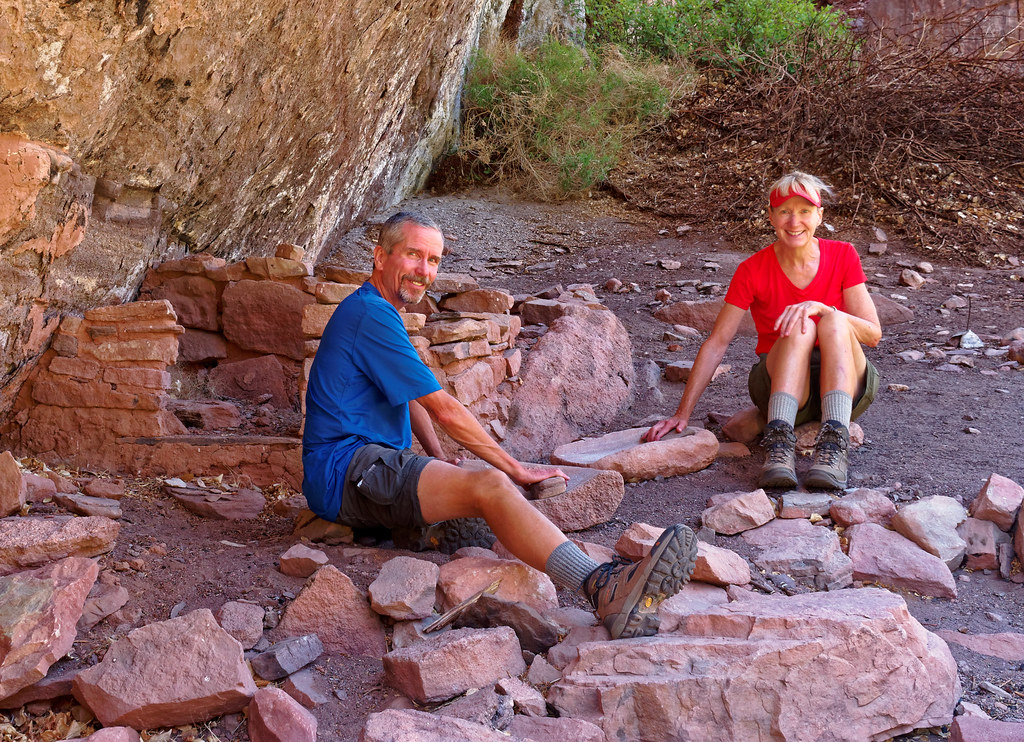
Something I especially enjoyed seeing at this site were these metates (grinding stones).
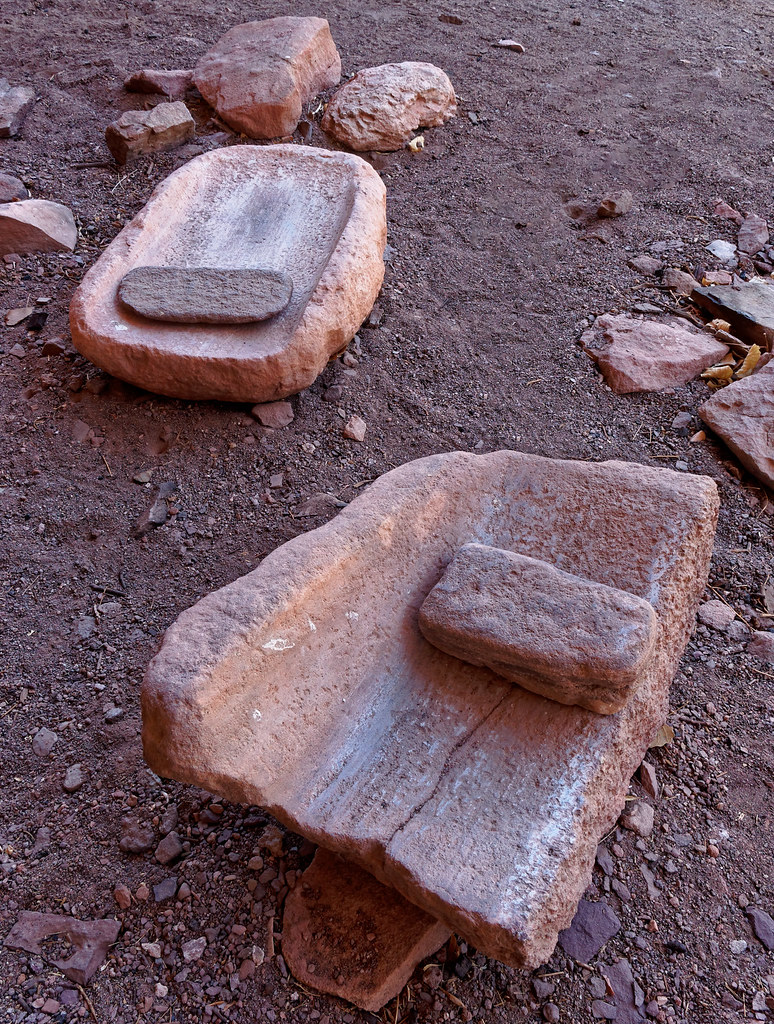
There is just something so personal about touching an implement that was used on a regular basis by the Ancestral Puebloans who once lived in the area.
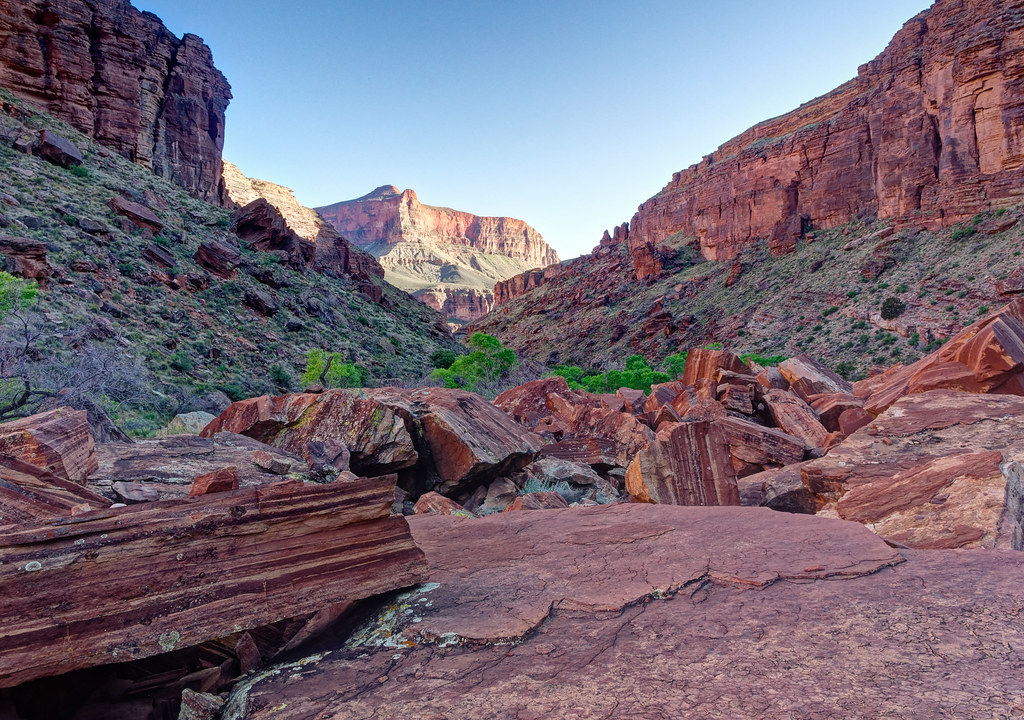
We then hiked back down canyon.
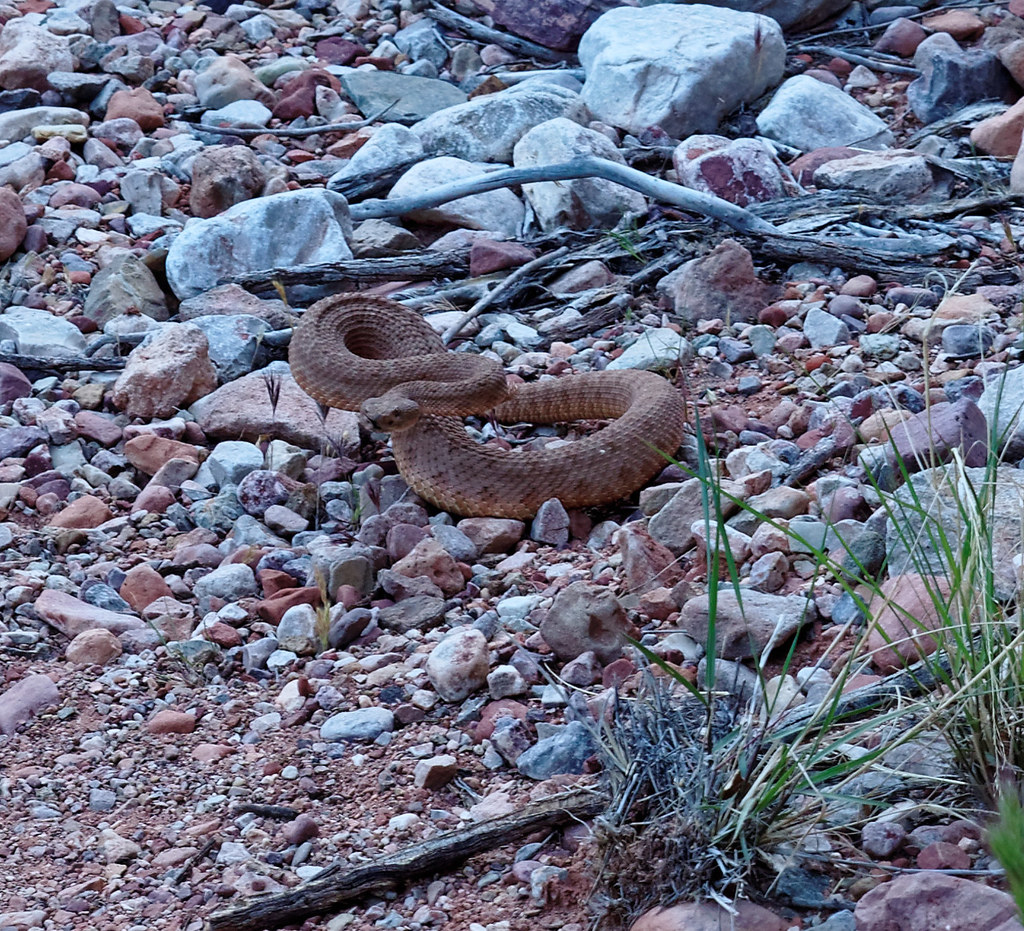
We were very nearly back to the main camp area when John suddenly jumped back. Fortunately for him, this rattlesnake was courteous enough to warn him of its presence.
Once back at camp, he explored down canyon a bit.
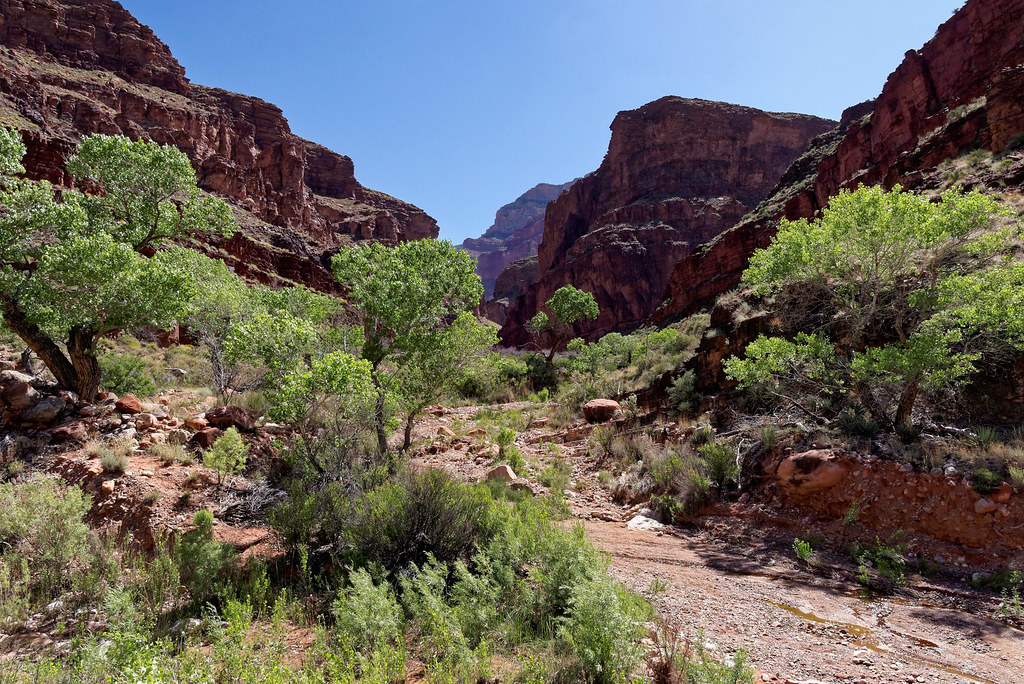
The next morning we began hiking out.
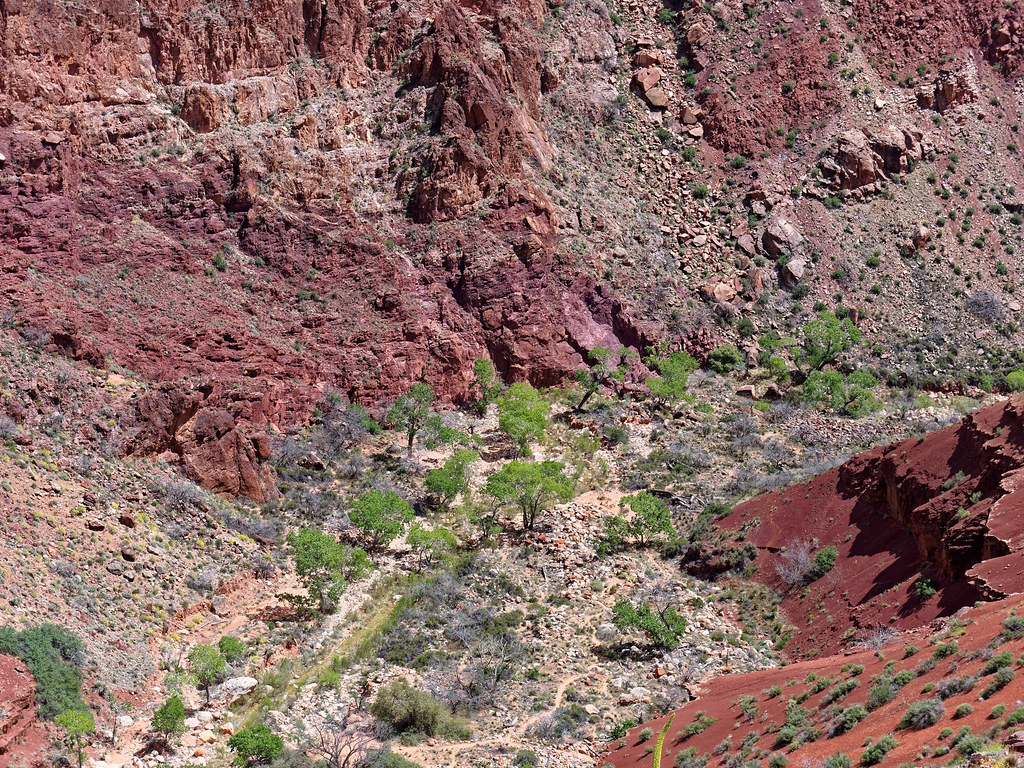
We realized we could look down at our campsite (located just down and left of center).
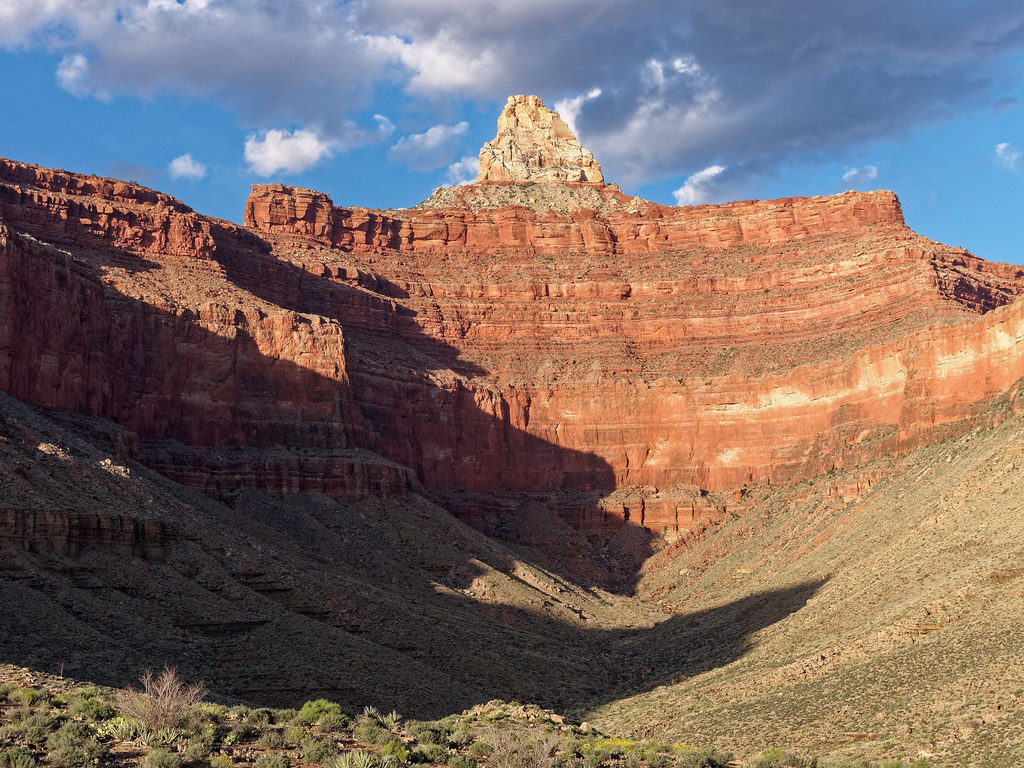
As a general principle, we prefer loop hikes. However, even an out-and-back trip such as this can provide different views of the same features because of changing light and weather conditions.
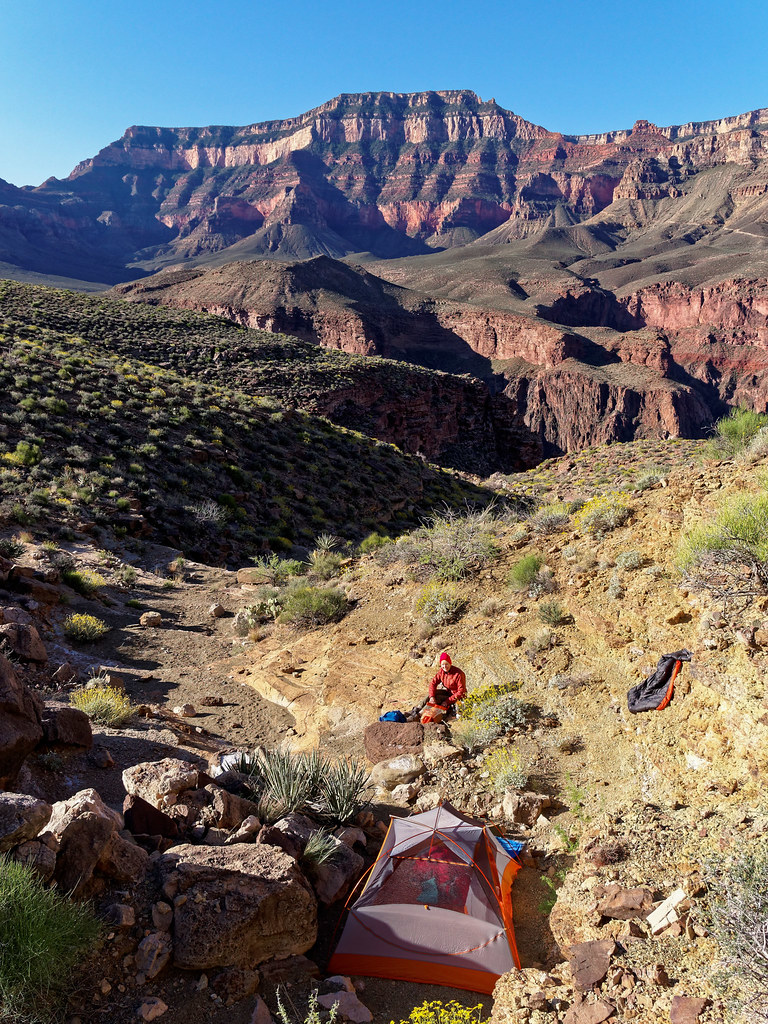
We camped our last night at Sumner Wash. It had become quite windy, and the developed sites located there were all completely exposed. After reclaiming our cached water, we backtracked a bit and found a narrow wash with a relatively flat spot just big enough for our spacious tent. Fortunately, it offered enough protection from the wind.
The next day we continued out and took a short break at Phantom Ranch before crossing the river …
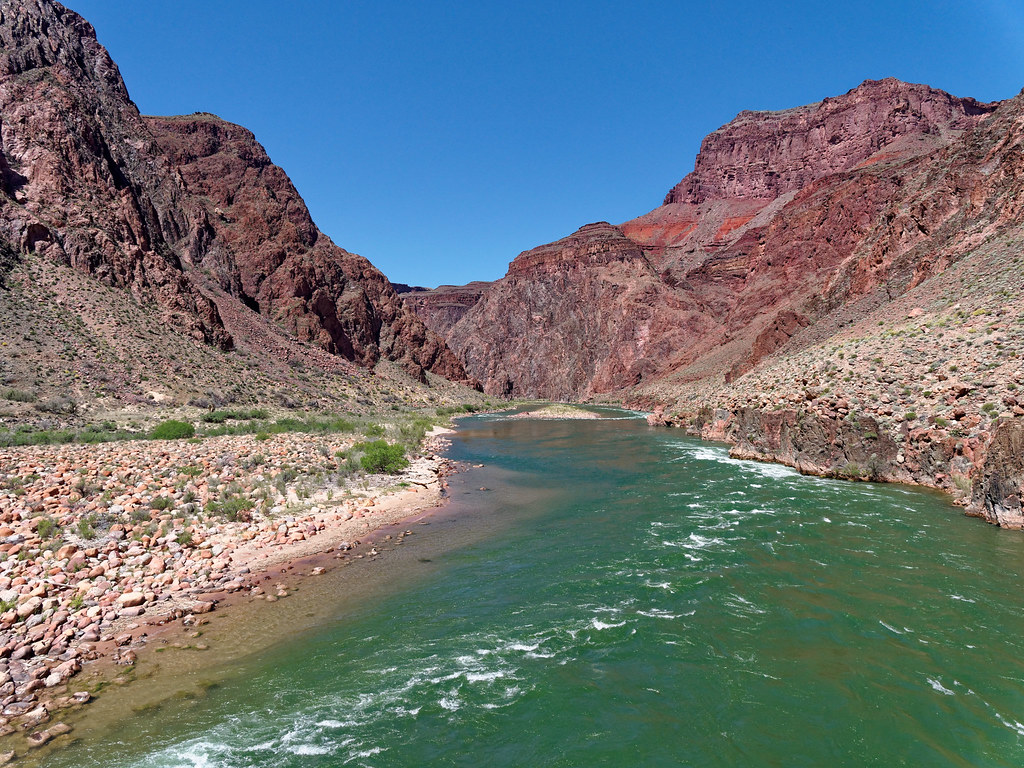
… and heading up the Bright Angel Trail. We welcomed the shade, one of the advantages of South Rim trails.
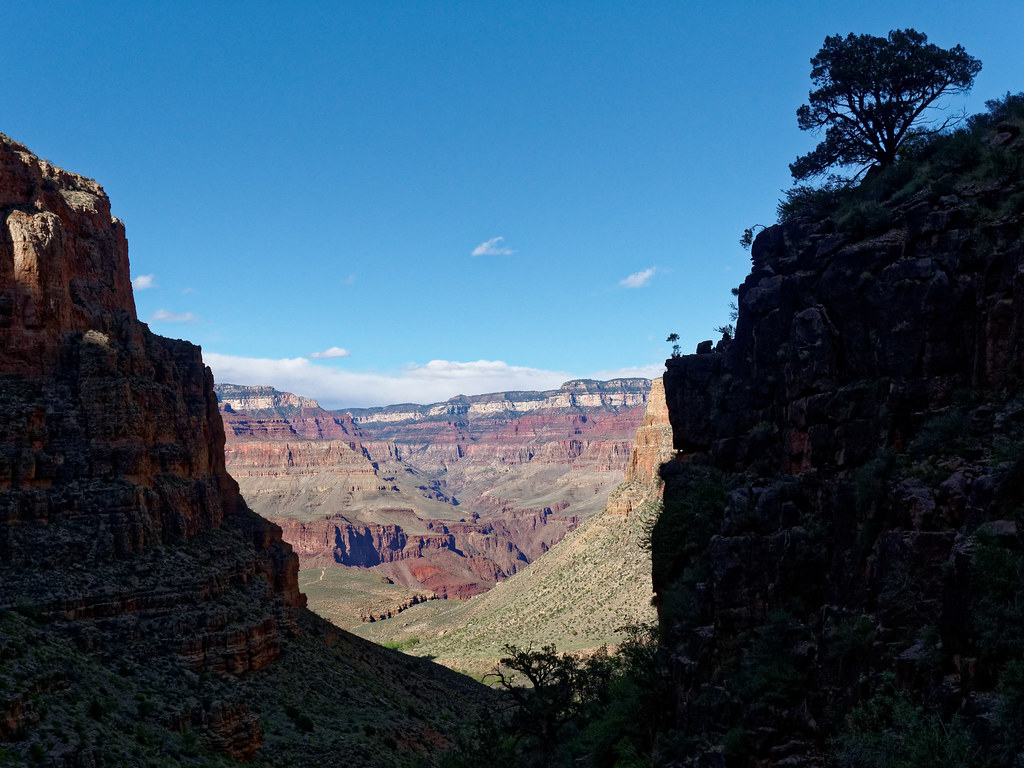
We love hiking in the evening with the golden light and the shifting shadows!
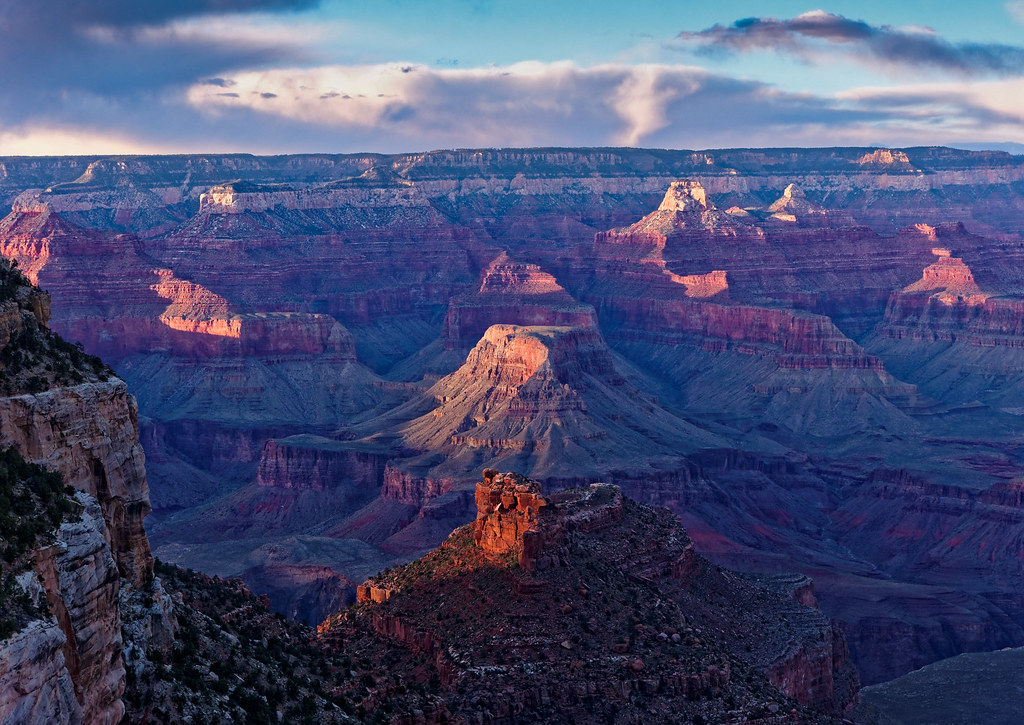
We were happy to finally get back to the South Rim. We were not too disappointed with how we did on this first climb of the season from river to rim. We were starting to get back in shape!
All photos from this trip are on Flickr.


Leave a Reply