In July and August 2011, we did a seven-day, six-night backpack trip in the Weminuche Wilderness, Colorado. We hiked up Weminuche Creek to join the Continental Divide Trail (CDT) at Weminuche Pass and exited at Wolf Creek Pass. John was 58 and I was 57.
We started out on the Weminuche Creek Trail.
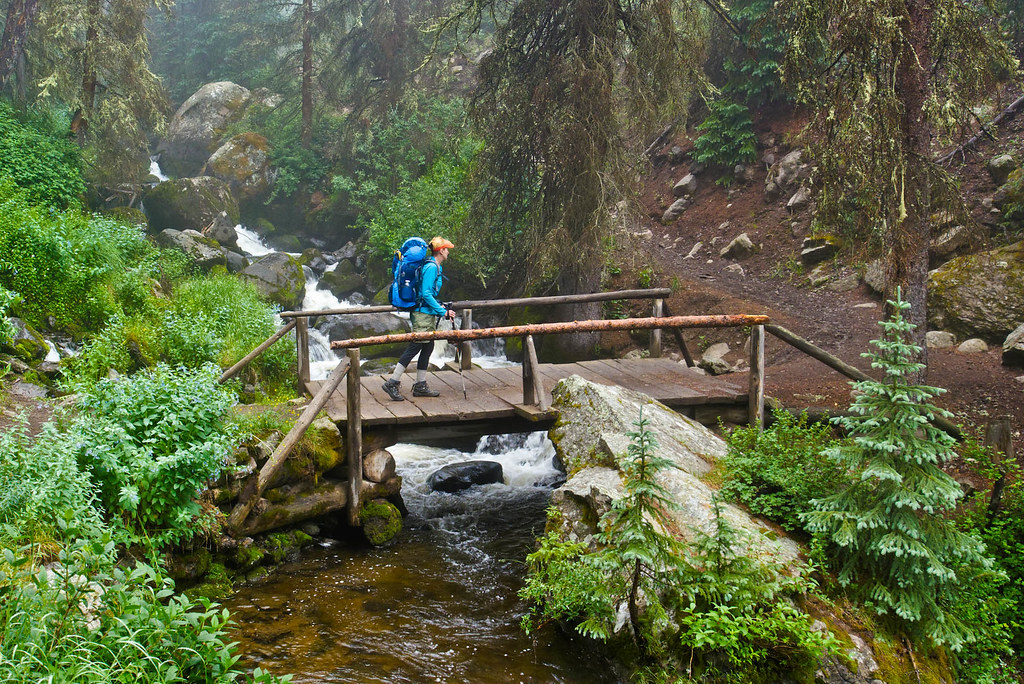
It was foggy that morning and later began to drizzle.

We were dismayed by the sight of so many dead trees. Spruce bark beetles were the culprit. Unfortunately, these weren’t the only dead trees we would encounter on this trip.

As the CDT is one of the premier trails in the country, we were expecting it to be well-signed and well-traveled. However, when we got to where we were supposed to join the CDT, we were faced with a vague junction sign, no visible trail and a marshy meadow. We had made the mistake of forgetting our map, but the trail guide we had said to cross the meadow and “jump the canal” (apparently someone owns the water rights here and dug a canal through the valley to divert the water).
We could see a couple of posts in the distance and headed toward them. Partway across this marshy meadow, we reached the canal. It was about eight feet across with steep, muddy sides, and the dark water appeared to be about two feet deep. How were we supposed to jump across it? Neither of us wanted to risk getting our shorts wet, so we took them off. Fortunately, we had both brought water shoes. We stepped in gingerly and immediately encountered deep mud. Fortunately, we found a shallow spot where the bottom had some gravel in it, so we didn’t sink down too far.
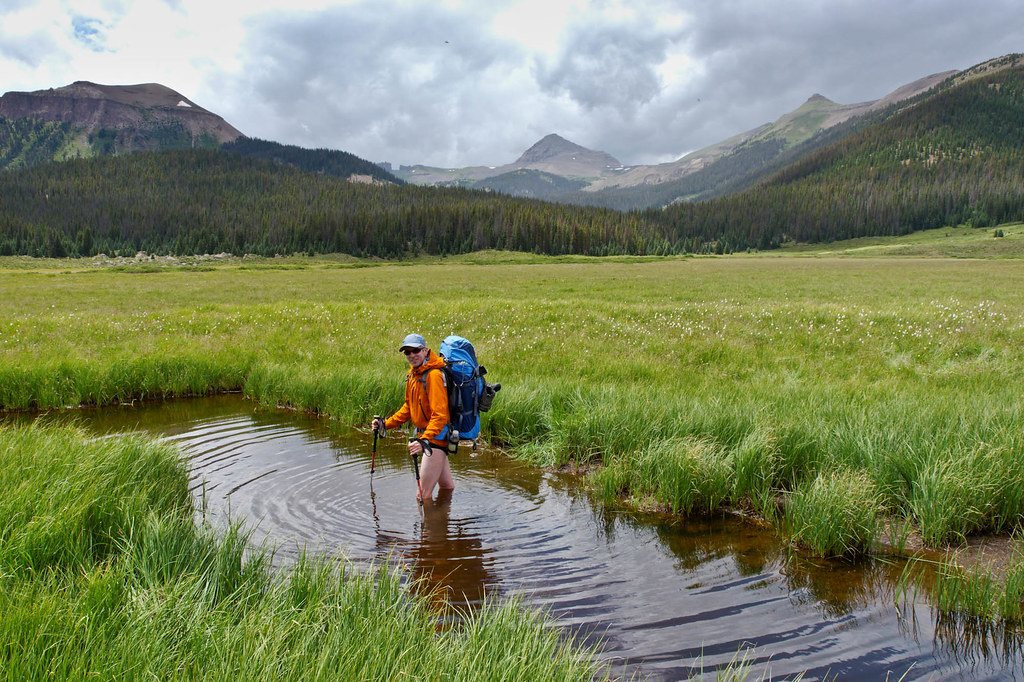
We were happier once we started gaining some elevation.

We finally gained enough to start getting the kind of views we prefer, …

… views of mountains!

This was more like it!

That evening, we were treated to a lovely sunset.

Of course, getting those mountain views often meant crossing high mountain passes.

There were several on this trip.

One of the biggest challenges backpackers face in the Colorado mountains is the all-too-common afternoon thunderstorm. Before crossing each mountain pass, we had to assess the threat of lightning. Was there enough time to get over the pass and down the other side before a storm hit?

We only had one day where we had a serious debate about whether there was enough time to get over a pass. We monitored the dark clouds ahead and the direction of the wind. Even though it was raining, it appeared that the worst of the storm would bypass us. We were unnerved by the thunder and great dark clouds behind us, but they didn’t seem to be getting any closer. They were the darkest, scariest clouds I’ve ever seen, and I wish John could have taken a photo. But we felt it was more important to just keep moving, which was easy because the thunder was a great motivator. We were relieved once we had descended the other side and the thunderstorm still hadn’t caught up to us. It finally did, but we were in our tent by then. We felt lucky to have found a somewhat sheltered spot to camp that night.
Hiking in mountains also involves descending and crossing valleys. On this section of the CDT, downed trees often blocked the trail. We had to pick our way through the tall grass and dead branches to get around them.

However, in the process, it wasn’t unusual to completely lose sight of the trail.

Despite the challenges of this trip, we came away fully satisfied with the outcome. Neither of us experienced negative effects due to the altitude. The two preceding backpack trips plus our day hikes up three 14ers had done their job.
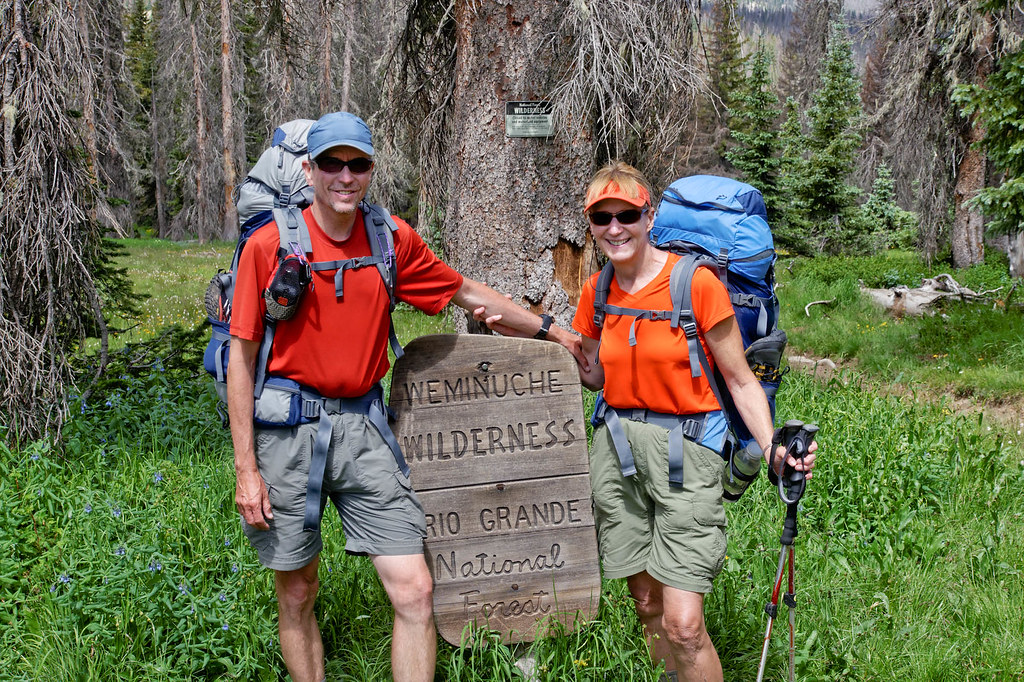
We went to Colorado that summer with one goal in mind—to acclimate to altitude in preparation for our backpack trip on the John Muir Trail the following month. And we had achieved that goal. But we came away with much more than that: mountain views, countless wildflowers in bloom and some of the most dramatic skies either of us had ever seen.
All photos from this trip are on Flickr.


Leave a Reply