In June 2014, we did two trips of a lifetime. The first was trekking the Inca Trail to Machu Picchu. This was the second, a five-day, four-night trek around Mount Ausangate (20,905 feet). We went with Andes Adventures for both trips. John was 61 and Jean was 60.
We left the hotel in Cusco and boarded a bus for Tinqui, where we would start our trek. On the drive, we got our first view of the Cordillera Vilcanota, a mountain range in Peru …
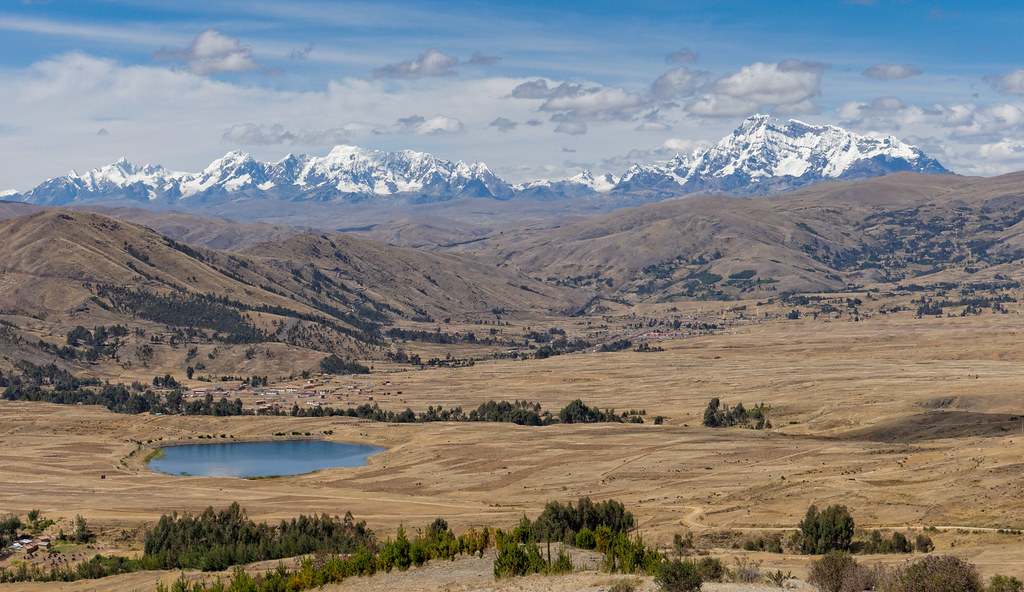
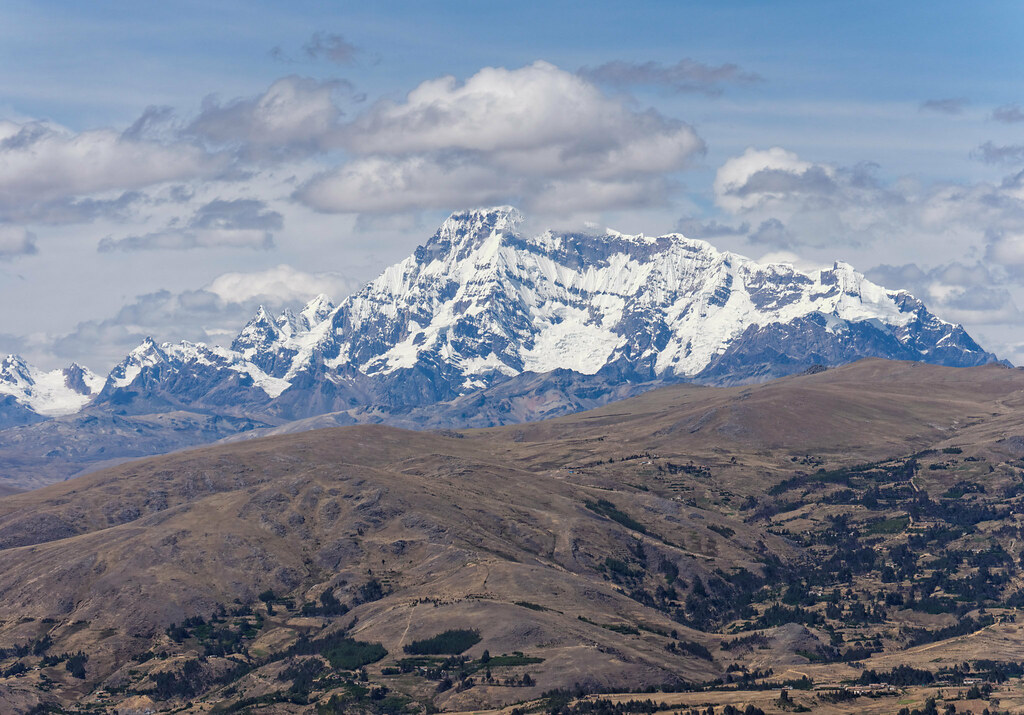
… and Mount Ausangate (20,905 feet). It seemed a little daunting to think about walking around it.
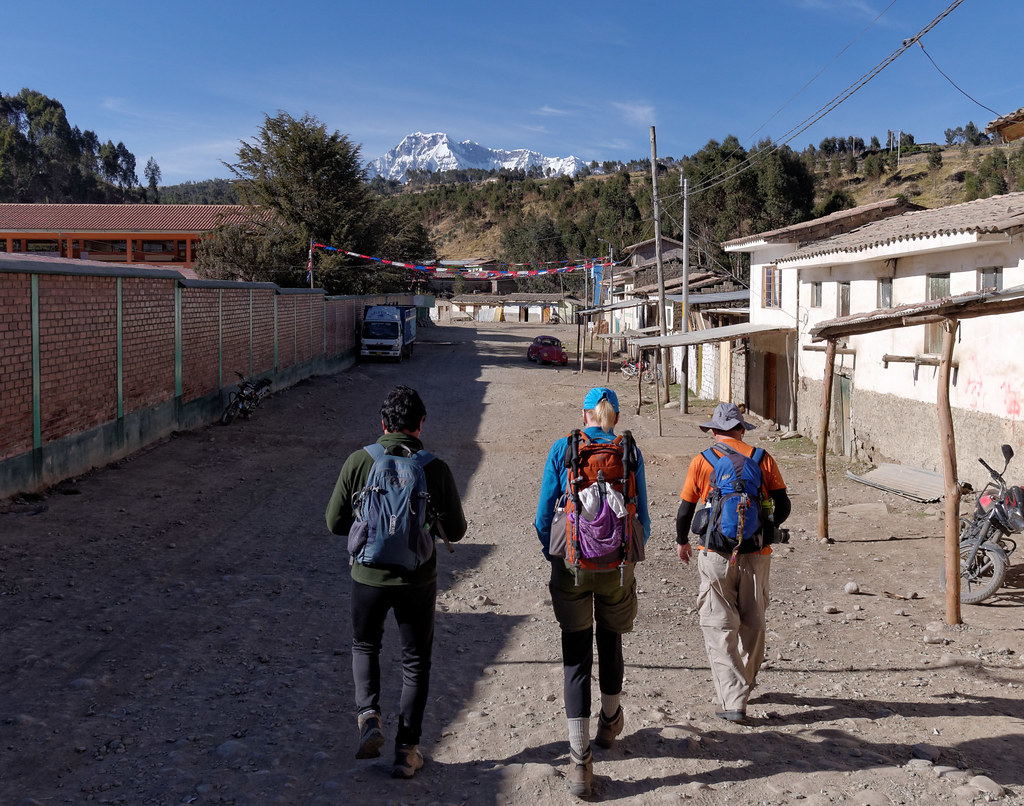
We spent the night in Tinqui and started out the next morning hiking through the town. Unlike many hikes to mountains where views are obscured by trees, we were already getting a look at our destination.
Once out of town, we entered an area of open, arid grasslands. We had surprisingly good views of Mount Ausangate because there were no trees or other peaks blocking our view.
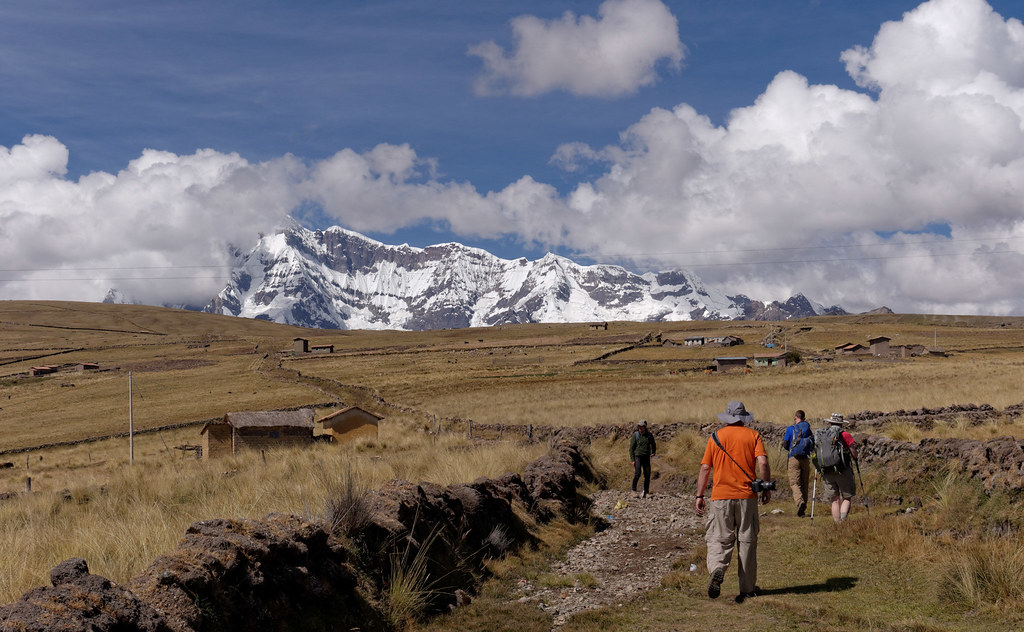
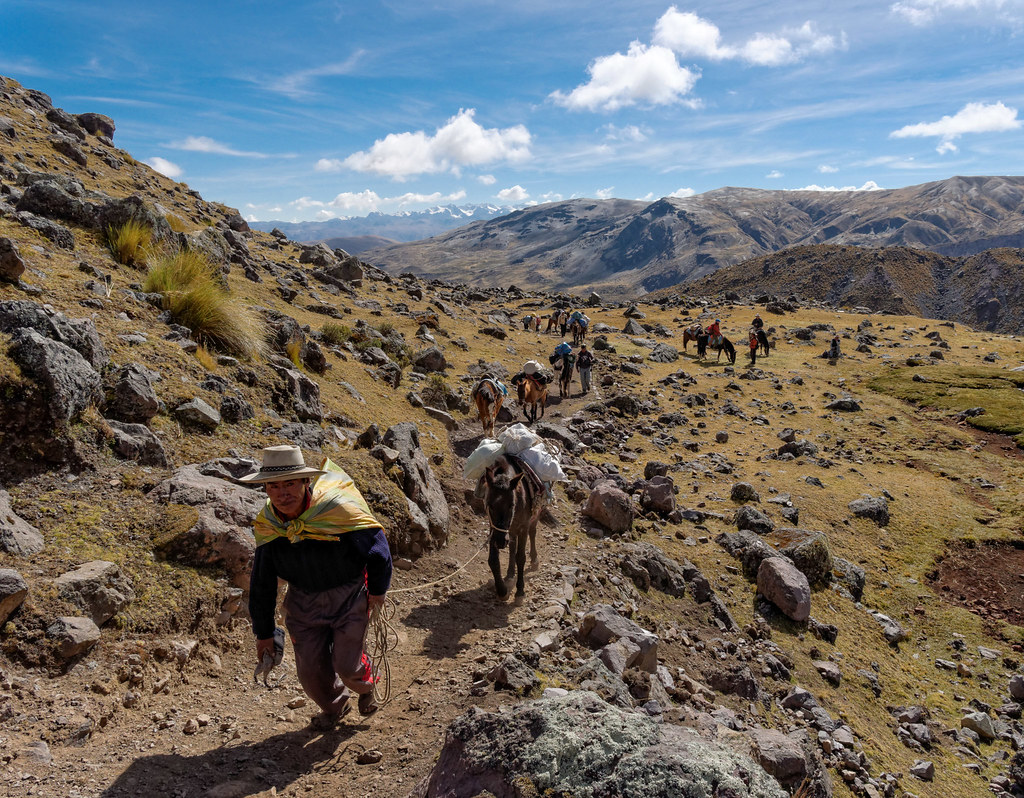
One big difference between this trek and our Inca Trail trek was that there would be fewer porters as horses carried our gear.
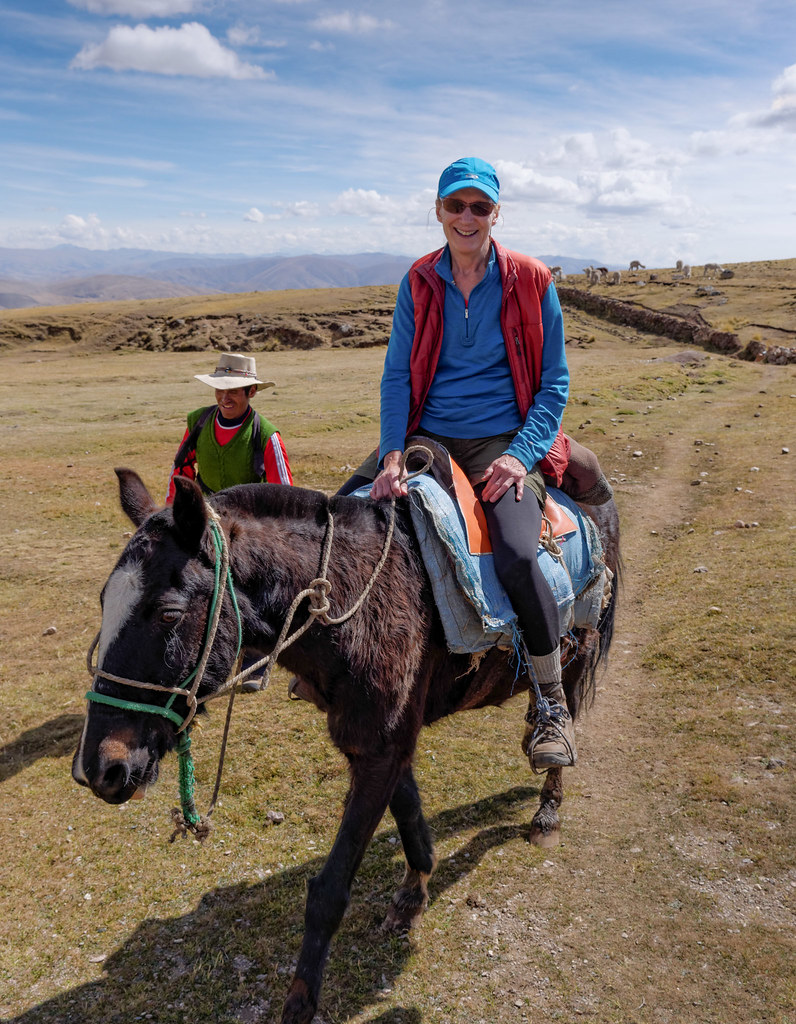
John and I both had acquired colds while hiking the Inca Trail, and I had developed a particularly bad cough, so we had some concerns about whether it was a good idea to do the Mount Ausangate Circuit. What we decided to do was hire two additional horses so either of us could ride when we needed to. I ended up riding that intelligent and surefooted little horse, Paccha, more than I thought I would, so I was very grateful to have him along.
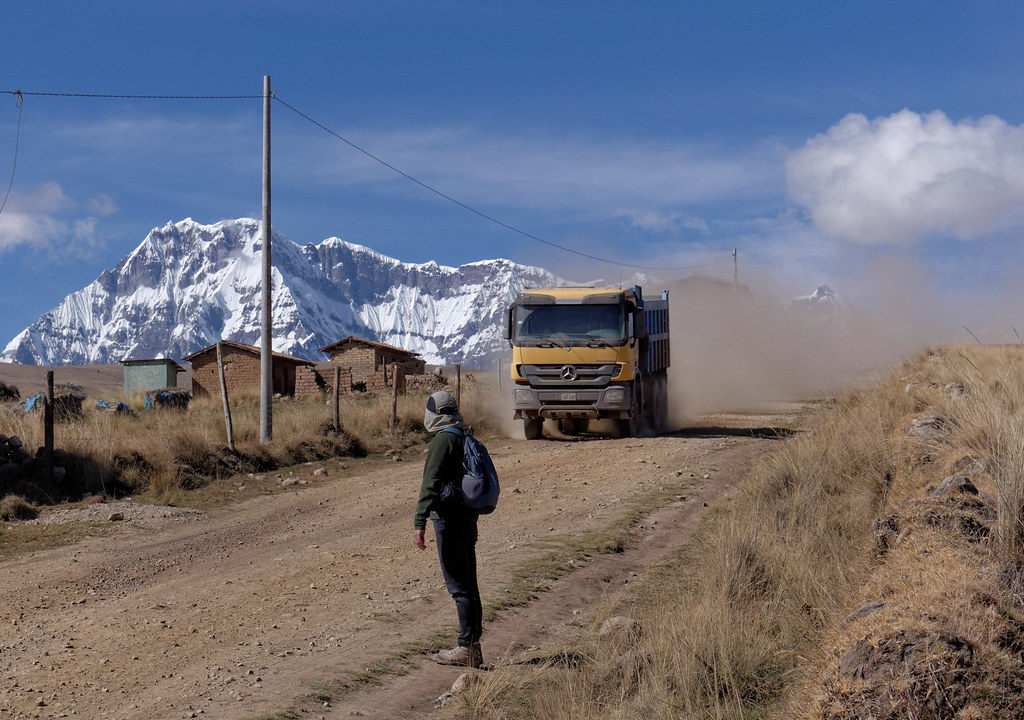
At the time, a road was being built to Upis, which made for dusty walking when trucks zoomed past us. We wondered whether future treks around Mount Ausangate might originate there.
However, driving as far as Upis would skip some beautiful scenery, so we were happy to walk.
Farms with rustic buildings and stone fences were a common sight.
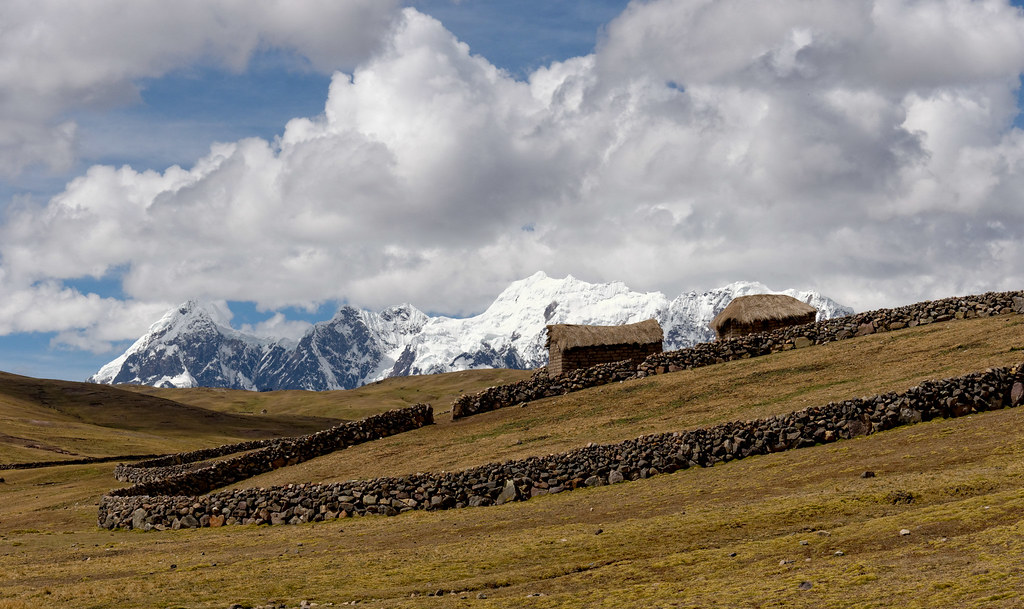
We camped that night at Upis (14,400 feet).
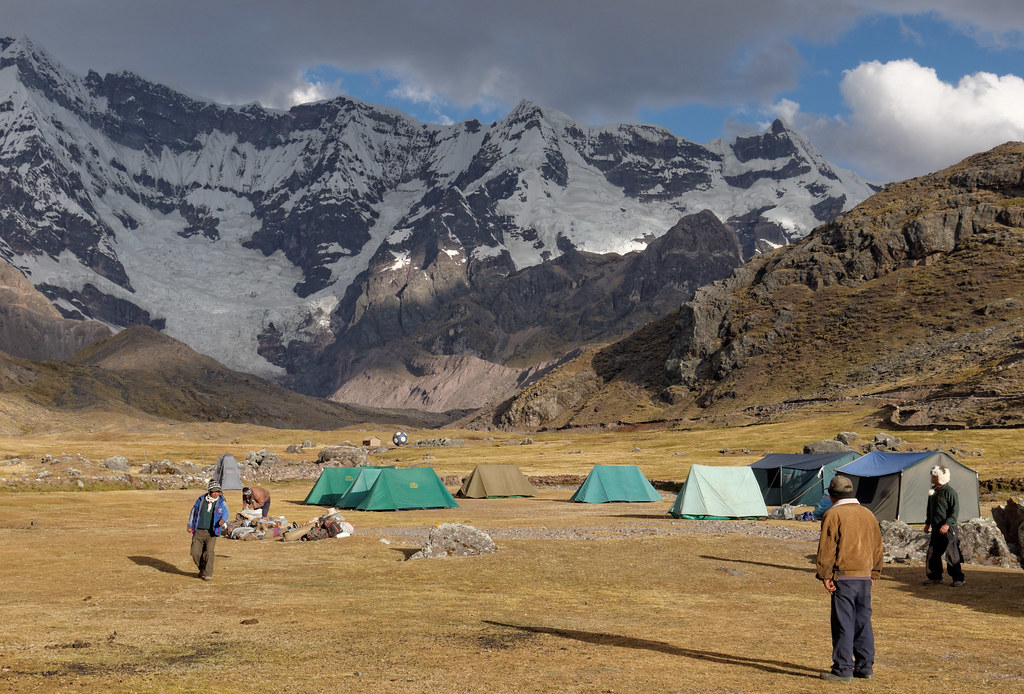
We started early the next day by crossing a valley before beginning our climb to our first pass, Arapa Pass (15,585 feet).
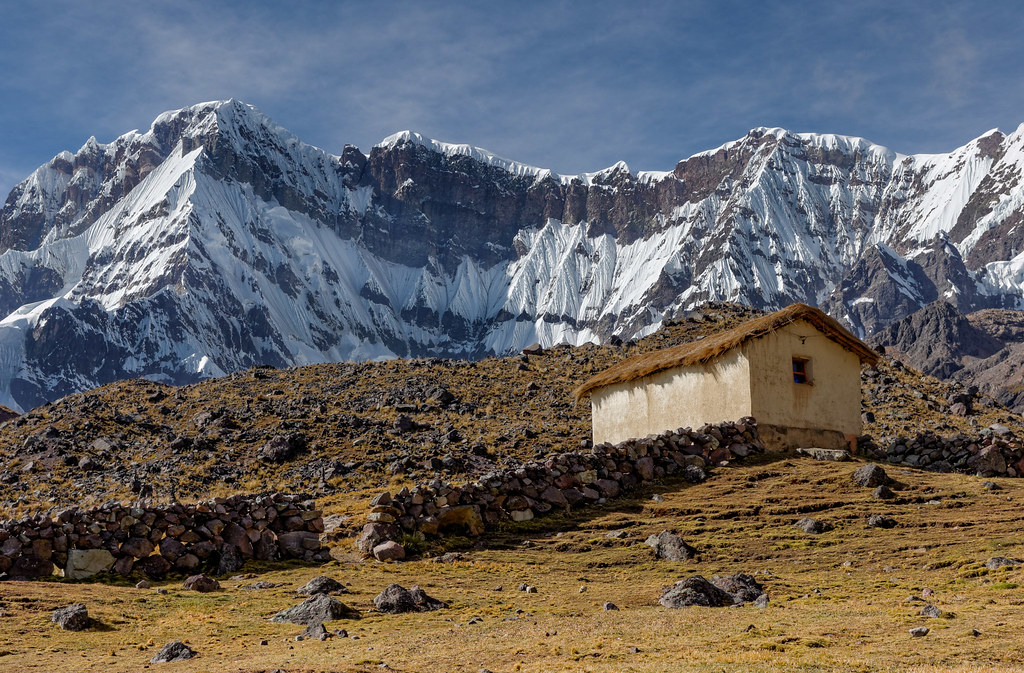
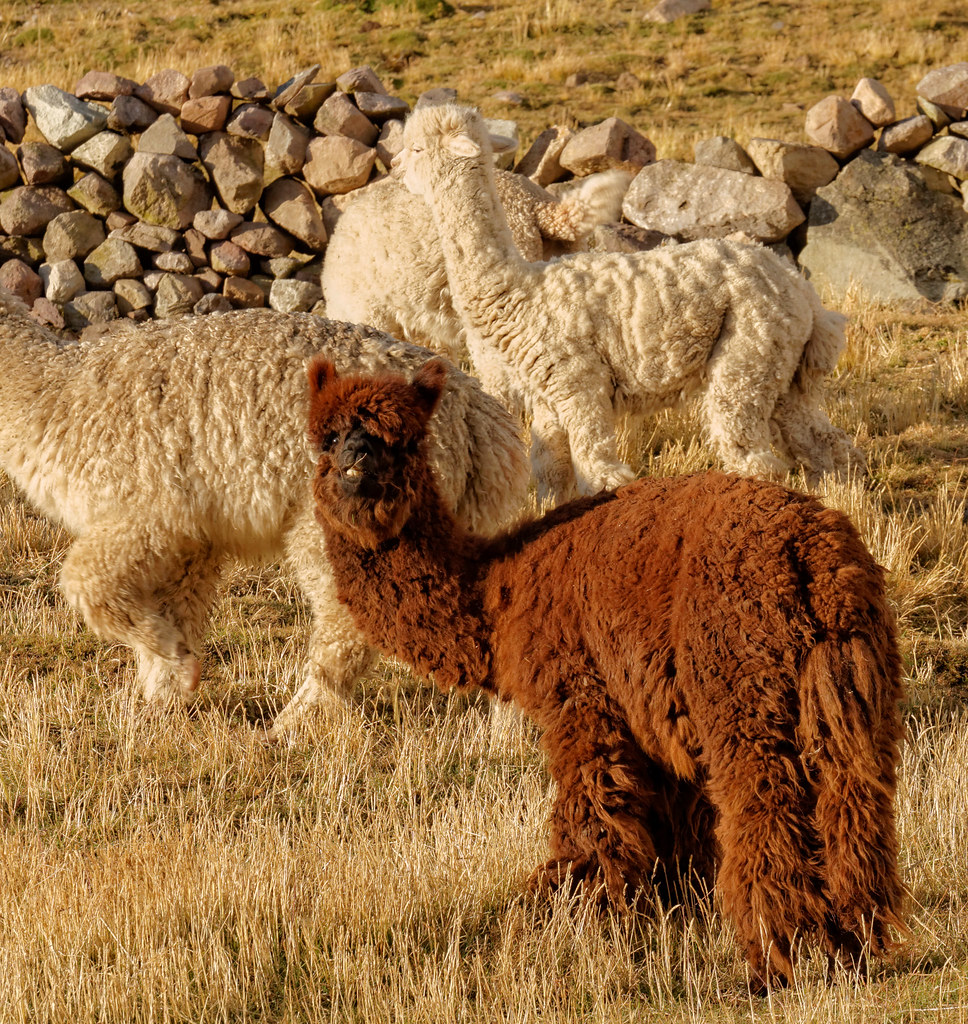
The people who live in the highlands are typically weavers and farmers primarily raising llamas and alpacas.
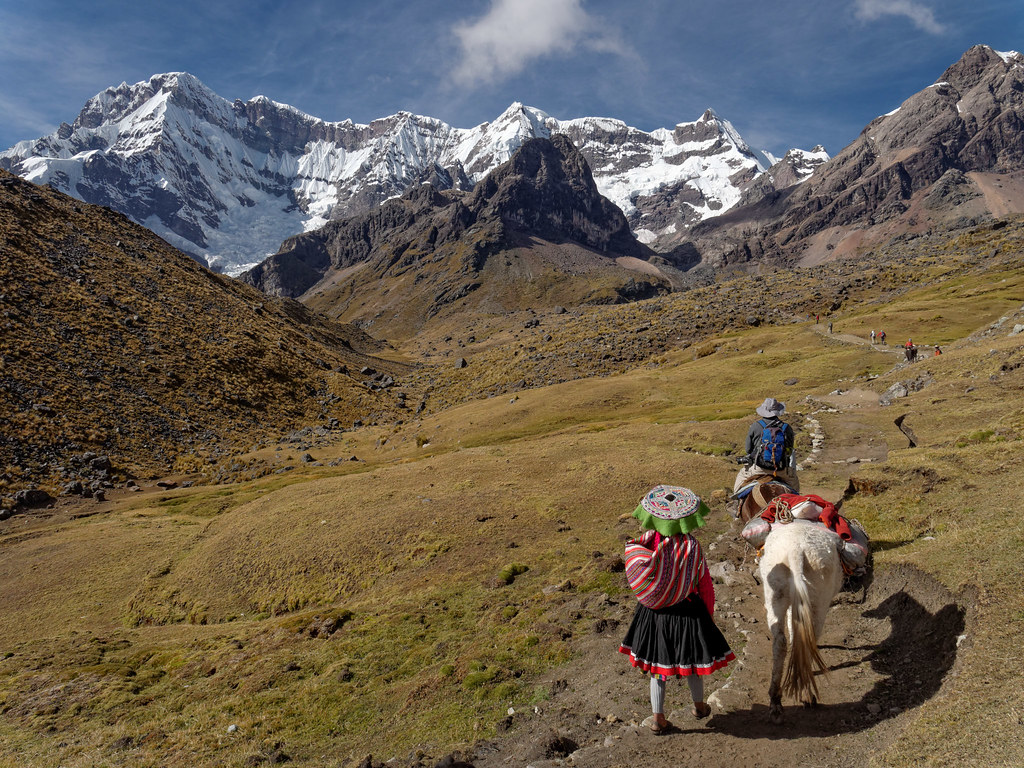
It was humbling that what was a high-altitude adventure for us was a routine activity for locals. While we trudged up mountain passes in our expensive hiking boots and high-tech clothing, we saw several women walking briskly up the trail in their light shoes and lovely traditional dresses and hats.
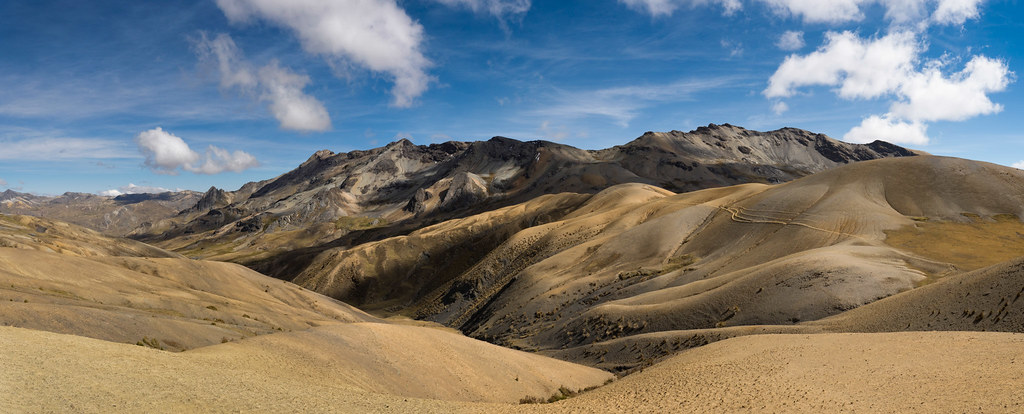
The view of an alpine desert from Arapa Pass provided a dramatic contrast …
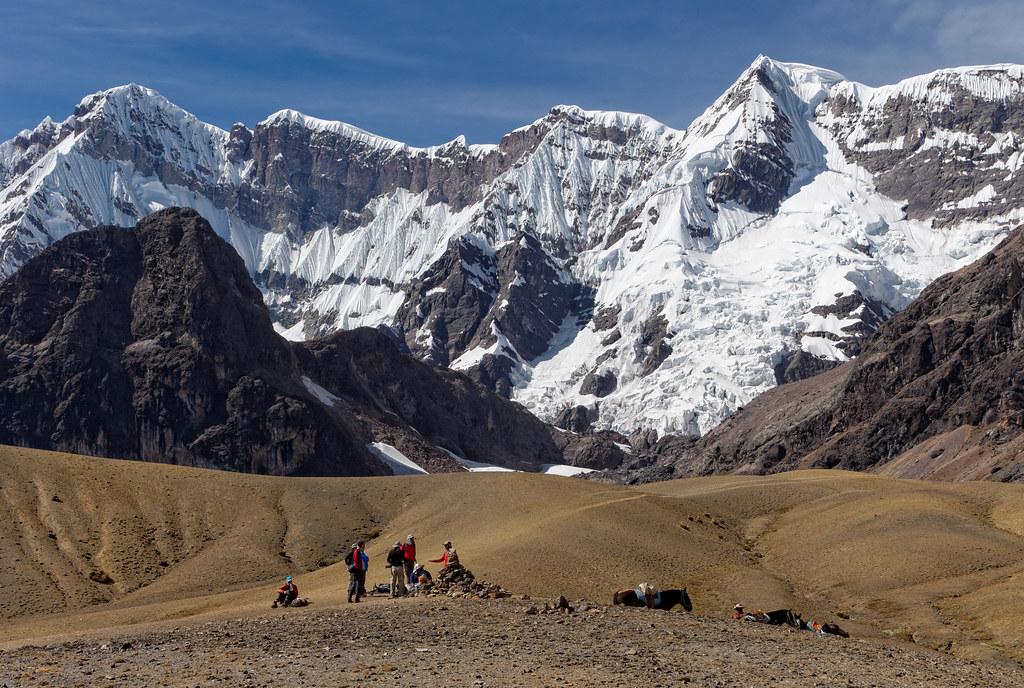
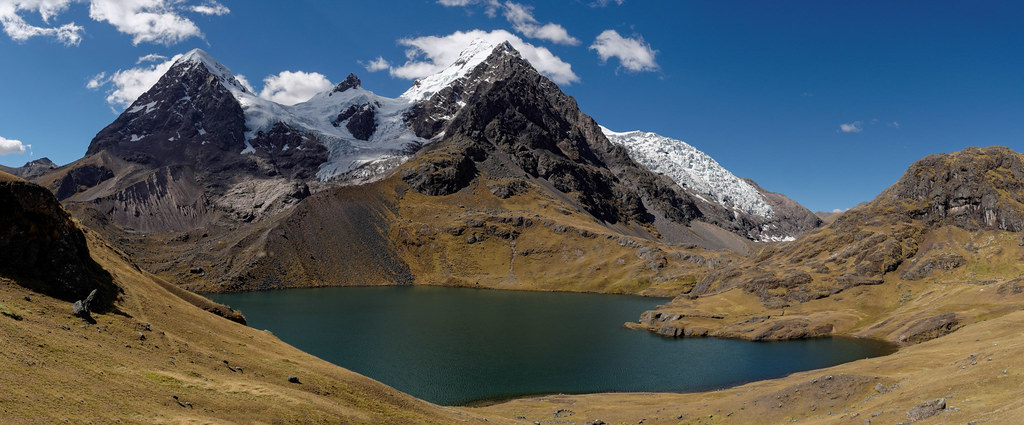
… to snow-covered peaks and glaciers.
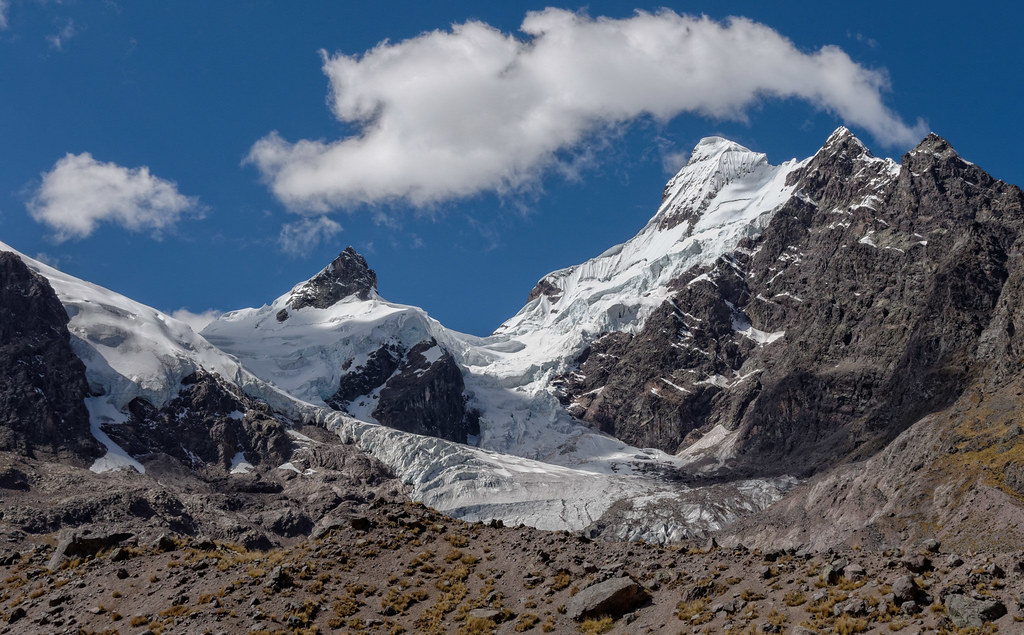
Once over Arapa Pass, we began getting views of other mountains such as Puca Punta (17,717 feet).
We continued down to the valley …
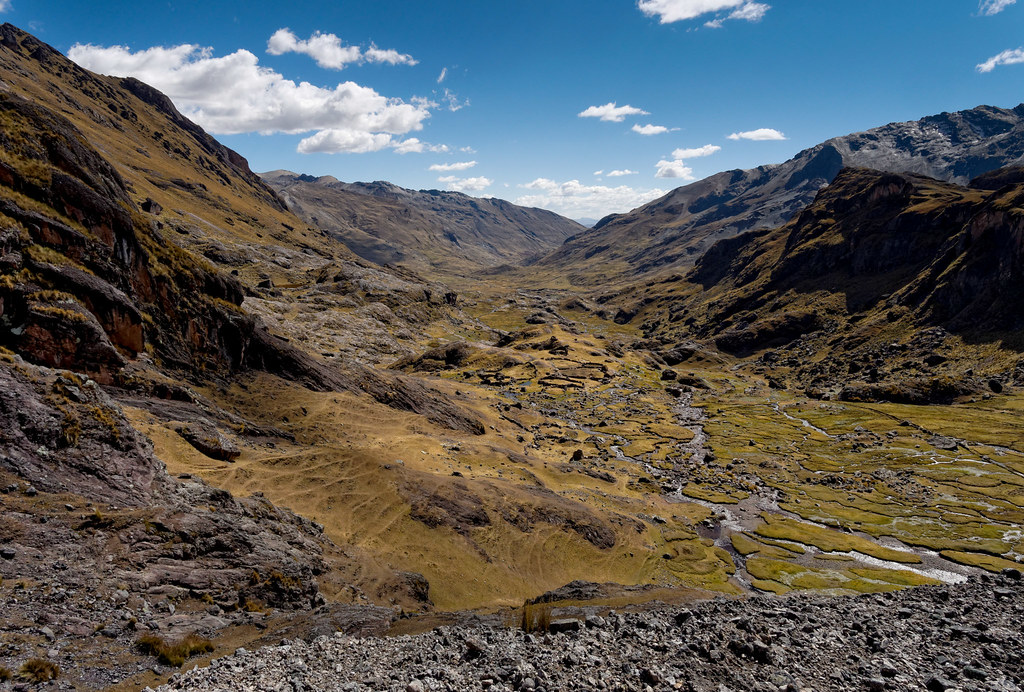
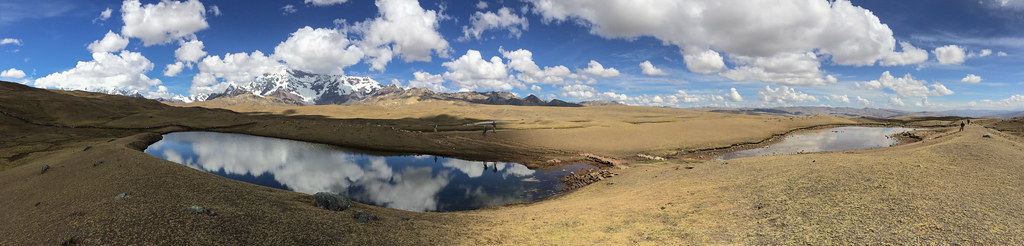
… past a lovely lake.
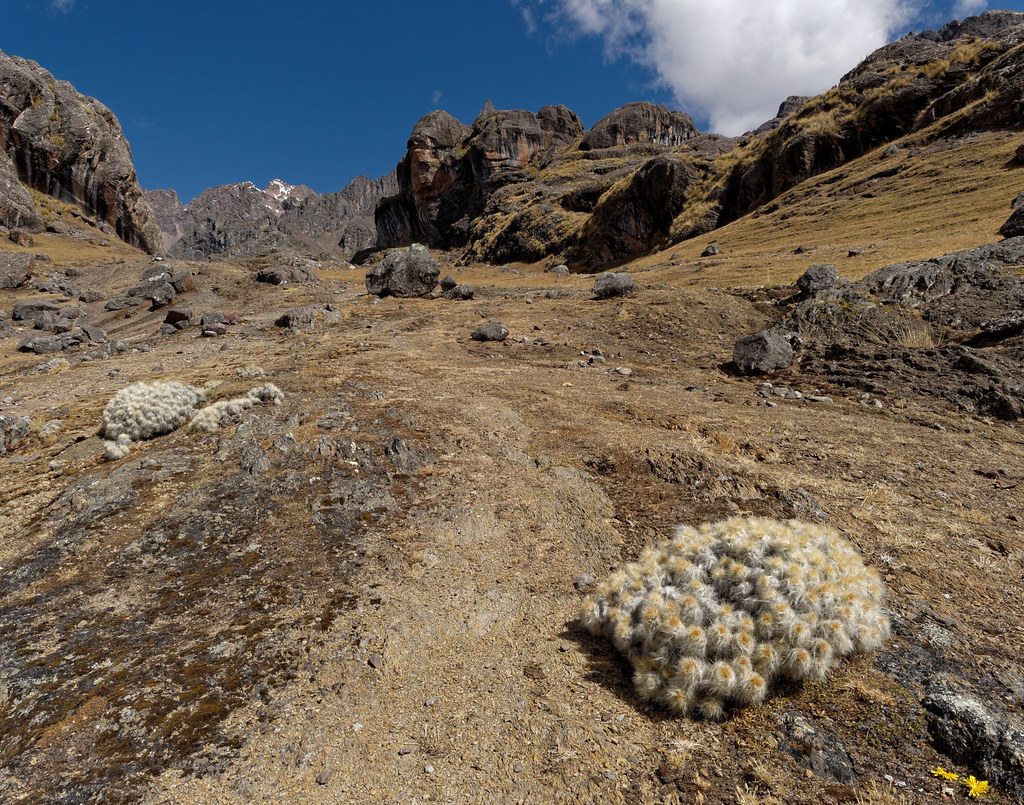
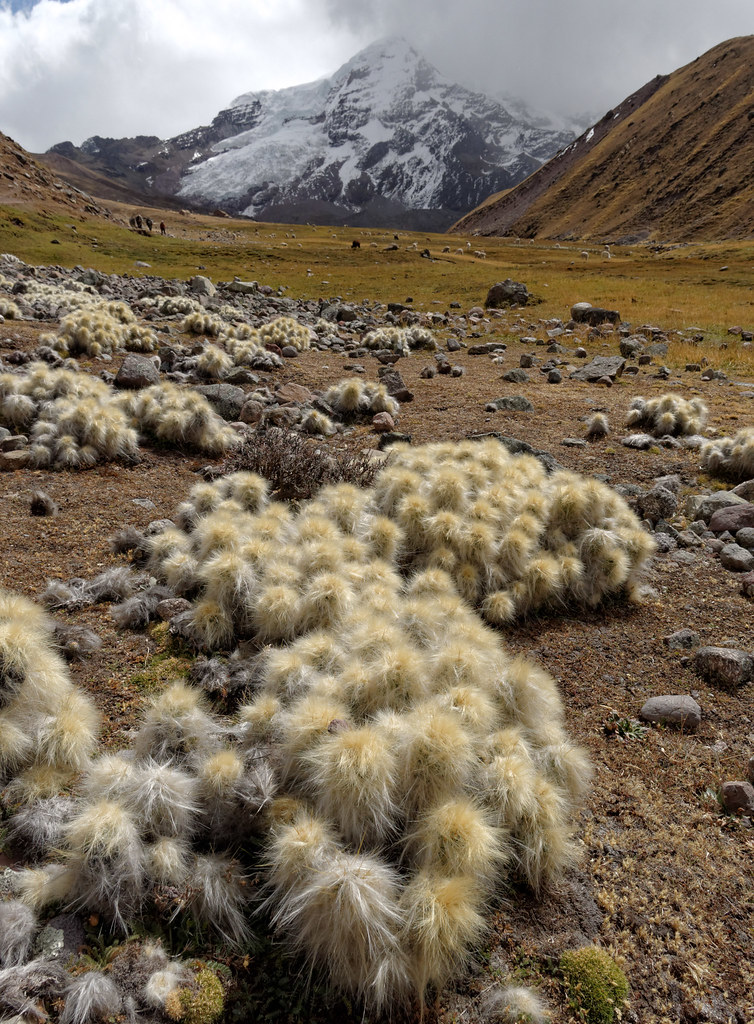
I suppose it shouldn’t have come as a surprise that a desert, even an alpine one, would have cacti, but it did seem incongruous to me at the time.
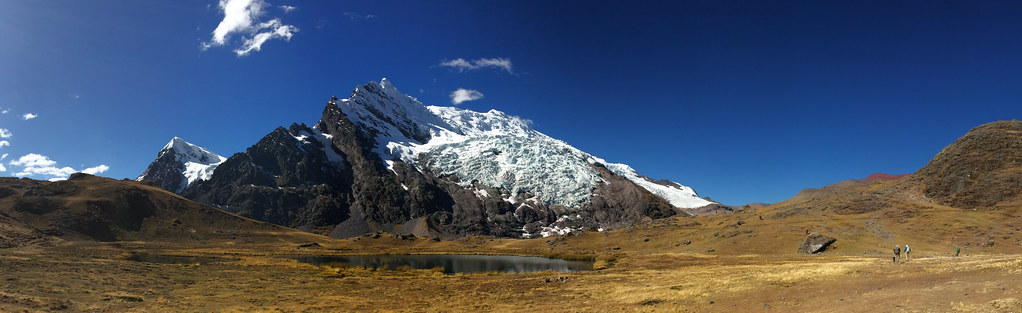
As we continued our trek, the views continued to change. Something neat about mountains is that, depending on the angle from which you view them, they can look completely different. I thought Puca Punta was quite attractive seen from this angle.
We camped that night in Jampamayo Valley. We left camp early the next morning knowing our highest pass was ahead of us, Palomani Pass (16,600 feet).
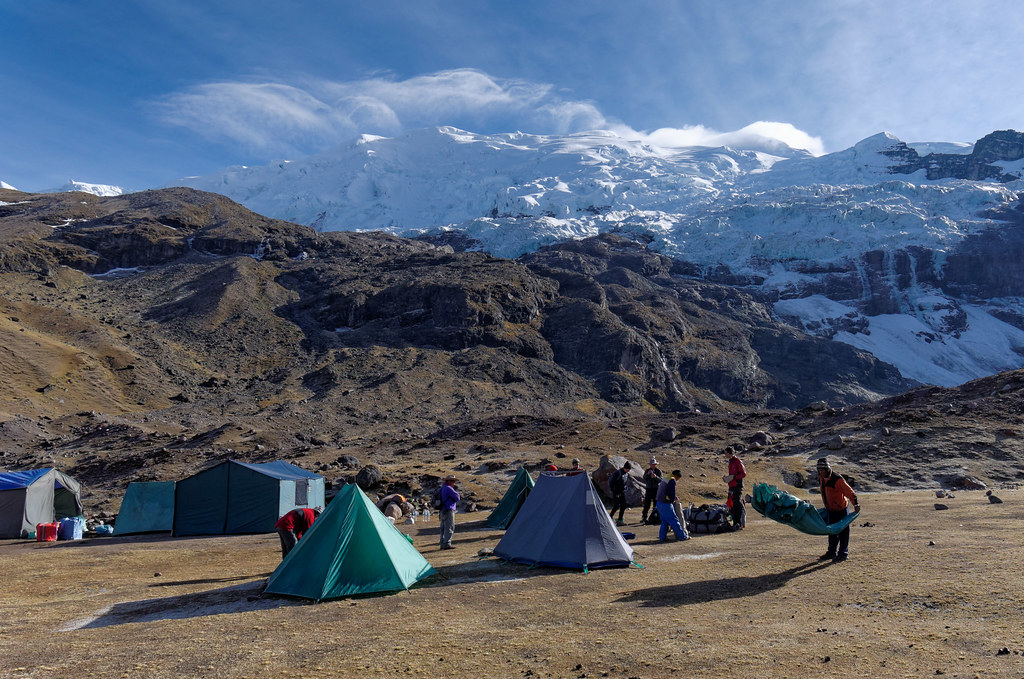
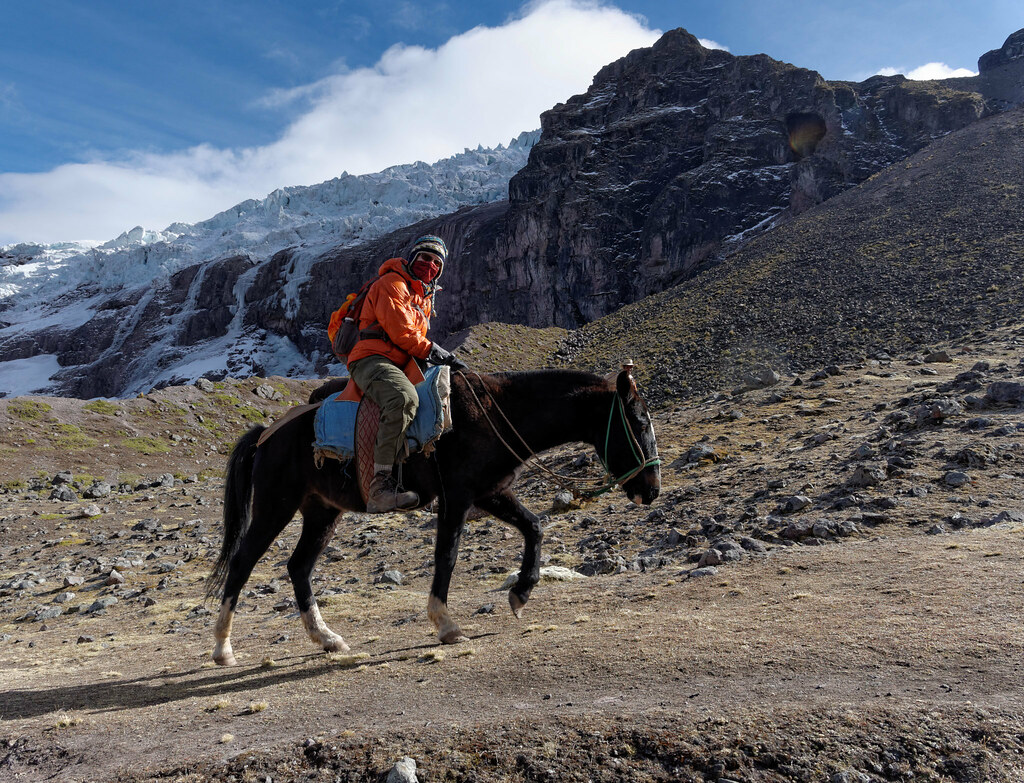
Not surprisingly, I relied on my horse to get up Palomani Pass. A disadvantage to riding rather than walking is that one doesn’t generate any body heat, so I had to wear nearly all of my clothing to stay warm. However, there was one big advantage to my riding. When I walk, I must watch where I put my feet, but I had learned early on that Paccha knew the way and was quite capable of steering himself. Therefore, I could spend all my time just looking around, enjoying the views.
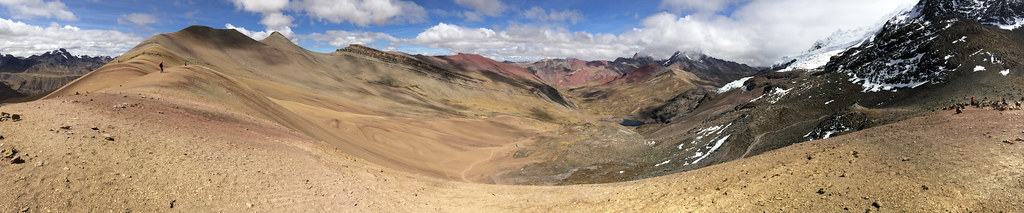
Once at the pass, we were again treated to an expansive view.
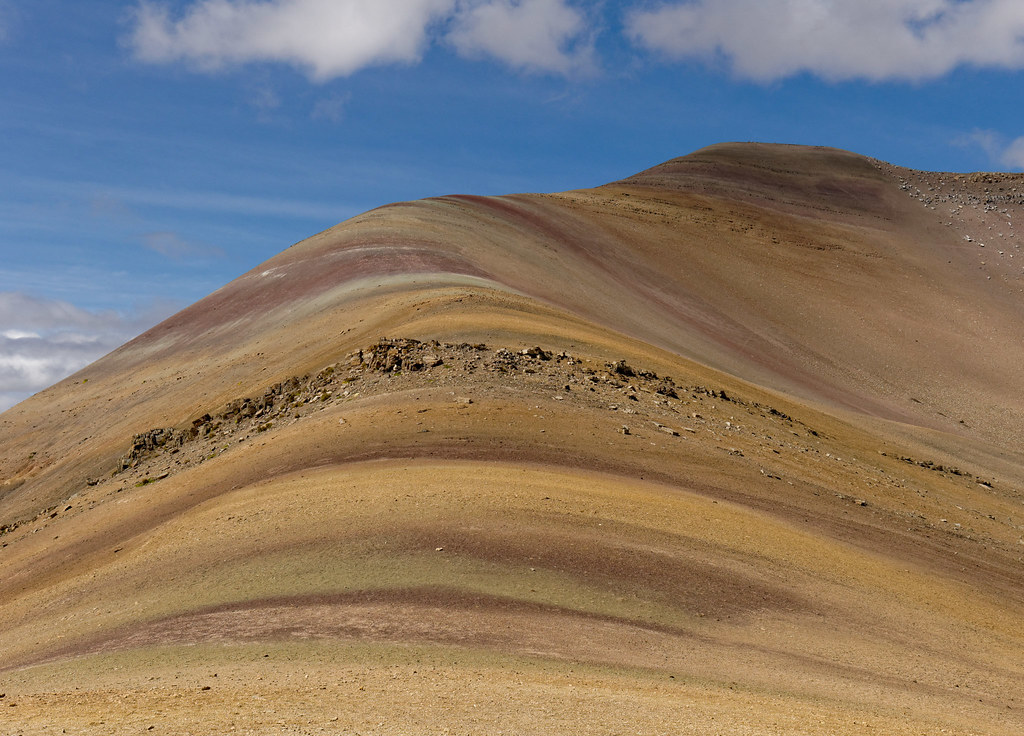
The color of the surrounding terrain was bold in places …
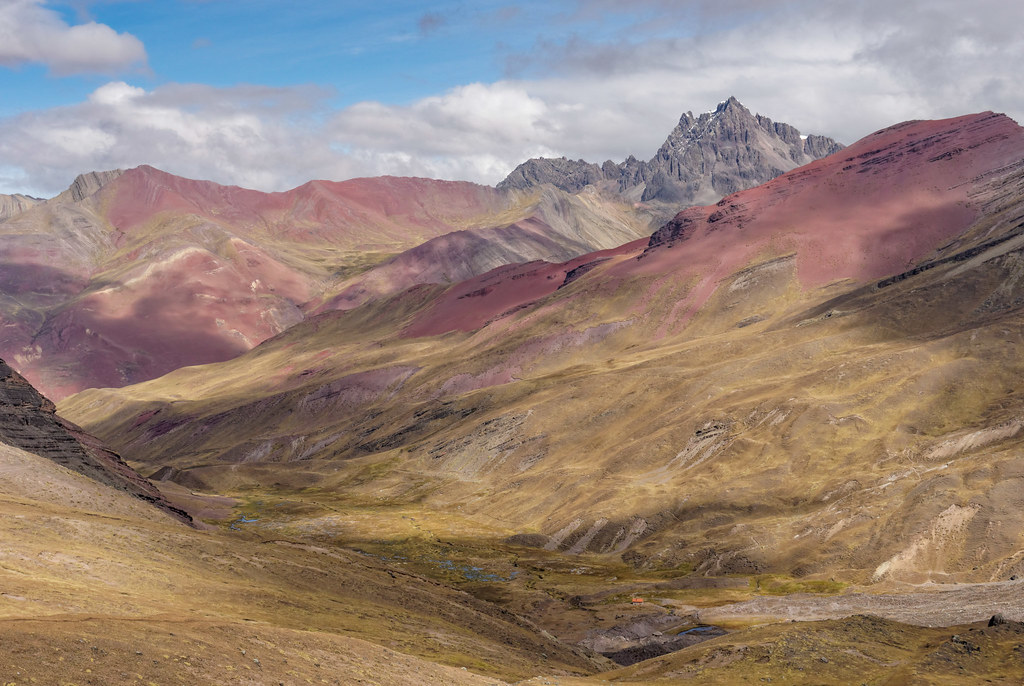
… and subtle in others. It reminded us a bit of the Southwest U.S.
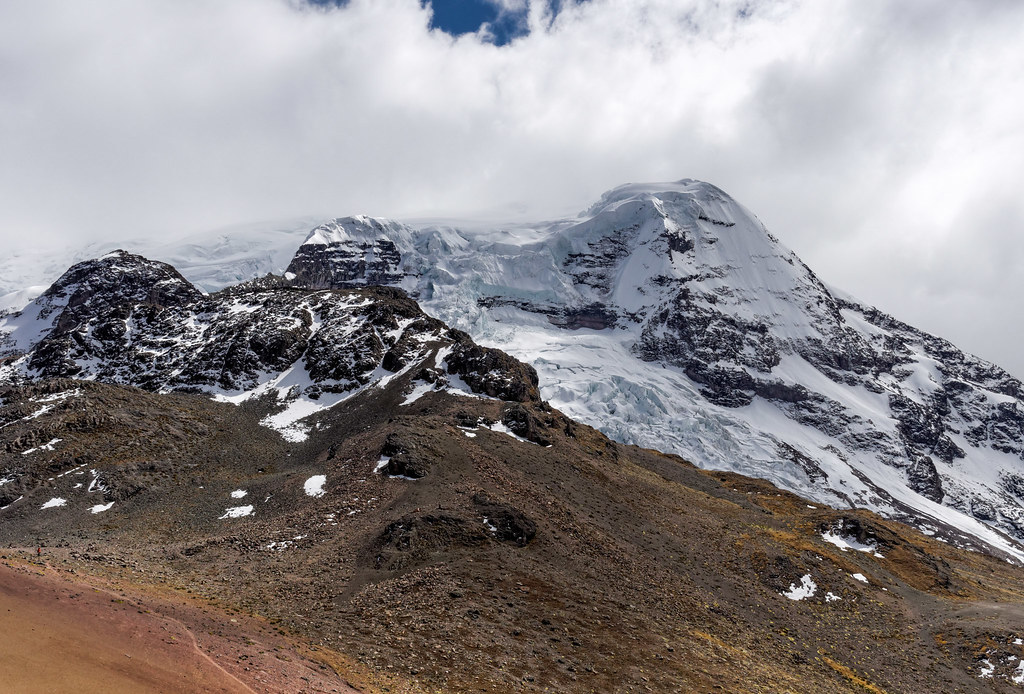
The pass also provided us with a different view of Mount Ausangate.
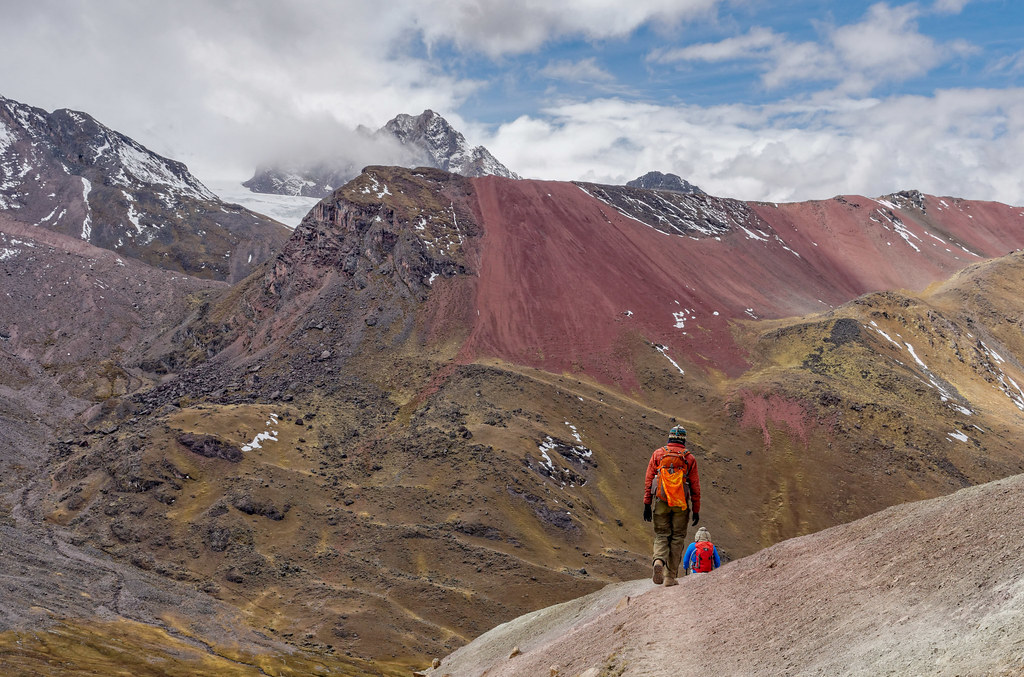
We gratefully descended from this pass toward the next valley.
Once in the valley, we saw even more alpine cacti …
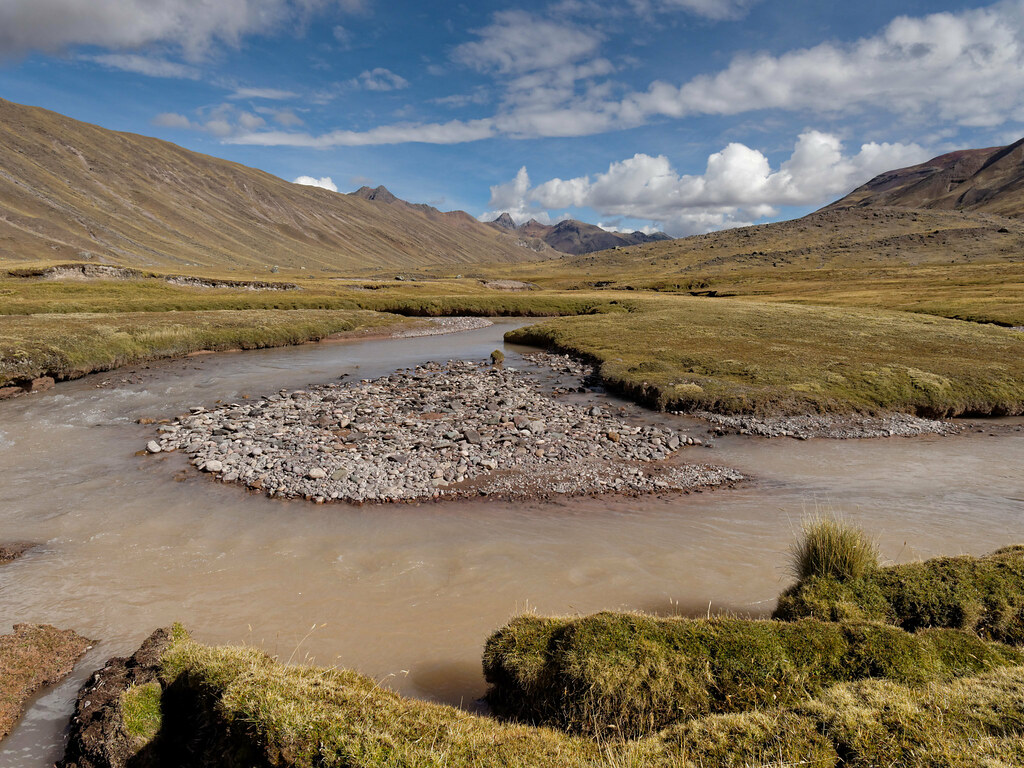
… as well as glacier-fed streams.
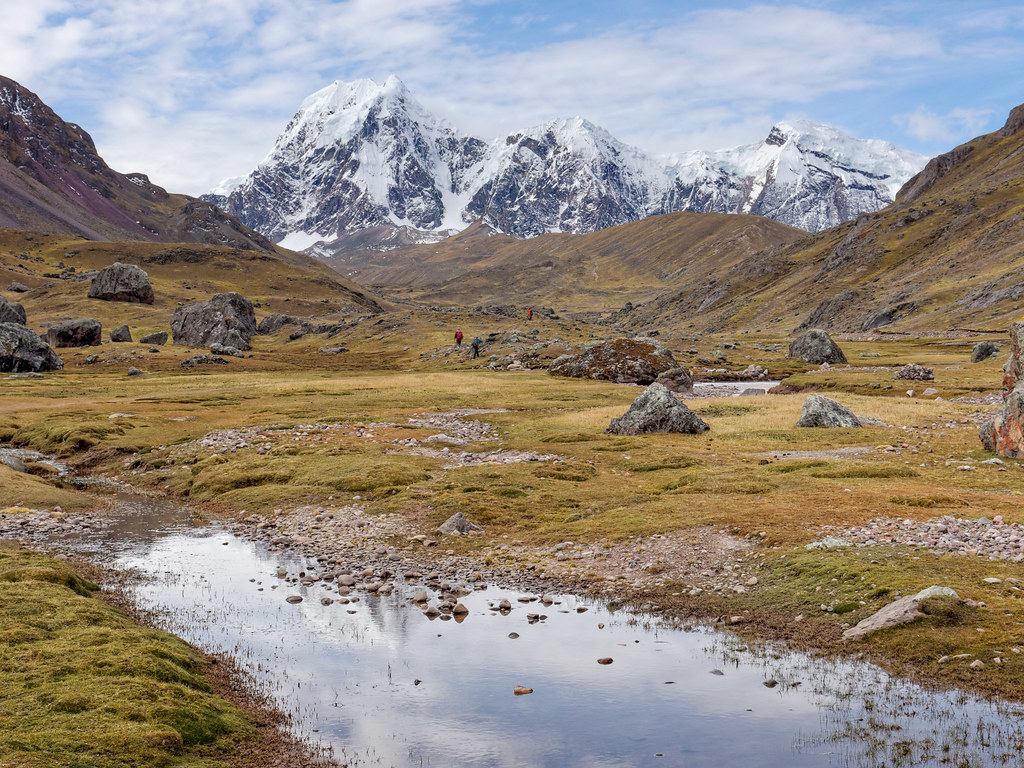
We also got views of Tres Picos (19,990 feet).
I looked forward to camping lower in Jampa Valley to breathe more easily. There are few other circumstances where 14,850 feet sounds low.
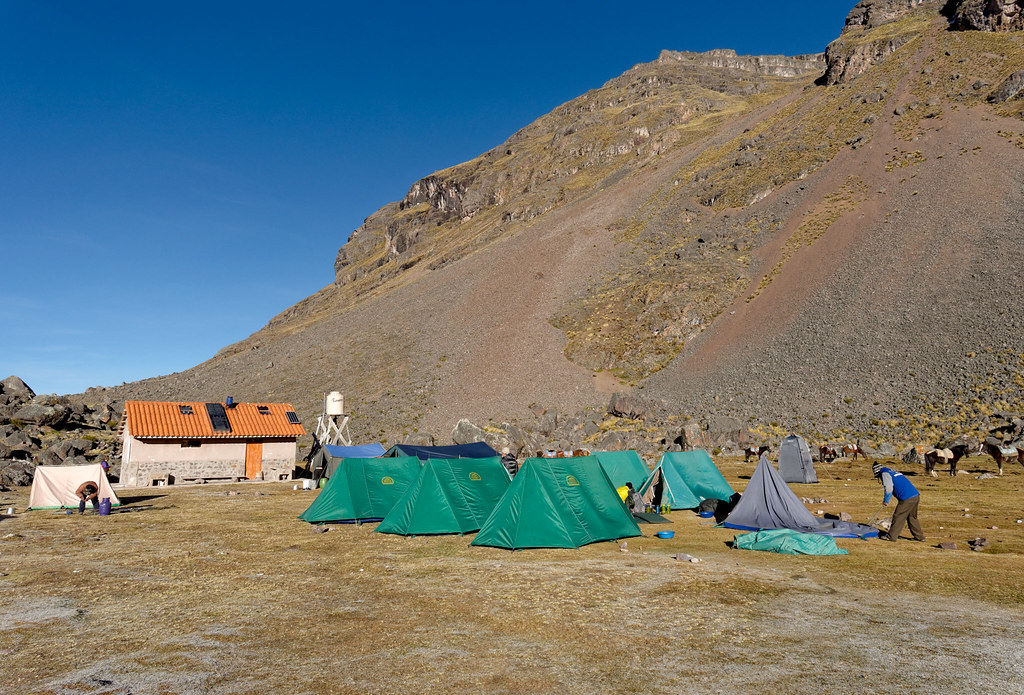
It was quite cold the next morning …
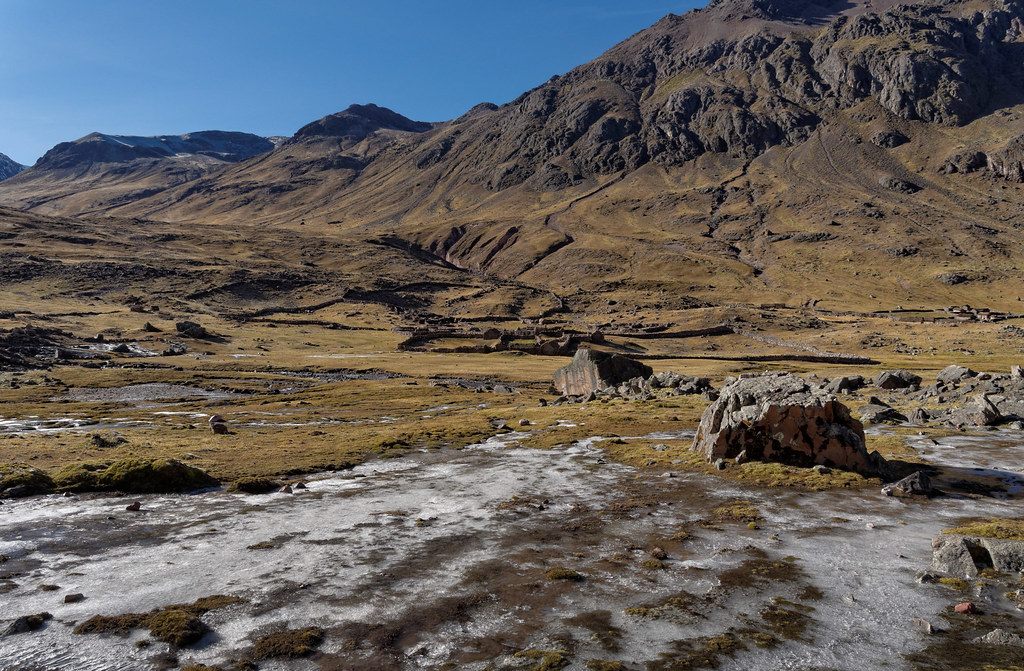
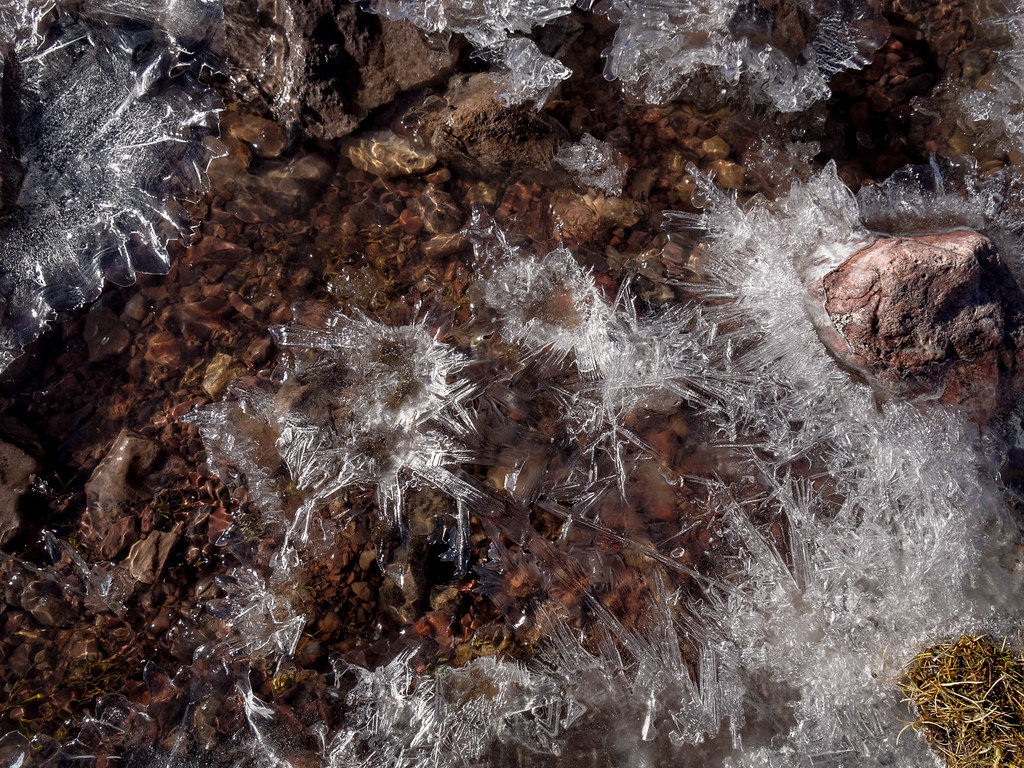
… and the nearby streams were frozen. It made me wonder where our cooks had gotten our water that morning, but, as usual, there was plenty available for our limitless cups of coca leaf tea and our wash basins, as well as our water bottles.
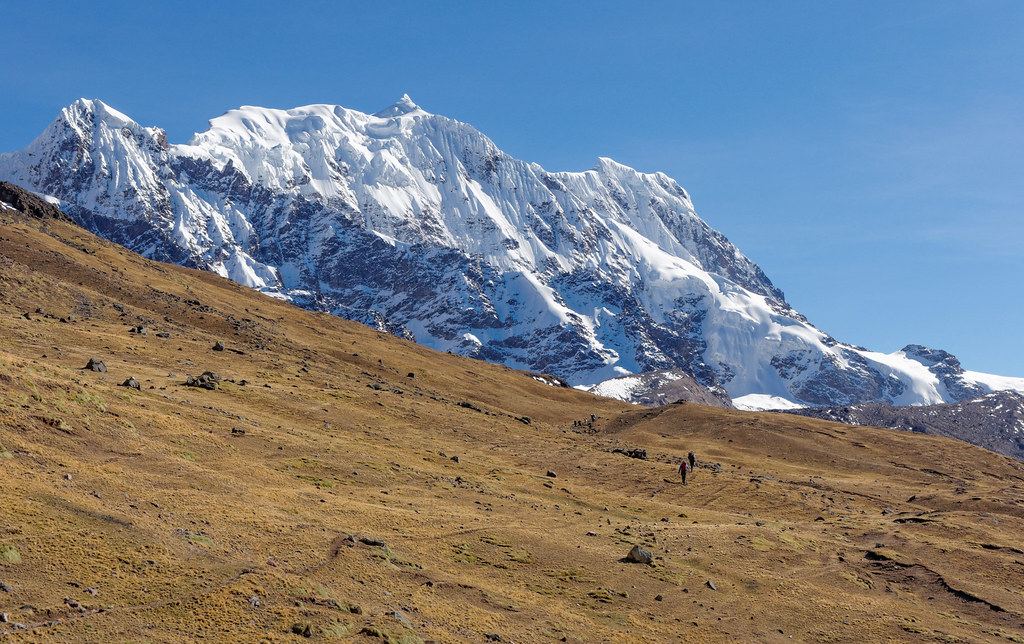
Before long, we began getting views of Colque-Cruz (19,554 feet).
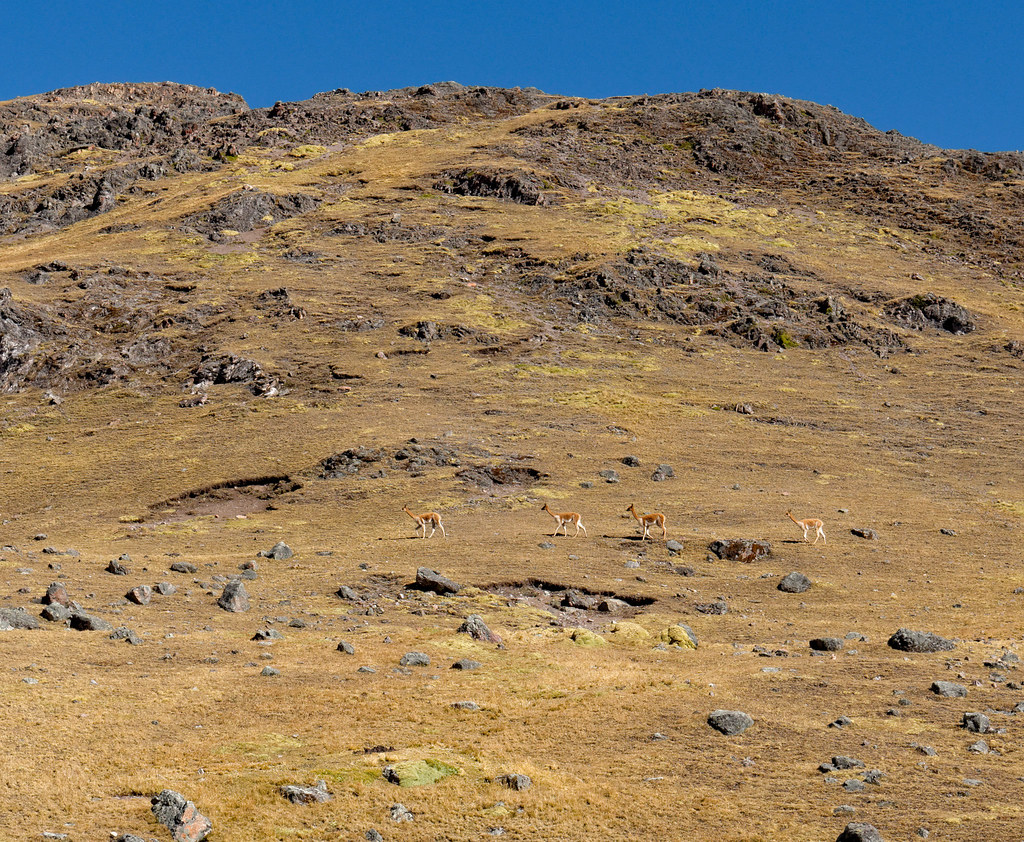
They were far away, but it was fun to see some wild vicunas.
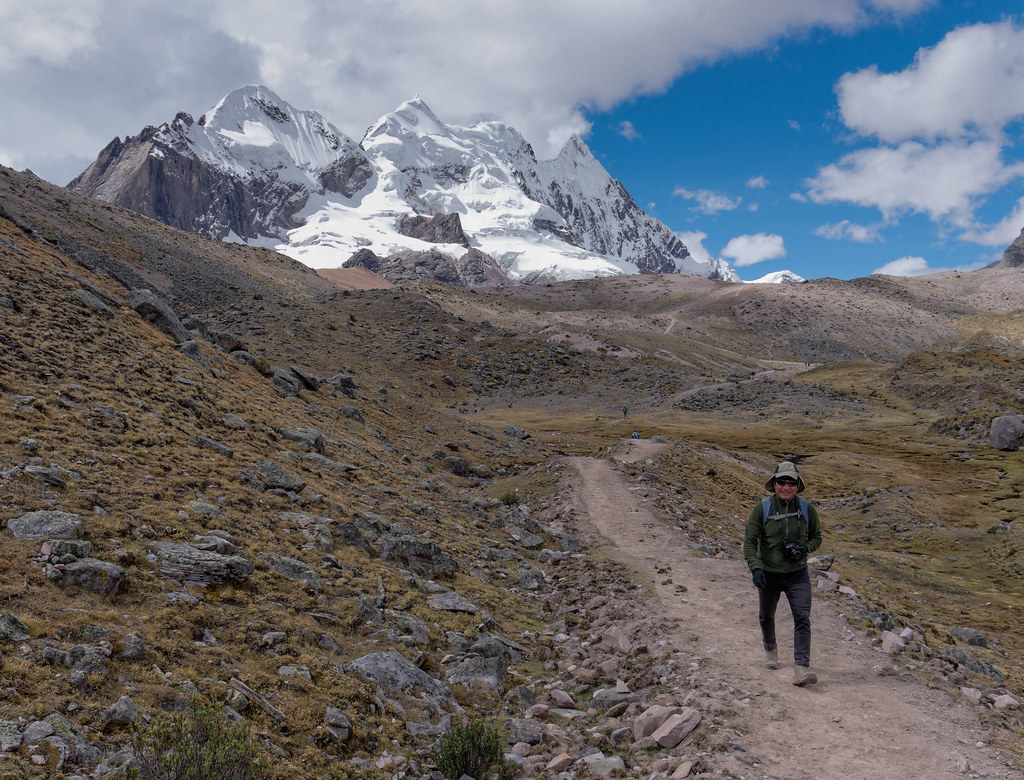
We continued up to Campa Pass at 16,400 feet where the views of Colque-Cruz (19,554 feet) and Tres Picos (19,990 feet) became quite expansive.

As we descended from the pass, we began to see occasional bits of color …
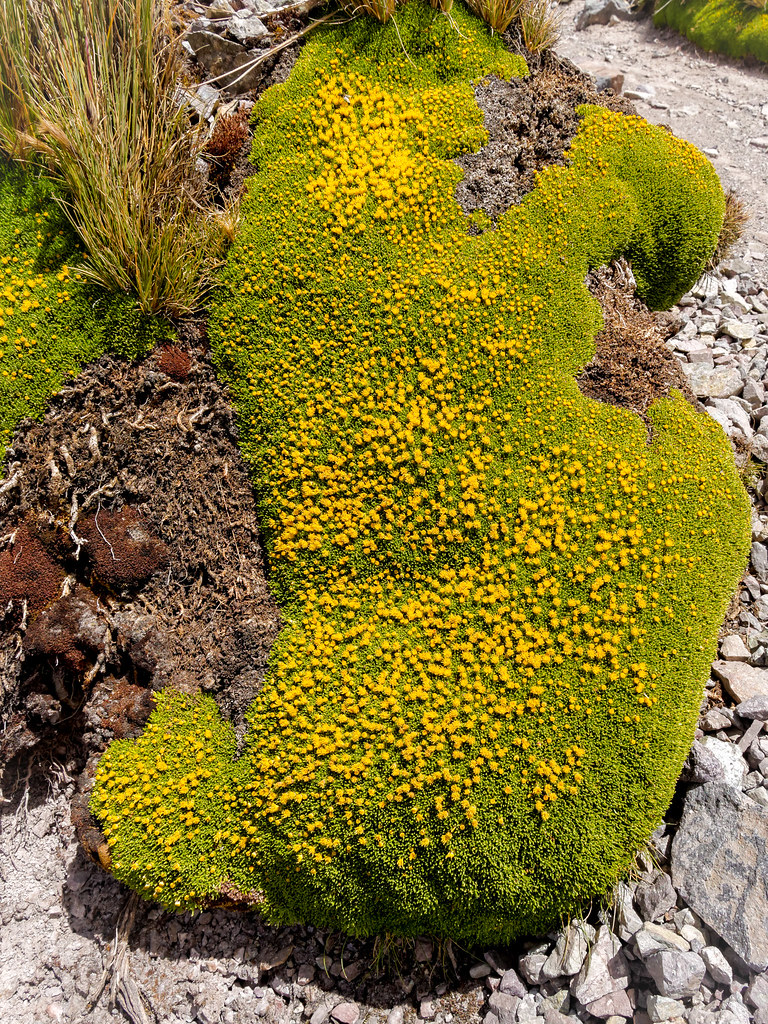
… as the trail led us away from the mountains …
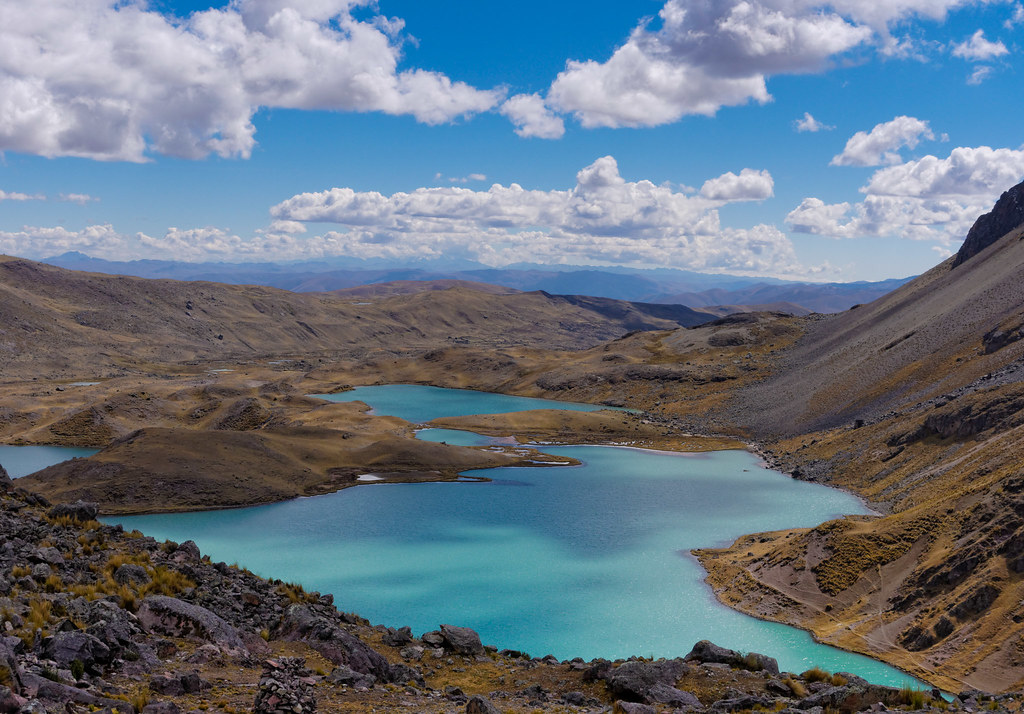
… and past beautiful blue lakes.
We camped that night in Pacchanta (13,050 feet). We were served a traditional pachamanca dinner prepared using a traditional Quechua method. Meat (alpaca and guinea pig) and vegetables were cooked in an underground pit with heated stones.
We had resisted eating any guinea pig during the time we had spent thus far in Peru. We just had too many fond memories of the pet piggies our boys had when they were young. However, we felt that in this particular situation it would be disrespectful to not even try it, so we did (don’t tell our boys). It tasted quite good, like chicken dark meat, but we didn’t feel compelled to eat more. We filled up on alpaca instead.
Our last day of the trek took us through several small villages. We headed back to Tinqui and boarded a bus for the return trip to Cusco. The next morning, we said our bittersweet goodbyes to the six other people in our trekking group. Between our Inca Trail trek and this one, we had been with them for over two weeks at that point, and I can’t imagine a better group of individuals to have shared this adventure.
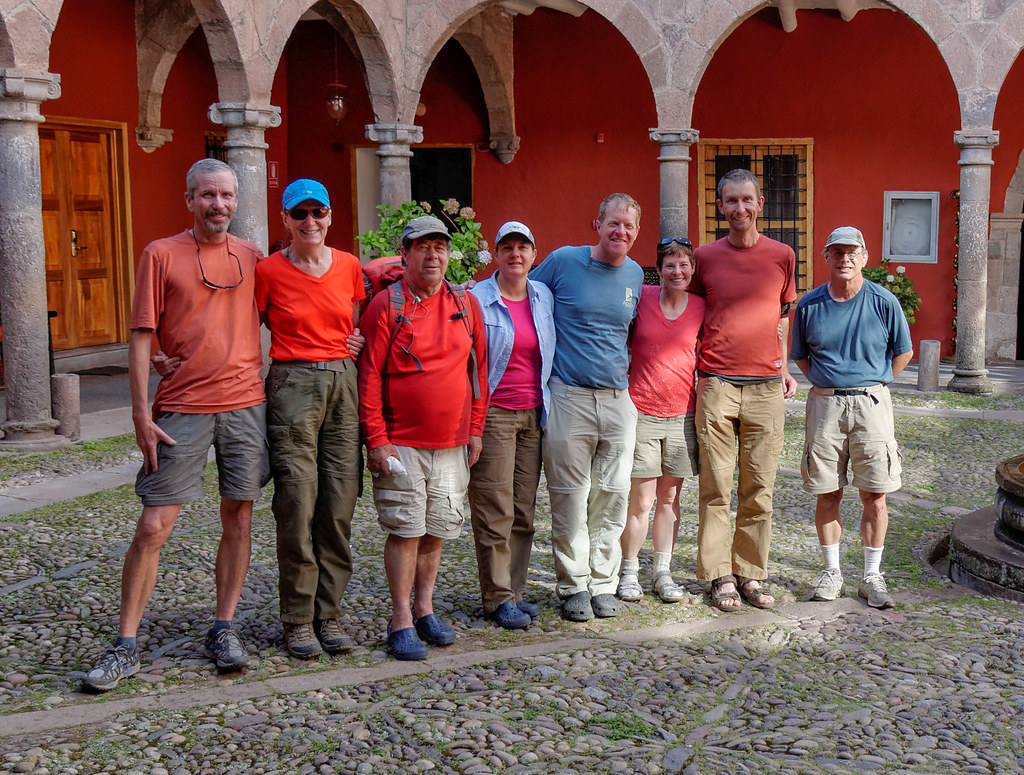
We thoroughly enjoyed our time in Peru despite our illnesses. It was a great privilege to have experienced not one, but two trips of a lifetime.
All photos from this trip are on Flickr.


Leave a Reply