In December of 2003, John celebrated his 50th birthday with a trip to Patagonia. He toured with Andes Adventures, and the trip included four trail runs. This is his account of one of them.
I’ve always loved trail running. Covering great distances on foot is something really special. Seeing that far point on the horizon and thinking, I’ll be there in just a few hours. Then looking back and thinking, Wow, I started way back there not too long ago. I’ve run the Wonderland Trail twice, around Mount St. Helens and large stretches of the Pacific Crest Trail. I don’t go fast. I take lots of pictures. I take the time to talk to anyone I meet on the trail. I’ve been told, “You don’t seem to be in much of a hurry.” That’s true. The running is just a faster mode of transportation that allows me to get deeper into the wilds in a day.
Devy Reinstein offers unique South American trail running and trekking trips with his company Andes Adventures. Devy does a terrific job. He basically does all of the worrying for you. You just have to show up. You run. You eat. You sleep. You socialize. You tour. It’s wonderful. This trip is an incredible value, and you efficiently hit four of the most desirable backcountry areas in Chile and Argentina: Torres del Paine, Fitz Roy, Cerro Torre, Tierra del Fuego. Since this was my first international trip, Devy’s style of travel made it a special joy.
On this trip, the trekkers and runners travel together except for the Torres del Paine circuit. This helps to balance the travel numbers for transport, lodging and food. The runners run and the trekkers trek. In fact, even on the Torres del Paine circuit, a fast, strong backcountry walker can cover the distances (up to 20 miles a day) just fine. Daypack weights are light because of the refugios at Torres del Paine. Altitude is not a problem on this trip at all, though weather and wind can be significant issues.
I traveled in December of 2003. December tends to be less windy, but the weather is not usually as clear as January or February. This trip has tourist as well as running aspects. My intent here is to just give a flavor for the trip.
Torres del Paine is a small but spectacular mountain range. Small enough to run around, but spectacular enough to be on most folks’ bucket list. Travelers talk about the “W” and the circuit. The “W” includes the Ascencio Valley, French Valley and the Grey Glacier. The circuit goes around the whole range. At running speed, the circuit becomes a comfortable four-day trip.
Day trip to Las Torres, Parque Nacional Torres del Paine, Chile
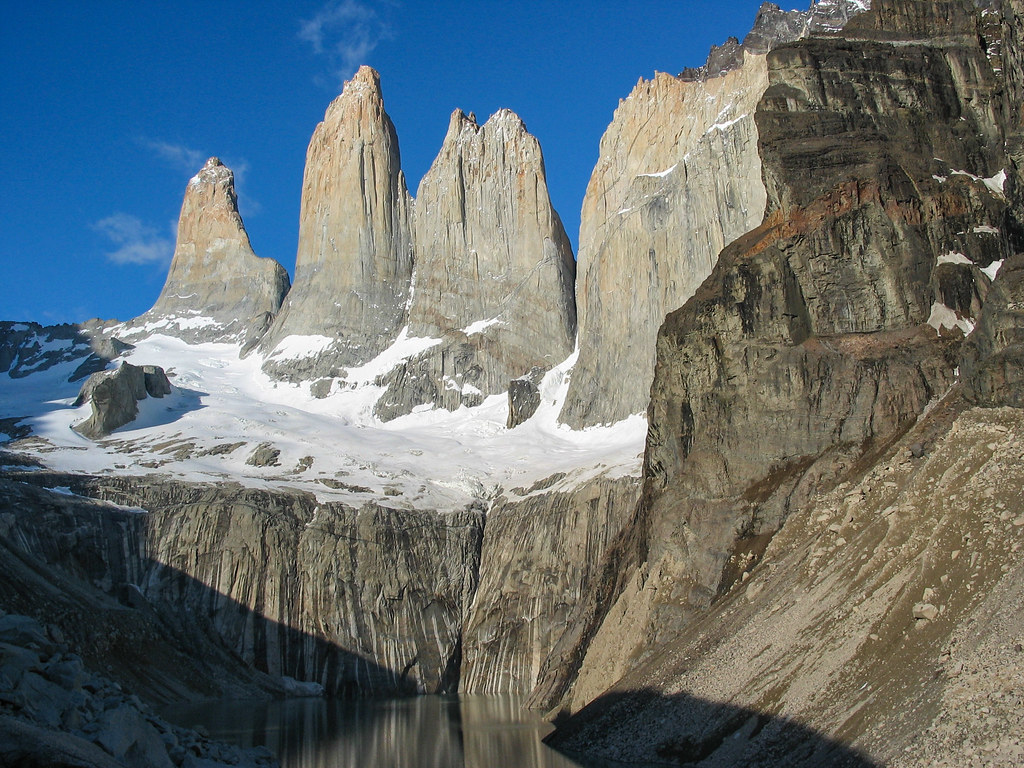
This day trip starts from Refugio Las Torres.
I got up at 3:00 to ensure that I made it to Las Torres by sunrise. Devy had a special breakfast made up for me the night before. I was the only person at Las Torres at sunrise under perfectly clear skies.
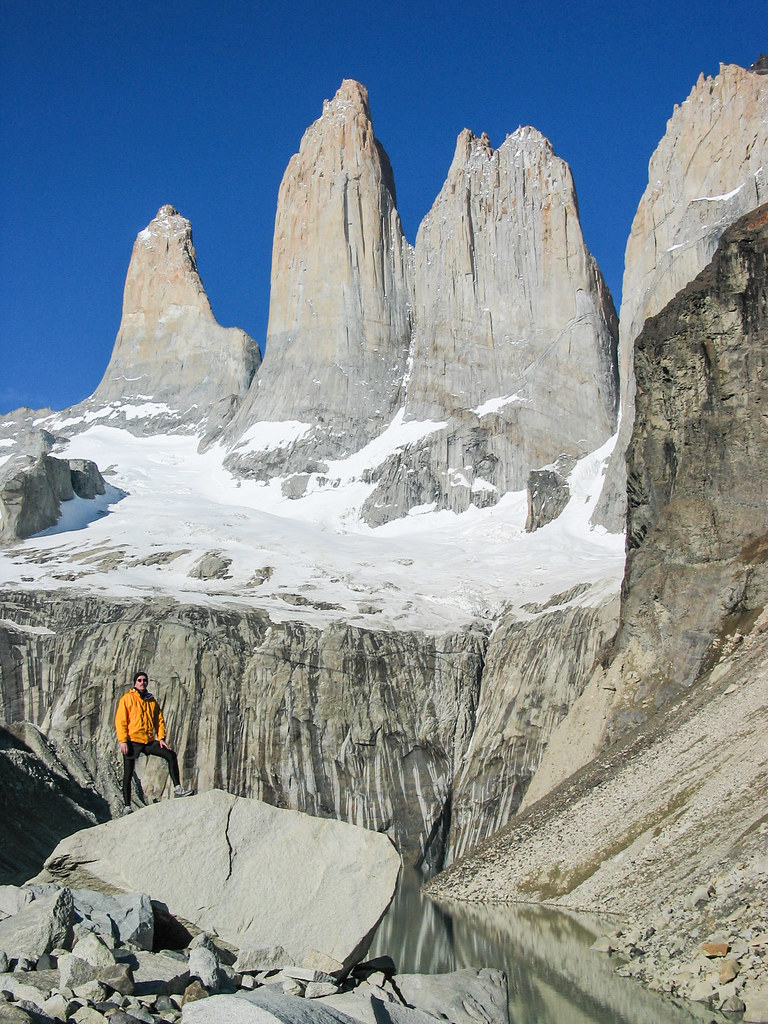
I waited a long time for the other runners who were running late and then headed down.

I ran into the other runners about one-third of the way down and decided to go back up for a group photo. It had started to cloud up a bit by then.
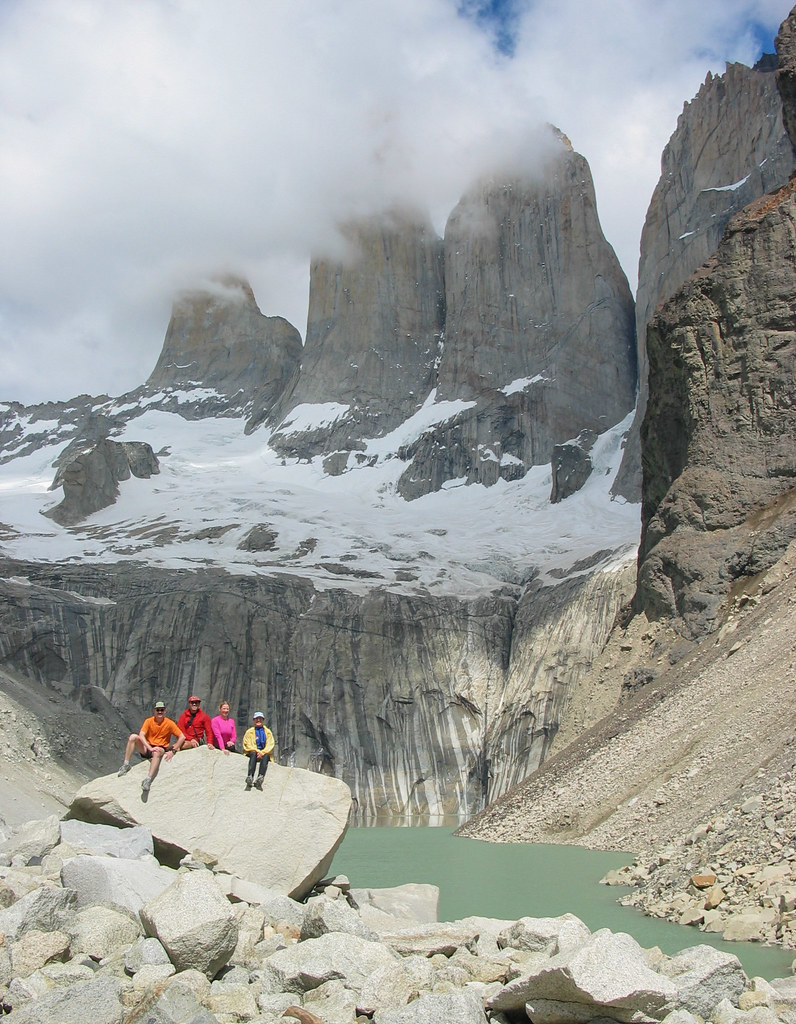
For this trip, I had a Canon G2 point-and-shoot camera. I shot a lot of panoramas since I didn’t have a wide-angle lens. The scenery in Patagonia worked really well for panoramas. In looking back on these photos, I’m amazed at how well the images from this, now very old, camera hold up.
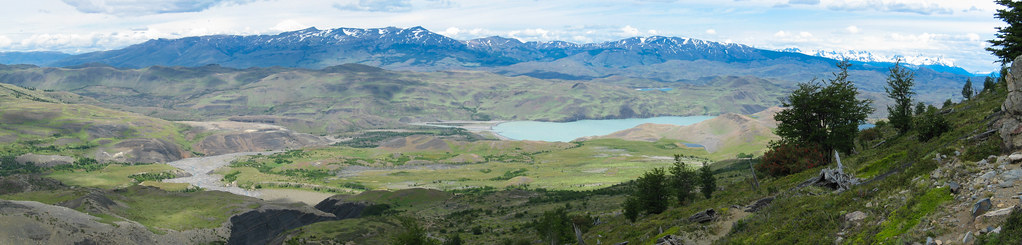
Color in the Ascencio Valley.

The Torres del Paine Circuit

Heading into the Rio Paine valley. Our refugio for the night is at the end of this valley around the ridge to the left.

Taking so many photos, I often ended up well back of the other runners. I saw no need to hurry through such pretty country.

Lago Paine comes into view across Rio Paine valley.

A few wildflowers come into view.


First view of Dickson Glacier.

A preview of trail conditions to come.

Our home for the night at Refugio Dickson comes into view.
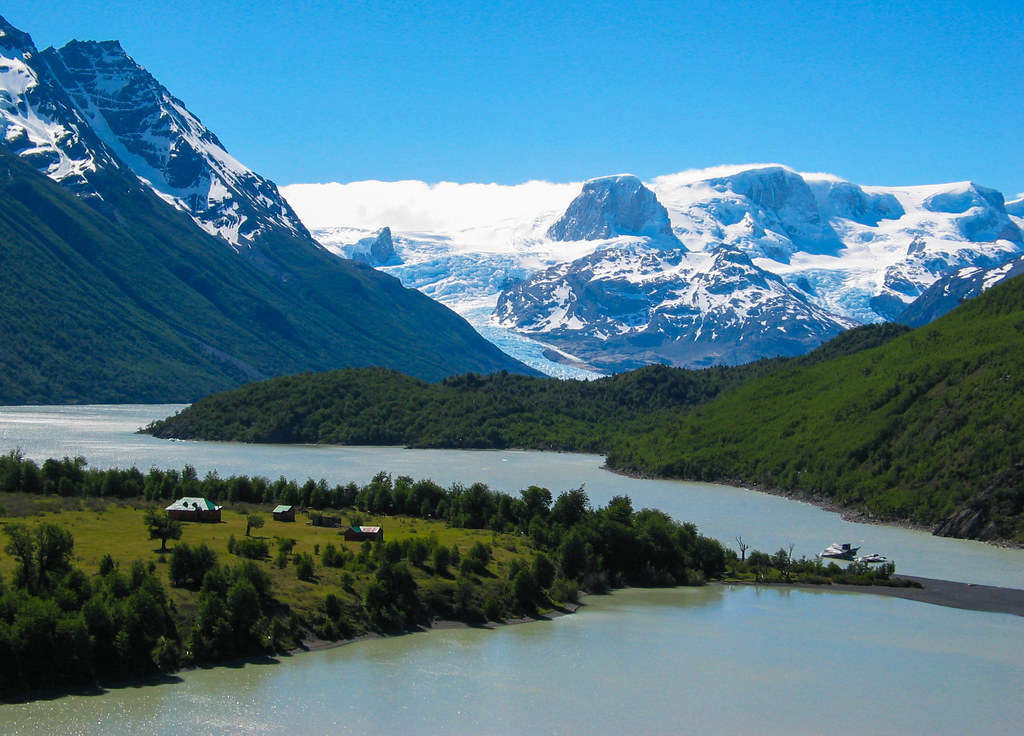
Looking back over Cordillera Paine, there is a condor just about dead center in this photo.

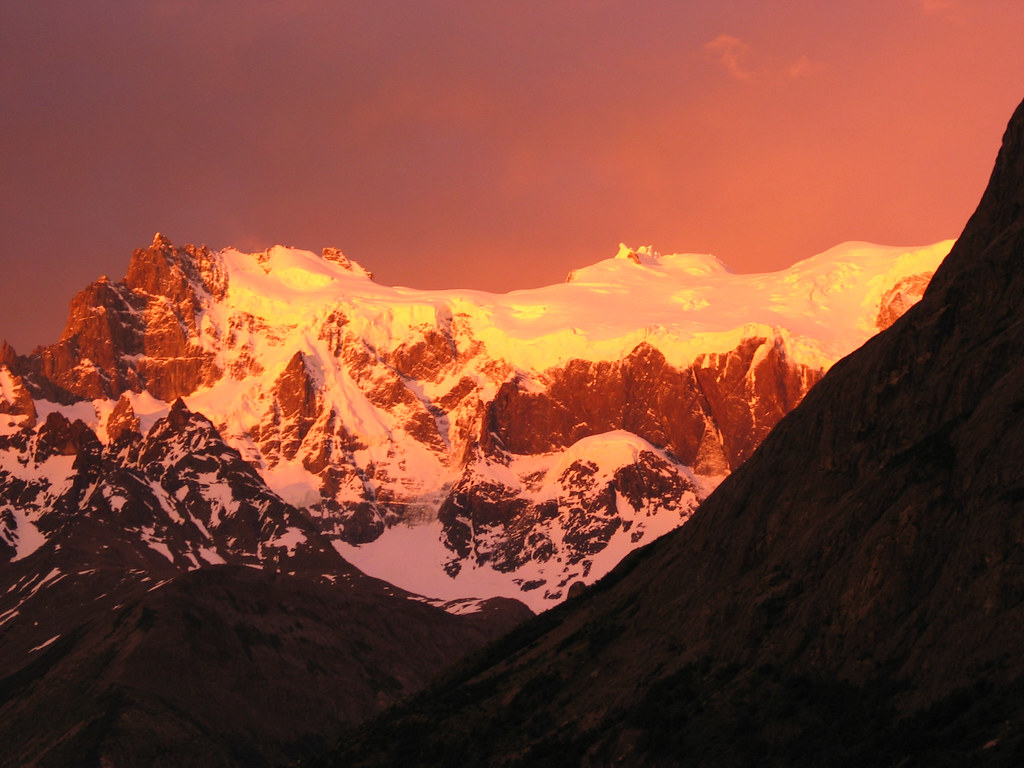
Sun setting across Lago Dickson from the refugio.

Cooking at Refugio Dickson. This is a fairly new refugio with hot showers and a top-notch cook. It is quiet and the least crowded of the refugios on the circuit. The only way in is via horse or on foot.
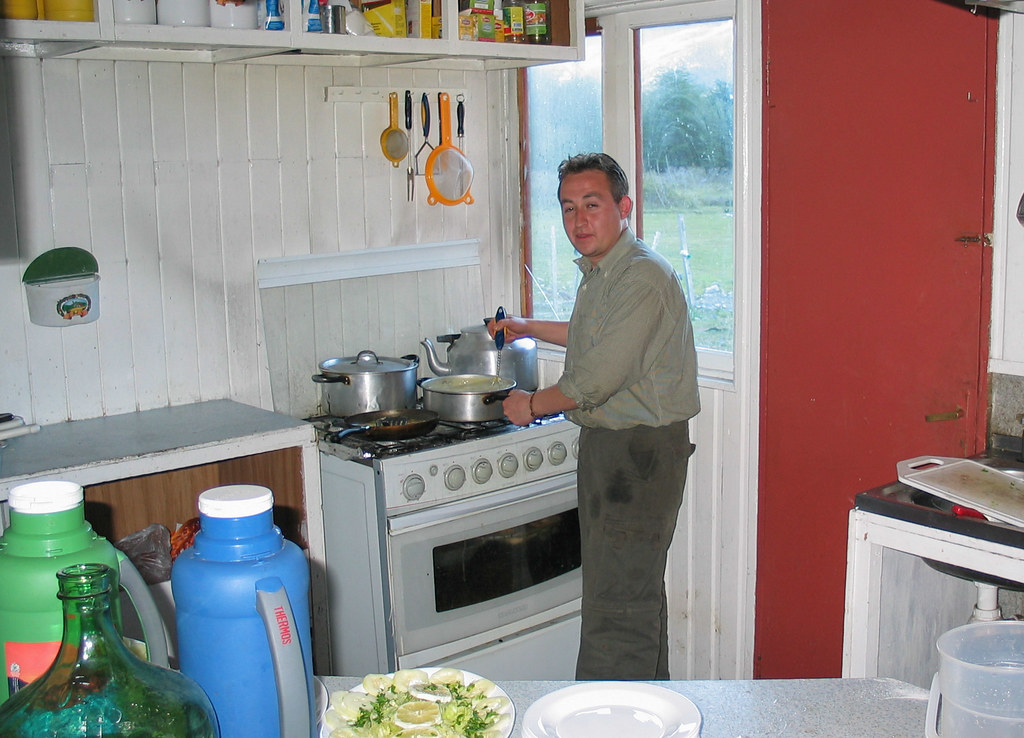
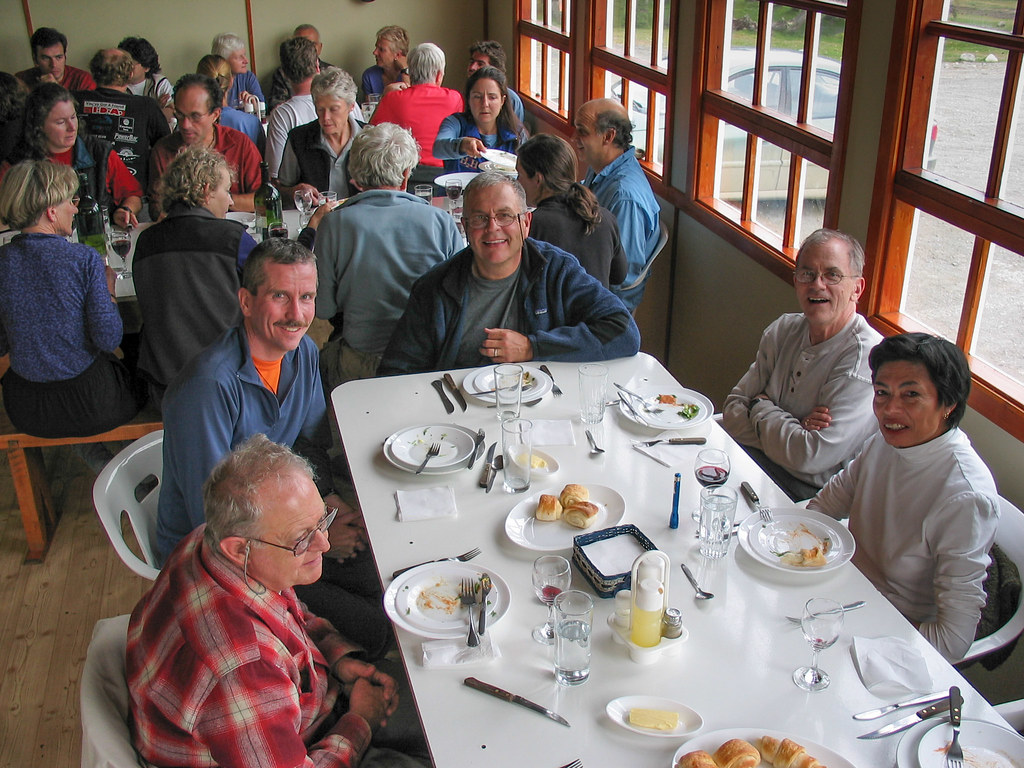
One of the great things about a trail running trip is the quick friendships with kindred spirits. Eating at Refugio Dickson.

The second day is the most challenging. You have to make it through about a mile of bogs, over the snowfields to Paso John Garner and down through the monkey forest before you get to Refugio Grey at the snout of the Grey Glacier. Here we all are, still neat and clean, getting ready to head out from Refugio Dickson.

Luckily, the tree that broke the bridge across Rio de los Perros made a new bridge.

Icebergs fill the lake at the base of Ventisquero Perro.

An avalanche came down while I was watching.

At Campamento Los Perros, there is a very friendly attendant, refreshments, and showers.

These bogs run on for about a mile. Pretty slow going. Luckily, I had been forewarned.

Wear gaiters and lace your shoes extra tight, and you just might not lose a shoe.

Weather coming in on Paso John Garner. Visibility was just good enough for long enough to get through.
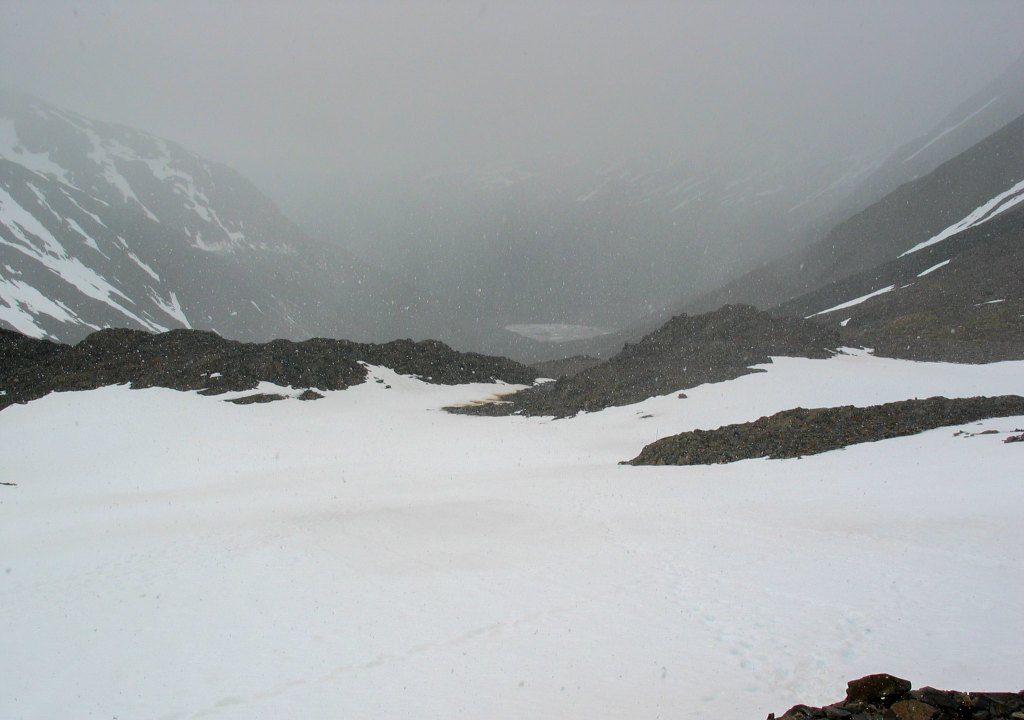
When in doubt, follow the orange paint.
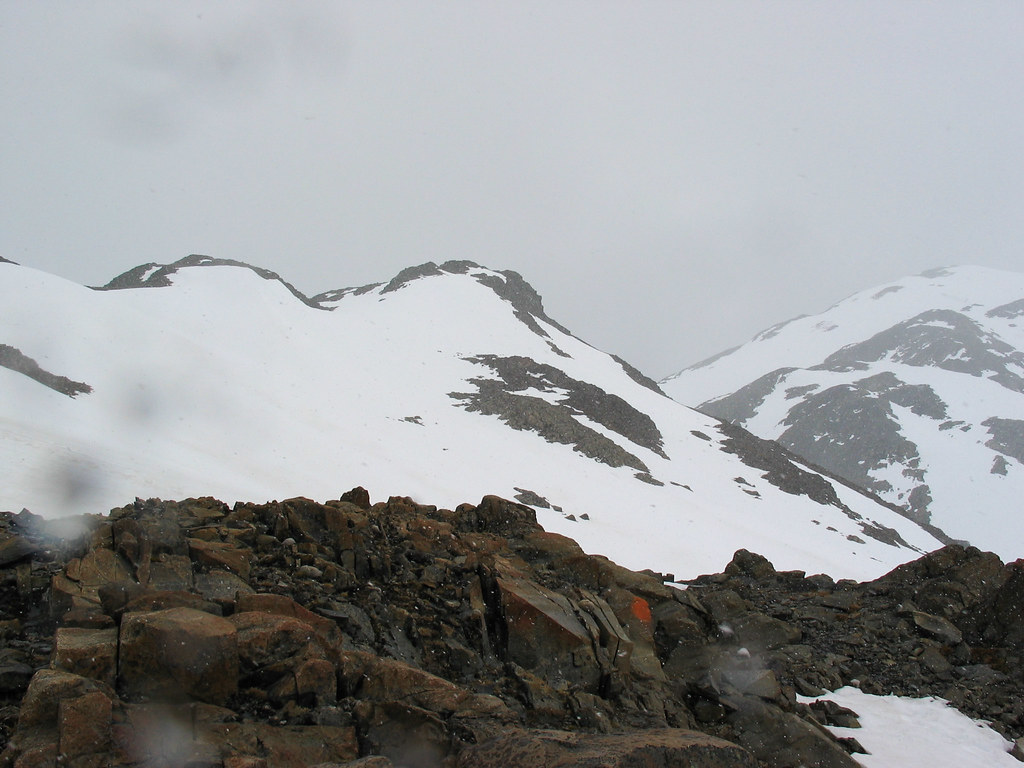
Once over Paso John Garner, the Grey Glacier comes fully into view from the snout all the way around the bend to the west.

The snout of the Grey Glacier and Lago Grey before I dropped down through the monkey forest. The destination for tonight is at Refugio Grey just a short distance down lake from the snout.

Looking at the sun-dappled finger of Glaciar Pingo flowing into Glaciar Grey.
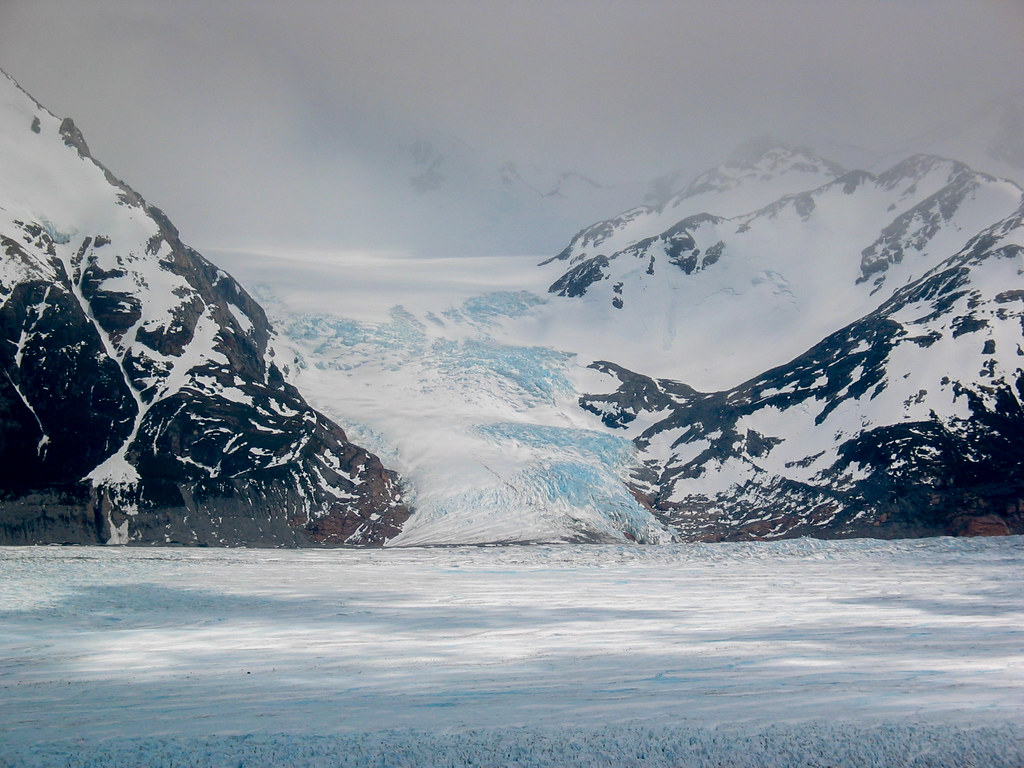
The roughest trail section of the Torres del Paine Circuit is down through the alpine scrub. This is commonly called the “monkey forest” since you have to almost swing from branch to branch to get down.
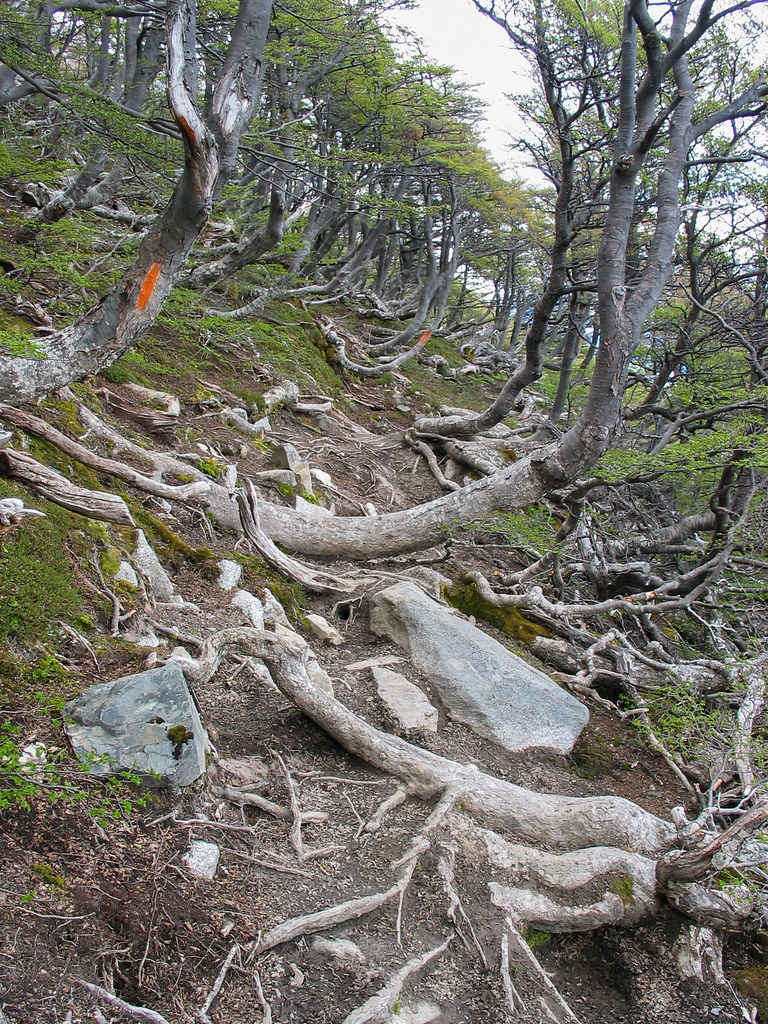
Once down from the forest, I went out onto a peninsula that juts into Lago Grey for fantastic views of the snout. This photo shows about the eastern one-third of the snout. The Grey Glacier is nearly at the end of the Southern Patagonian Ice Field, which extends 200 miles to the north, the second largest extrapolar ice field on the earth.

The glacier’s rock carving can be clearly seen on the right side of the Glaciar Grey.
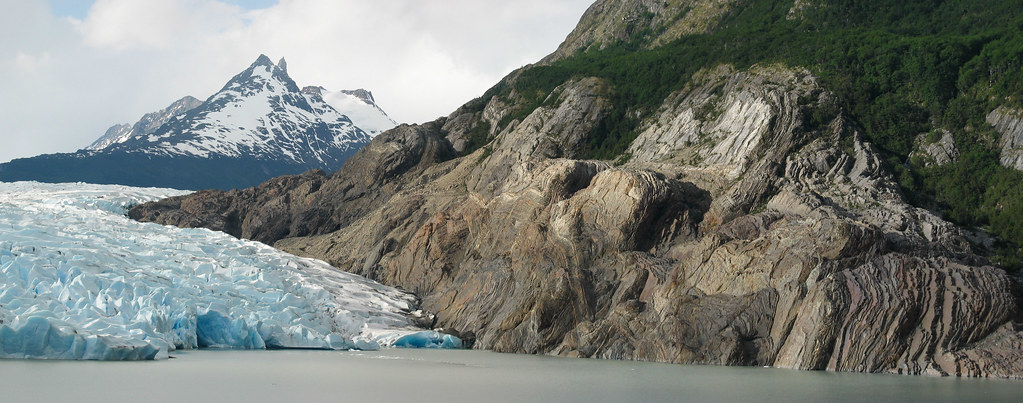
Iceberg floating on Lago Grey taken from the peninsula at the snout of Glaciar Grey.

Heading up from Refugio Grey on day three, I could now see the full snout of Glaciar Grey. The pictures above are just the section on the right. Refugio Grey is quite a bit more crowded since it is accessible by foot and boat.

Another runner and I pass our lunch porter pretty early in the morning. Normally, he would meet us far down the trail, but he was a bit slow. We grabbed our sandwiches and Cokes and were good for the rest of the day.
The next destination is the French Valley. I want to go as far up this valley as time will allow. It goes deep into Torres del Paine and yields fantastic views. Paine Grande guards the valley on the left and the horns guard it on the right.

Looking back down the French Valley toward Lake Pehoe.

Moving slowly up the French Valley along Rio del Frances heading to the mirador (viewpoint).

Up the French Valley I had unusual views of the horns including Cuerno Norte. The more classic view most folks see is from the south side of Lago Pehoe.

They definitely want to make sure that you don’t miss the mirador in the French Valley.
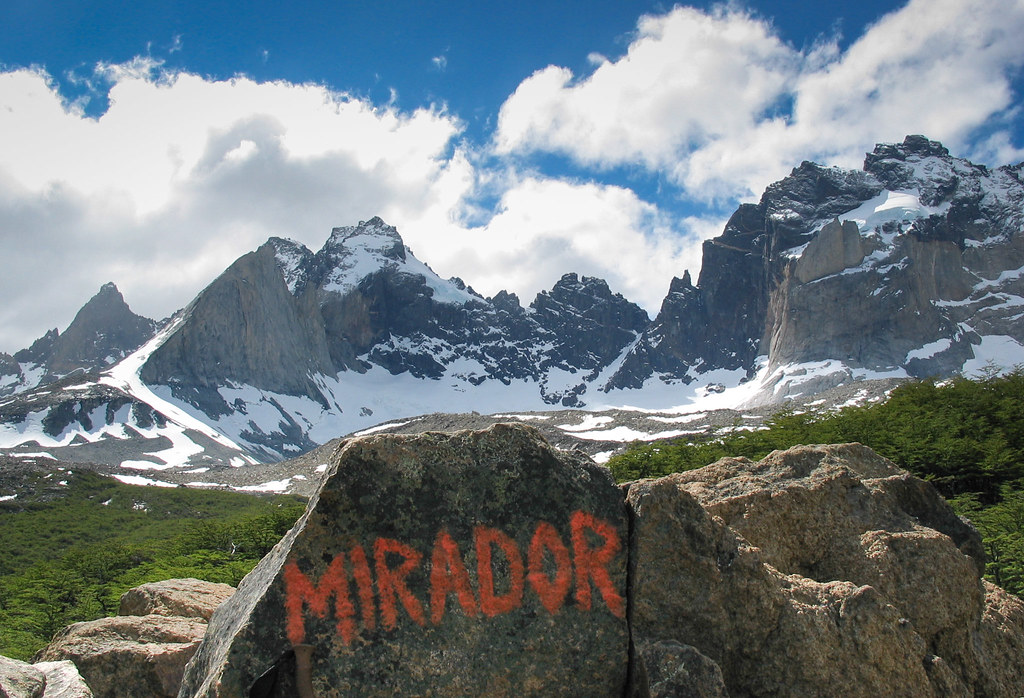
From the mirador, I had a fantastic panoramic view of nearly every peak in the French Valley—amazing.

A unique phenomenon in Patagonia is ice (rime) mushrooms that form with wind and unusual moisture circumstances. These mushrooms and rock pinnacles are casting glorious cloud shadows from the top of Paine Grande.

Now my goal is to make it to the refugio by dark.
Day four is just a half-day run along Lago Nordenskjold back to the van.
And then a tight squeeze on the way out of Torres del Paine.

All photos from this trip are on Flickr.


Leave a Reply