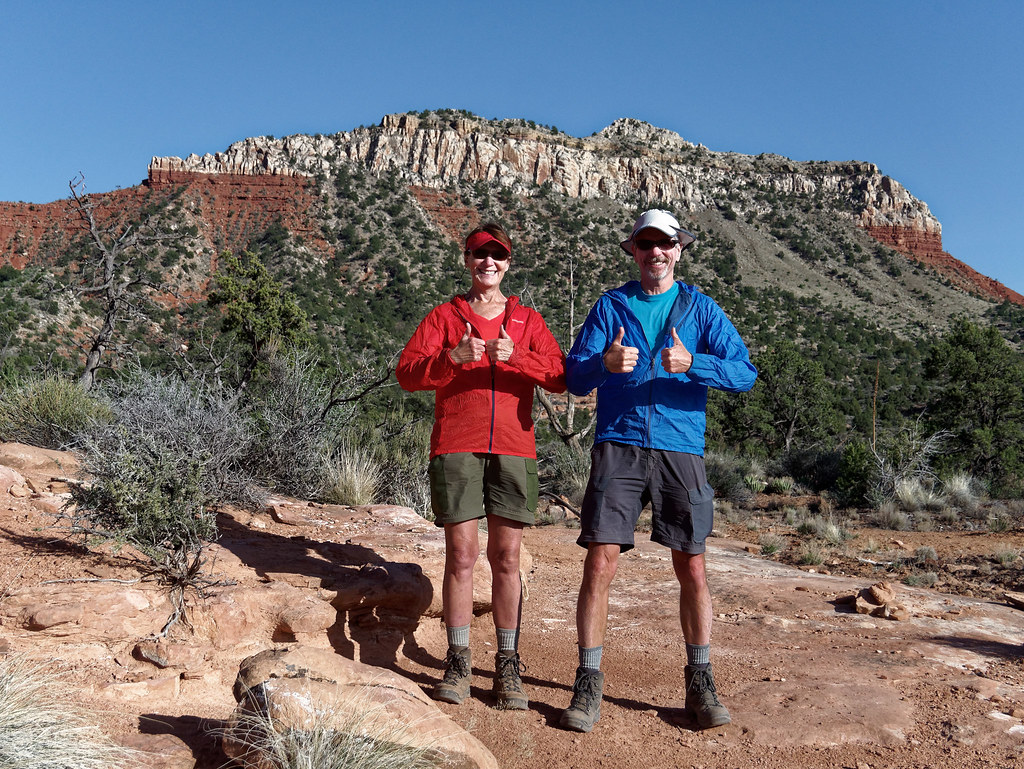
In May 2018 we completed our goal to hike every officially named trail and route in Grand Canyon National Park. You can read our list of trip reports here. Our list includes every trail and route that appears in a Park Service publication—a brochure, newspaper, trail description or map. Intellectually, I know I should be proud of our accomplishment, but I have a bad habit of discounting my own achievements. The way I see it, if a woman in her 50s and 60s with arthritic knees can do it, then how hard can it be?
John says what I lack in physical ability and youth, I make up for with grit. But I just couldn’t see it. I had always thought of myself as a wuss. I possess a vivid imagination and can easily visualize the worst that can happen. John has always been more adventurous, and he has led me into situations where I have felt afraid. I have written an essay about that. Yet we had done something that required a big effort. Perhaps John was right. If I had developed some grit along the way, then where had it come from? Hiking in Grand Canyon.
Hiking in Grand Canyon is like climbing a mountain in reverse. The climb and the increasing altitude come at the end, when one is most tired. Then there is the heat; temperatures within the canyon can be 20 degrees Fahrenheit higher than on the rim. The trails also vary greatly in quality. The Park Service has designations for backcountry use areas, ranging from the maintained trails and facilities of the Corridor Zone to the indistinct routes and scarce water of the Wild Zone. Many of our trips took us well beyond the maintained trails.
We did our first backpack trip in Grand Canyon National Park in 2011. John put together a four-day, three-night trip, and our son, Dan, would be joining us. We would descend the Tanner Trail to the river, follow the Escalante Route downstream, and return to the rim via the Tonto and Grandview Trails. These trails and routes were recommended for experienced canyon hikers. According to Park Service standards, we weren’t.
The Park Service provides trail descriptions to help hikers prepare for the challenges ahead. I read the ones for our planned trip and started to worry. John dubbed these write-ups “Worry Papers.” We have called them that ever since. We also received a form letter from the Park Service stating that trips such as ours “too often result in injury” and “occasionally even death.” This letter is affectionately known as the “You’re gonna die” letter.
The first trail description I read was for the Tanner Trail. It states, “The trail is narrow, badly eroded … a serious fall is a real possibility…” and “…missteps should be avoided at all costs…”.
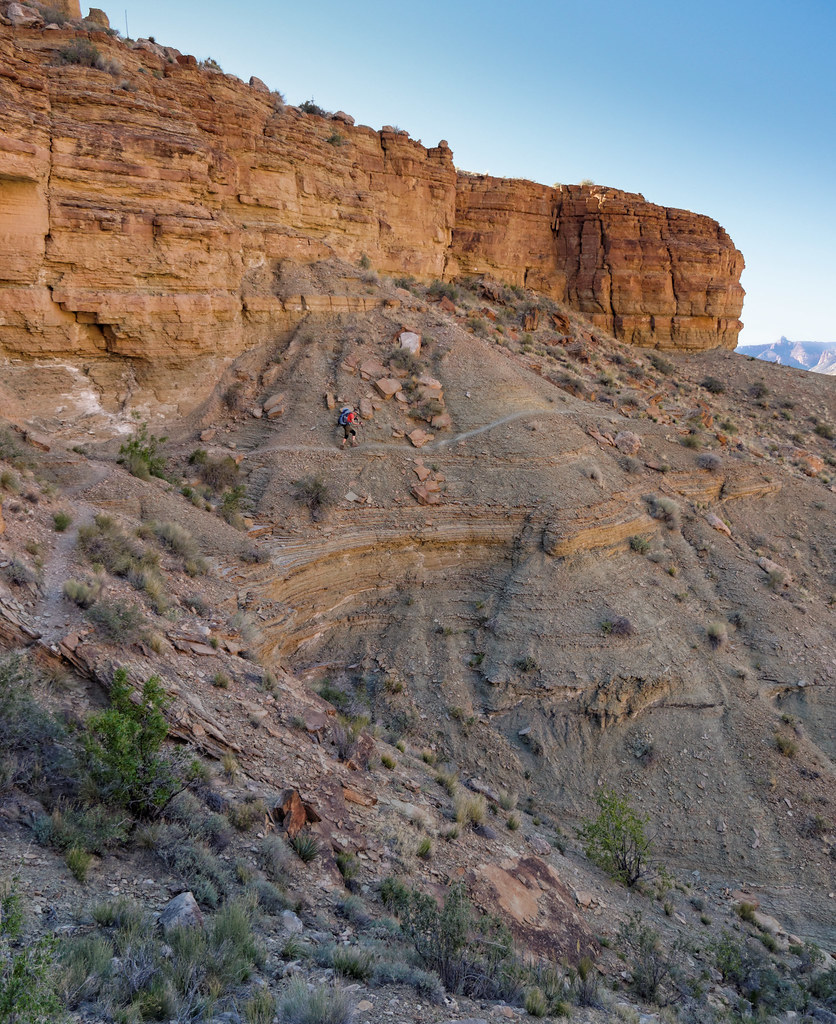
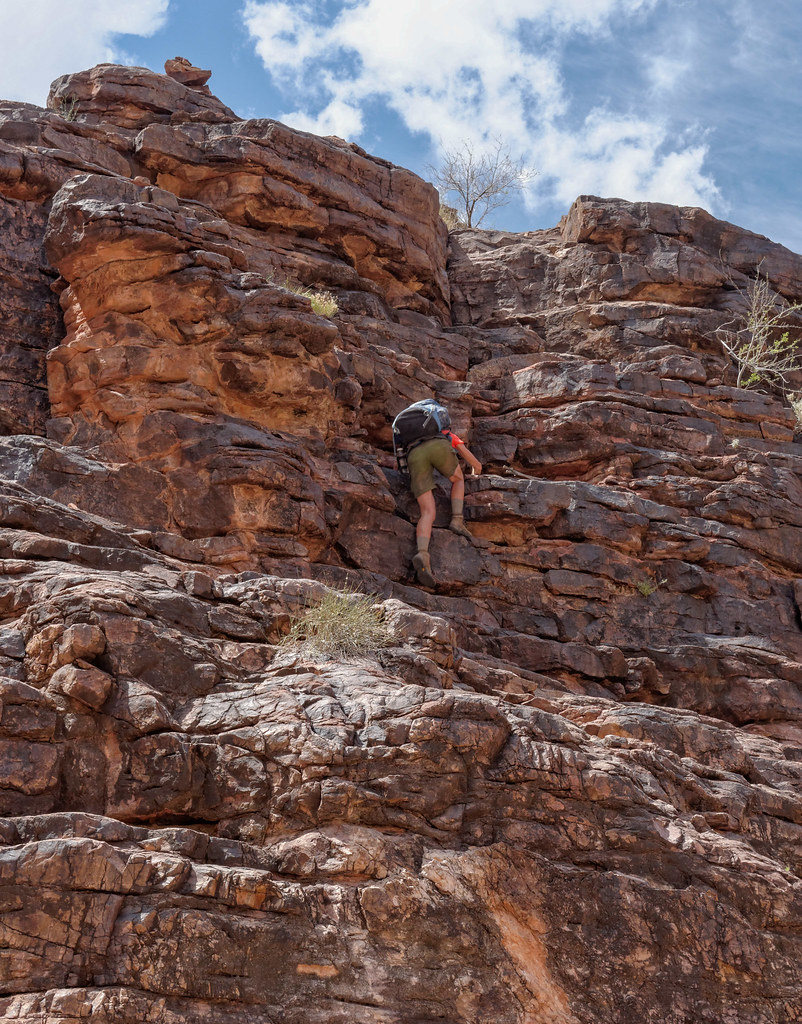
We would then follow the river downstream on the Escalante Route. Its Worry Paper describes the necessity of climbing 35 feet up “a series of tall ledges” …
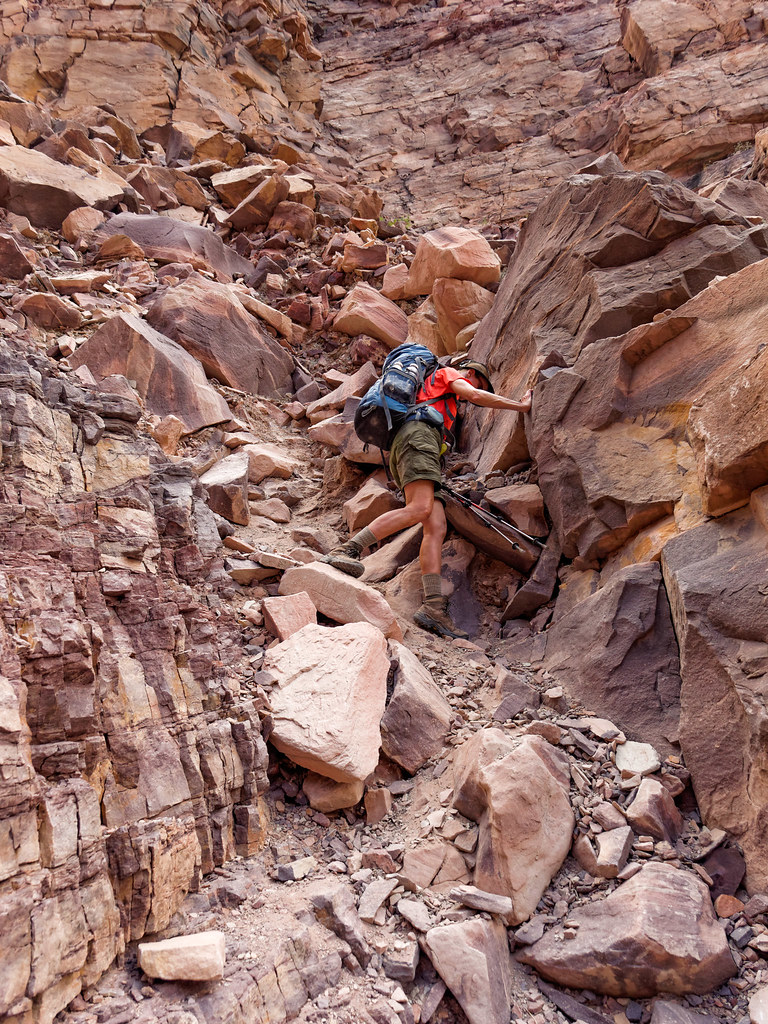
… and descending through a gully that is “steep, with lots of big boulders in precarious balance”.
We would then ascend back to the rim via the Tonto Trail and the Grandview Trail. The Grandview Worry Paper states the trail “traverses steep ground and the old trail is eroded…”
Despite the dire warnings, we completed the trip and nobody died. We were later told that the length of our final day—11.4 miles—was enough to prompt the “You’re gonna die” letter. It was a challenging trip, and I definitely acquired some grit along the way.
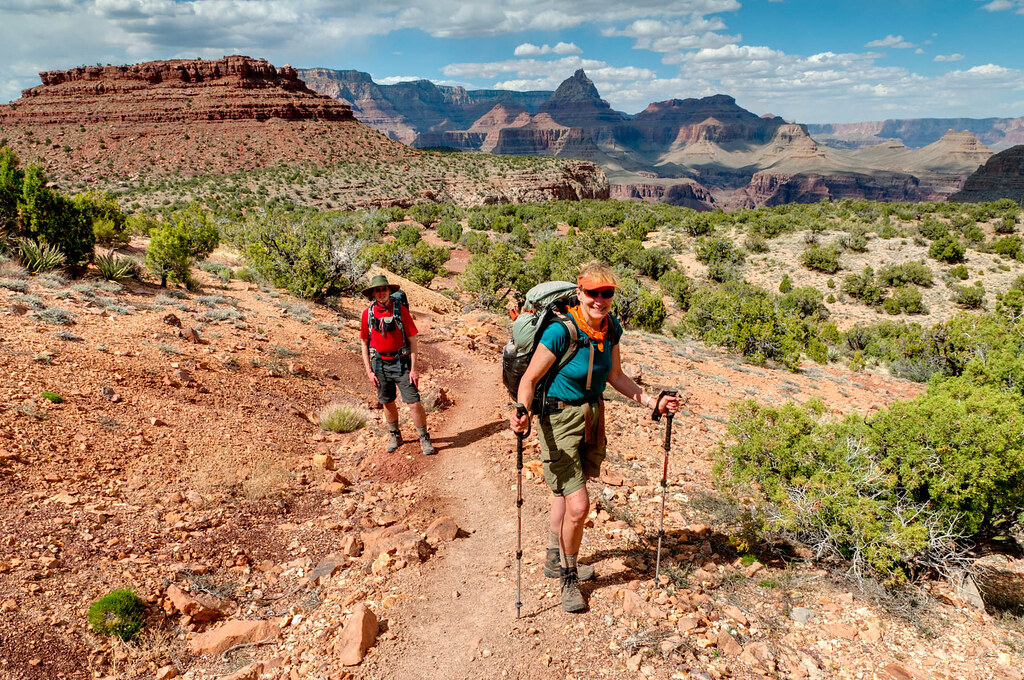
We did another backpack trip in 2011, the Thunder River/Deer Creek Loop. In 2013 we did several more including a week-long trip on the west Tonto Trail. The Worry Paper states it is “… regarded by canyon experts as the most difficult and potentially dangerous section of this long transcanyon trail system.” We also did the Royal Arch Loop, which according to the Worry Paper, “is considered by many to be the most difficult of the established south side hikes, …” In addition to many challenges encountered while hiking down Arch Canyon there is a 20-foot rappel. While John had rappelled many times before, it was my first time. And I acknowledge it took some grit to take that first step back off level rock.
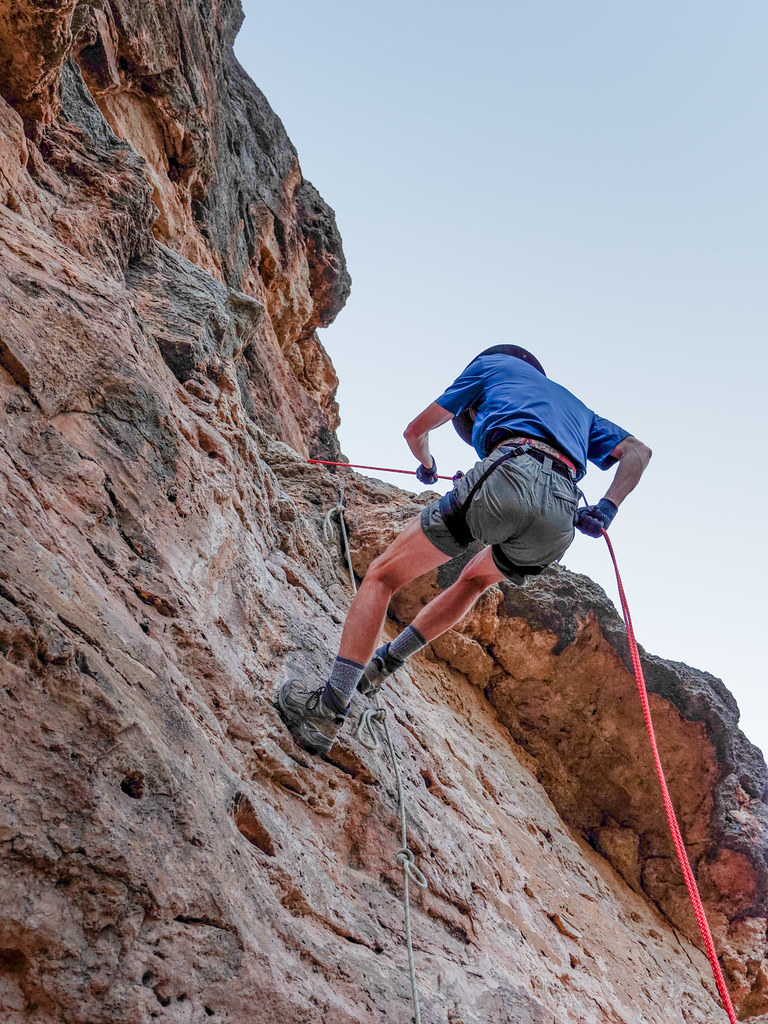
We were back in the canyon in 2014 and did a loop on the Hermit and Boucher Trails. The Boucher Trail Worry Paper states it “… is one of the most difficult and demanding of the south side trails.”
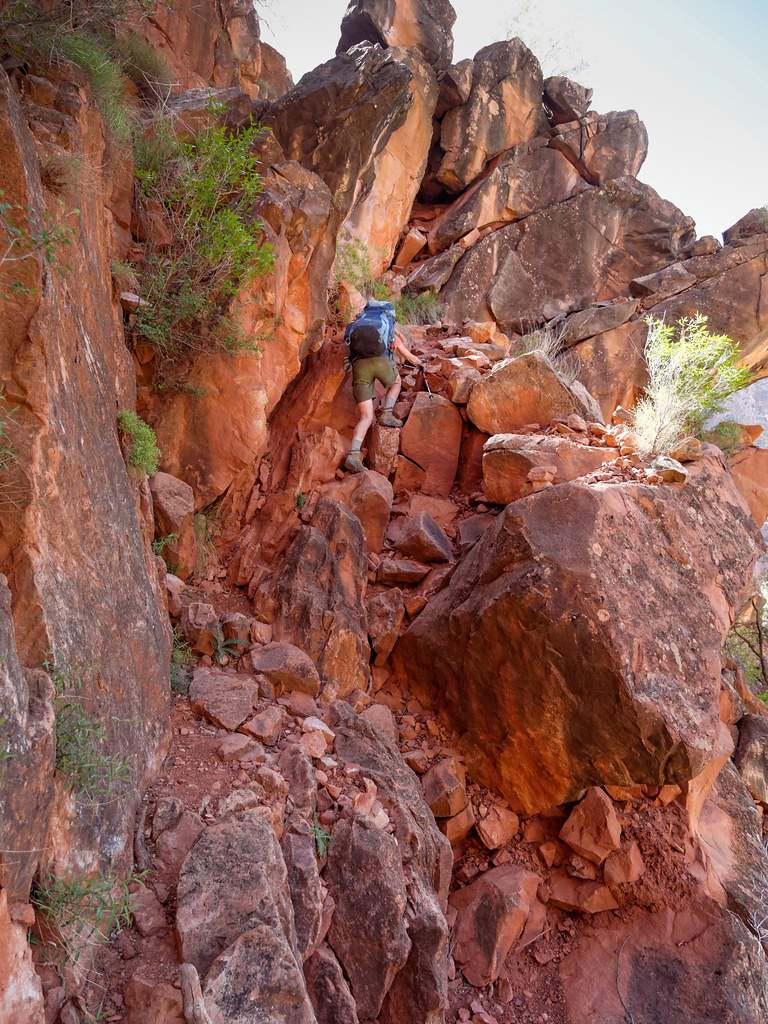
We also did another trip down the Tanner Trail in 2014. I was a bit ahead of John when I encountered two couples who had stopped for a break. I said hi and kept going. However, John stopped to talk to them and learned that their plan was similar to our previous trip. They had paused because one of the women was having a panic attack. When I heard about it later, I was concerned. They had not yet reached the parts of the Tanner that had made me nervous on our first trip.
I wondered how she would manage the narrow, exposed portions ahead. If she was anxious now, how would she get up the Papago Ledges, much less down the Papago Slide?
I wished I had stopped to talk to her. Perhaps she was in over her head. Maybe she needed an advocate, and her companions needed a reality check. I then began to wonder if I should keep an eye out for hikers who seemed unprepared and speak up before they got in over their head.
But then I remembered an anxiety attack of my own. John and I were hiking to The Subway, a slot canyon in Zion National Park. The route requires hikers to crisscross the Left Fork of North Creek. Recent snowmelt had left the water especially high. It was cloudy, and the current was strong. My canyoneering boots were quite large, and I had trouble finding secure footing on the rocky bottom. I have lousy balance and almost went down a few times. I got freaked out and just stopped. I didn’t really want to go back, but for the time being I couldn’t go forward. I was stuck.
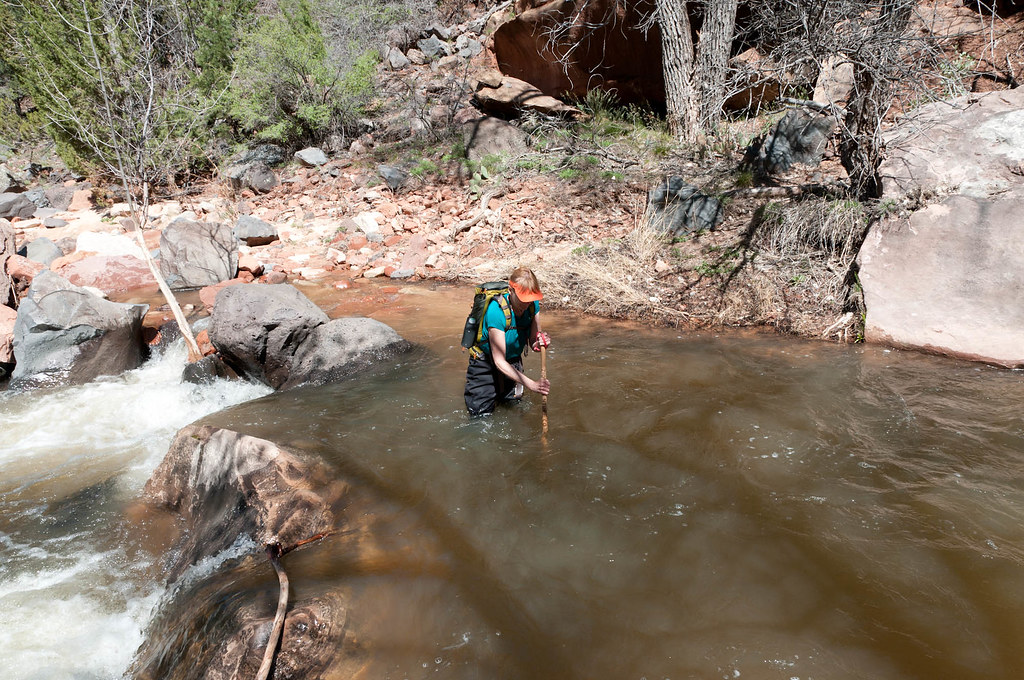
John reluctantly said that if I really wanted to go back, we would. Then he said he had confidence in my abilities and knew I could do it. It was just what I needed to hear. After I calmed down, we continued, and I’m so happy we did. At the time, I feared that turning back would cost me confidence and self-respect, as well as the chance to see such an amazing place.
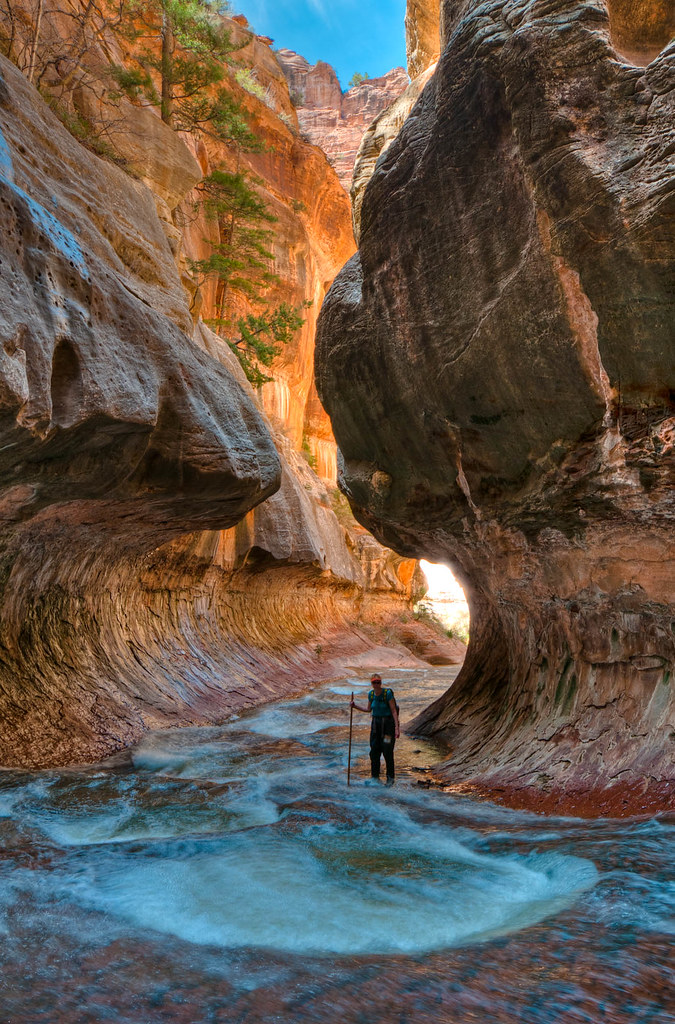
What I needed in that moment was someone who knew me, believed in my abilities, and was willing to turn back if that was what I chose. A stranger passing by would not have known what I had done before or what I was capable of now. They would have no idea about how to help me.
I now realize that I knew just as little about the woman on the Tanner Trail. Her fear alone couldn’t tell me whether she was capable of the trip. If I encounter someone who is struggling, I can ask whether they need help, listen, and share what I know about the trail ahead. Encouragement may help, but it shouldn’t become pressure to continue. I wouldn’t hesitate to help someone in obvious need. I also don’t want to assume that someone’s anxiety means they cannot meet the challenge. I know from experience how much confidence can grow from doing something that once seemed beyond me.
I am thankful that I have been able to work through so much anxiety and nervousness while backpacking in Grand Canyon. We achieved our goal of hiking every officially named trail and route in the park while I was in my late 50s and early 60s. Along the way, I gained experience and learned to trust my abilities. I may still imagine the worst, and I may still feel afraid. But that’s okay because I got grit.


Leave a Reply